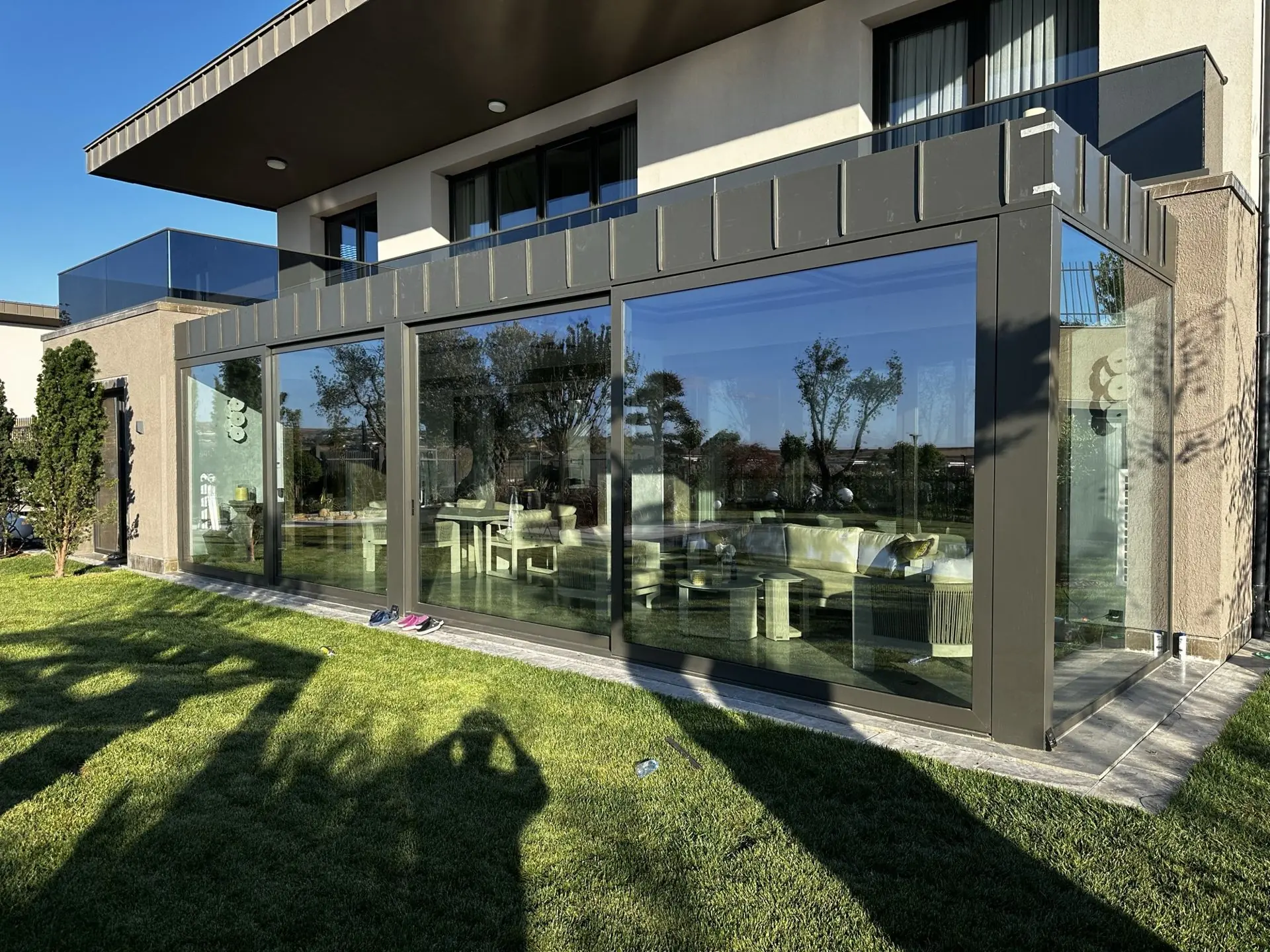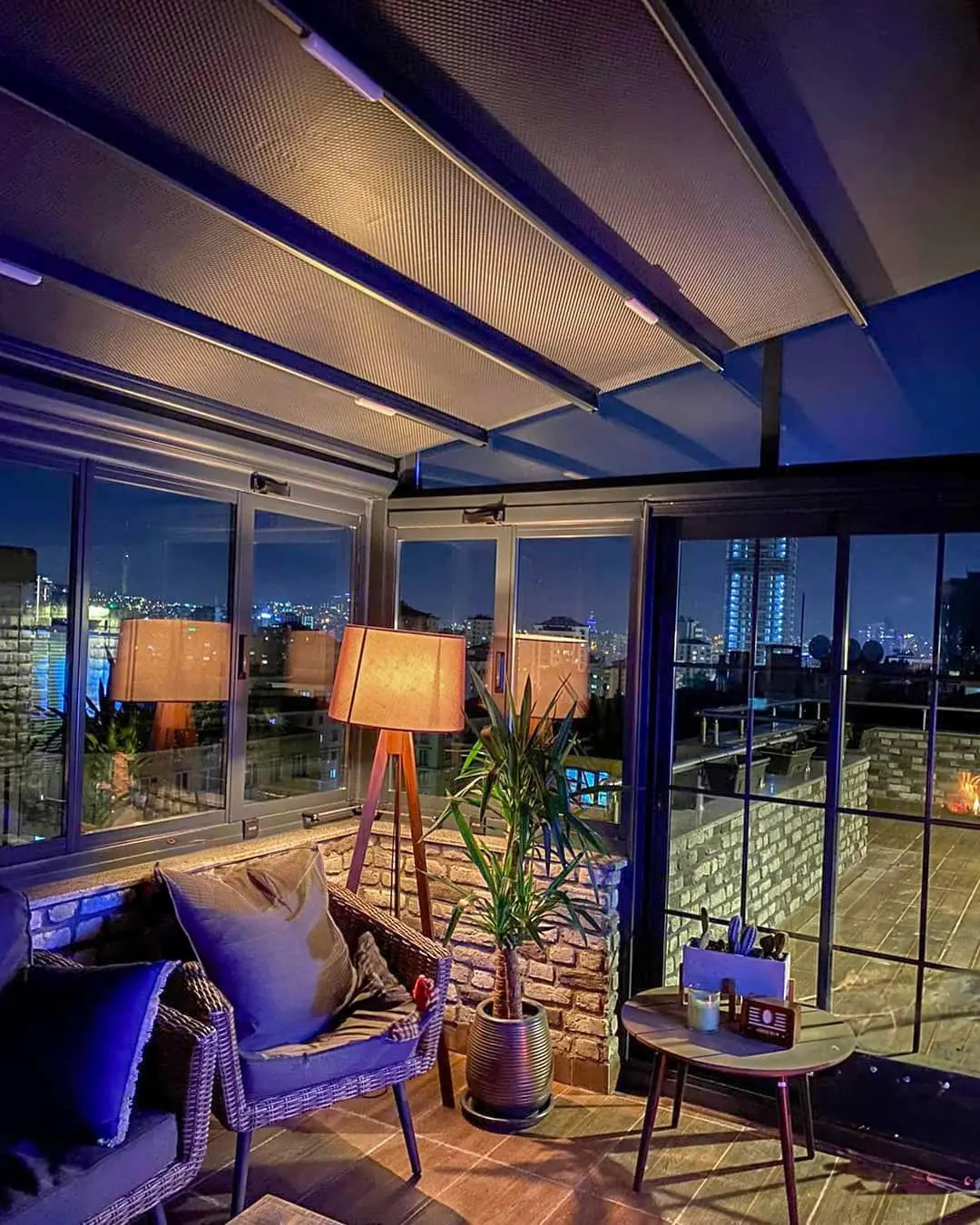
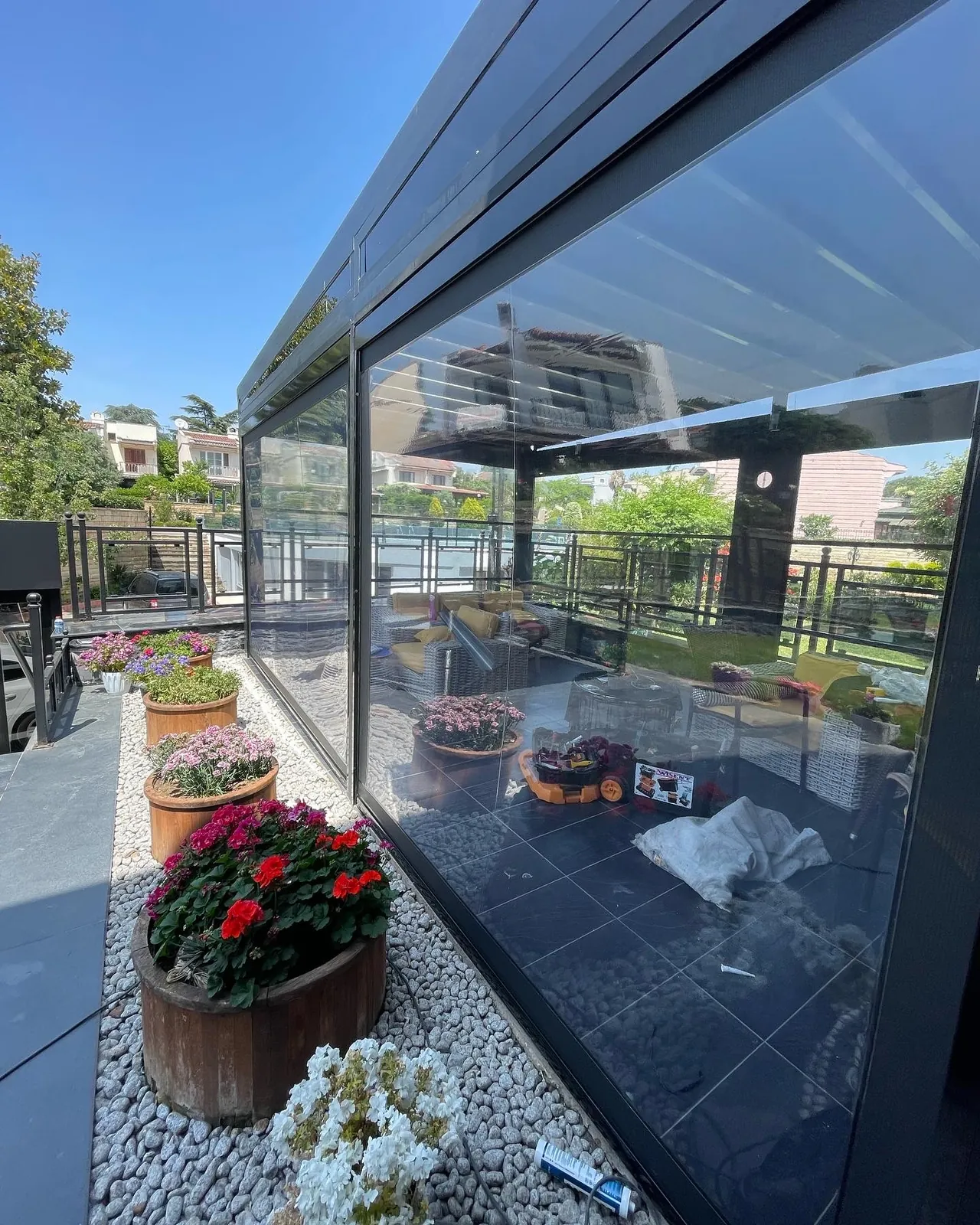
A zip screen is made of a micro-perforated technical fabric carried by an aluminium cassette and side rails; the zipper strip on both fabric edges locks into the rails. Fabric colour is chosen from a digital catalogue, profile colour separately.
In short
A zip screen has two main materials: a technical textile fabric and the aluminium profiles that carry it. A zipper strip sewn on both edges of the fabric locks into the side rails, which is why the screen does not flap in the wind. A motor rolls it into the cassette.
Part by part
| Part | Material | Role |
|---|---|---|
| Fabric | Micro-perforated, weather-resistant technical textile (Serge Ferrari or Screen group) | Blocks sun, wind and rain while letting air through |
| Zipper strip | Zip strip sewn on both edges | Locks the fabric into the rail and keeps it taut |
| Cassette | Aluminium | Top box where the screen rolls up and the motor sits |
| Side rails | Aluminium | Hold the zipped edges; the screen runs in these channels |
| Motor and remote | Tubular motor in the cassette | Opens and closes the screen by remote |
Fabric: two groups
We choose zip screen fabrics from two groups: Serge Ferrari and Screen. We explain the difference in our fabric guide. The fabric does not tear and does not let water in; rain runs off its surface. It can collect dust but is washable (cleaning guide).
Choosing from the colour chart
- Fabric colour: Colours and patterns are in a digital catalogue; we show it during the survey or share it on WhatsApp.
- Profile colour: The cassette and rails also come in different colours, usually matched to the windows, railings or pergola.
- Visibility: With Screen fabrics, darker tones generally give a clearer view outside by day; lighter tones make the space feel brighter. See a sample on site if you can.
- Consistency: Using the same fabric and profile colour on every screen of one façade keeps it clean.
Lifespan
A zip screen lasts 5–7 years on average depending on use, longer with care. All our systems carry a 2-year warranty (lifespan and faults).
Zip screens are mostly used on the sides of a bioclimatic pergola and under conservatory roofs (Sky Zip). Book a free survey to see the colours on site.