On restaurant and café terraces zip screens keep service going in sudden wind and rain: they cut wind by about 70%, do not let water in and free the terrace completely when raised. They do not insulate, so in winter plan them with heating or a glass system.
Why restaurants choose them
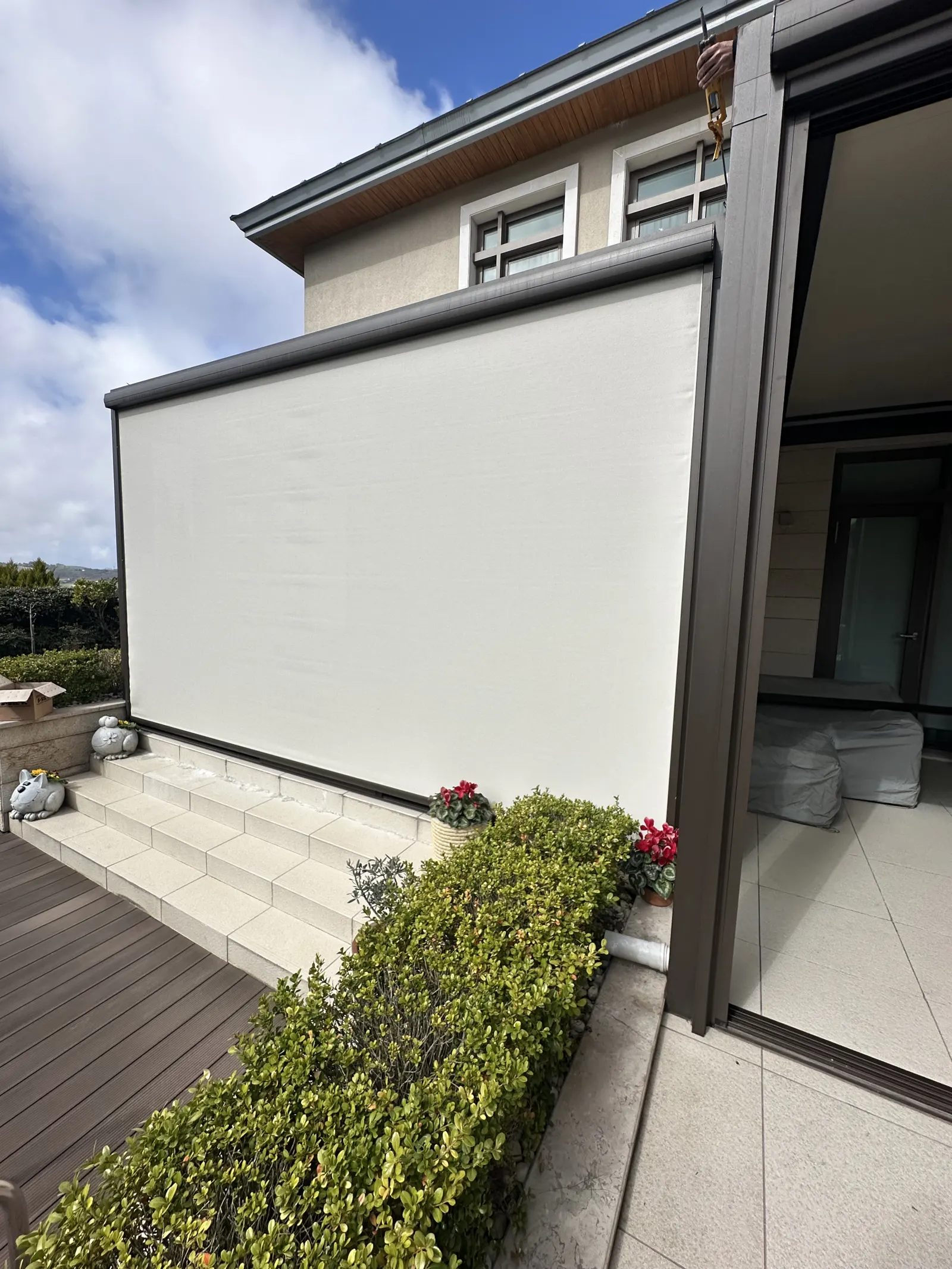
When the weather turns, a restaurant terrace should not empty. A zip screen comes down by motor in seconds; its edges are locked in the rails so it does not flap. When the weather clears it rolls back into the cassette.
- Cuts wind by about 70%; withstands up to 120 km/h.
- Does not let water in; rain runs off the fabric to the ground.
- The micro-perforated fabric keeps the view by day.
- Works like an insect screen in the evening (details).
Use by season
| Season | What it does | Note |
|---|---|---|
| Summer | Blocks low sun and glare, keeps air moving | Prioritise the afternoon-sun side |
| Spring / autumn | Protects service in sudden wind and rain | Do not leave the fabric rolled up wet for long |
| Winter | Blocks wind and rain | No insulation; add heating or close with glass |
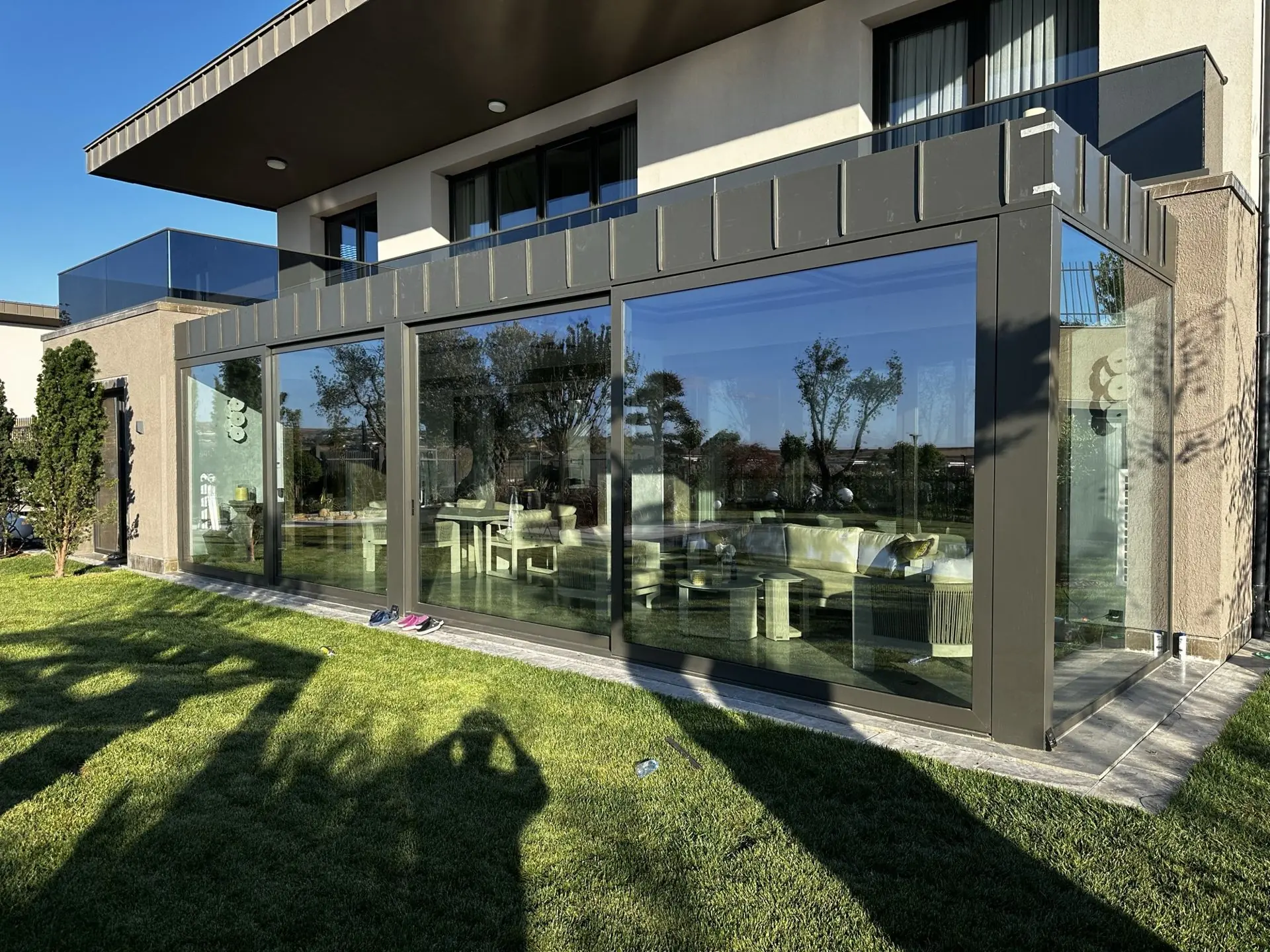
A terrace used like an indoor room in winter needs more than a zip screen; closing the front with guillotine glass is better (guillotine glass in cafés and restaurants). See the winter limits of zip screens here.
Planning entrances
Paths used by staff and guests are planned during the survey. Each zip screen has its own motor, so the front is split into several screens and the one at the entrance can be opened separately. A single screen is at most 4500 mm wide × 3000 mm high; wider fronts are split anyway.
With a pergola
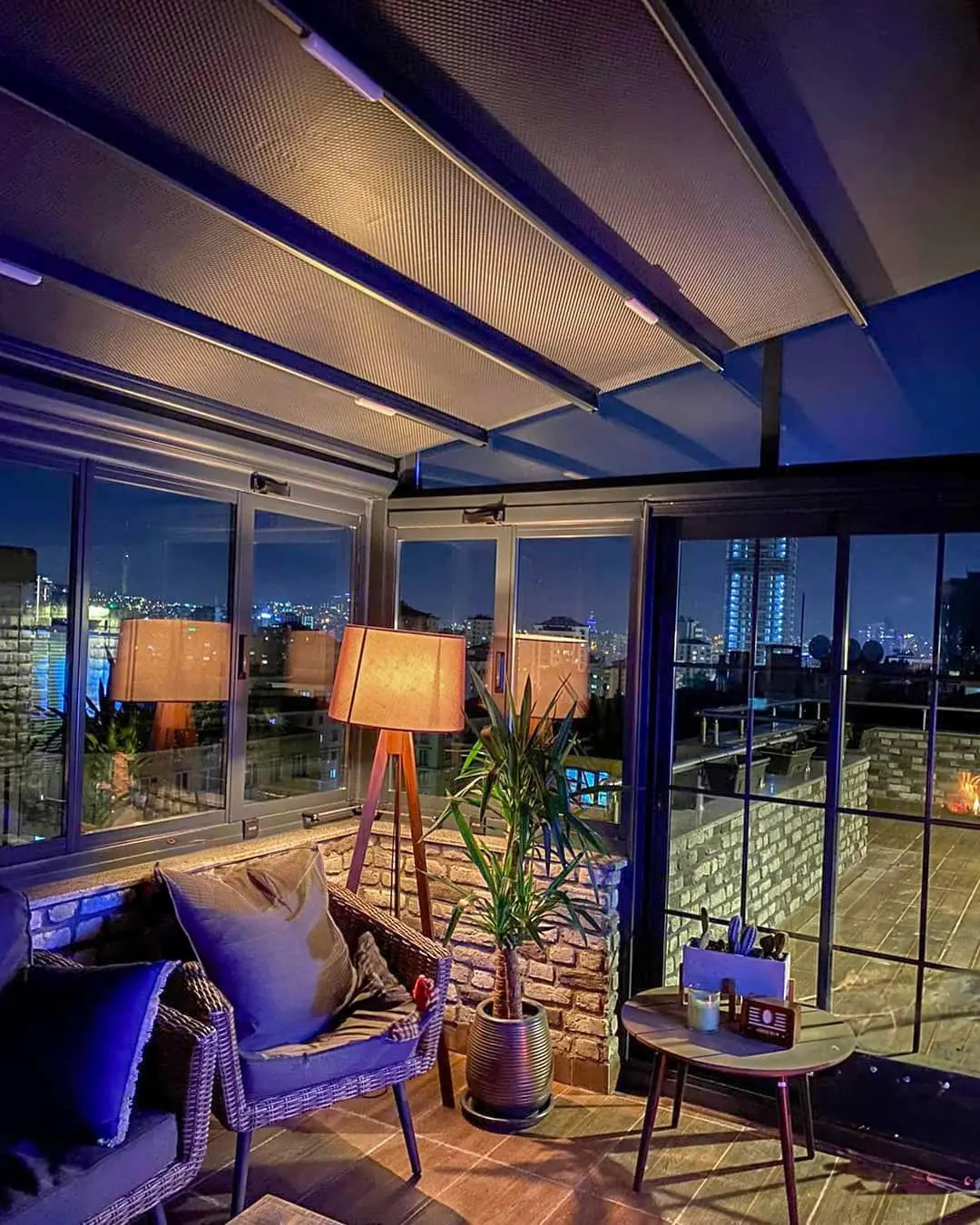
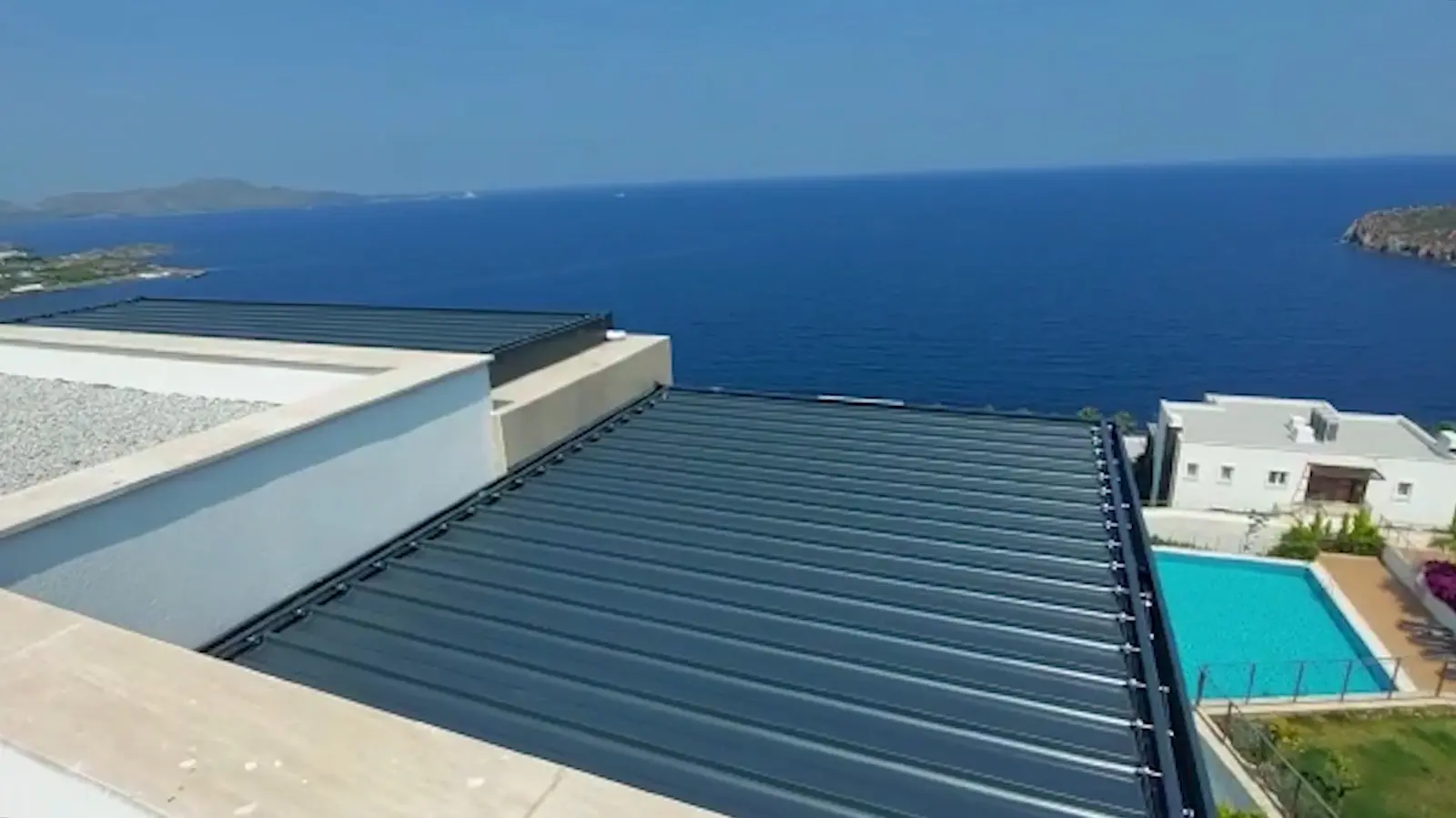
The most common layout is a bioclimatic pergola roof with zip screens on the sides: louvres stop rain, screens stop wind and low sun. See our Bağdat Avenue restaurant garden project.
Practical notes for venues
- Keep pots, climbers and flowers away from the screen; leaves can catch in the rail.
- Keep tables and chairs clear of the rail line.
- Do not wash the fabric with pressure washers or bleach.
- Check your municipality's rules on façades and pavement use first.
Let us plan sizes and entrances on site: book a free survey.