Yes, a closed zip screen acts as an insect screen: the micro-perforated fabric is zipped into the side rails, leaving no gap for insects while air keeps flowing. But it also blocks sun and wind. Here are its limits.
Short answer
A closed zip screen works like an insect screen. Both fabric edges are locked into the side rails, so there is no gap at the sides, and the micro-perforated fabric lets air through while acting as a barrier to insects. That is why a zip screen combines the functions of a shutter, awning, blind, insect screen and roller blind in one system.
Compared with a classic insect screen
| Classic insect screen | Zip screen | |
|---|---|---|
| Insects | Blocks | Blocks when closed |
| Sun | Hardly any effect | Filters sun and UV |
| Wind | No effect | Blocks wind, withstands up to 120 km/h |
| Operation | Mostly by hand | Motorised, remote control |
| Airflow | Yes | Continues through micro-perforated fabric |
Points to watch
- When the screen is open there is no protection against insects; it must be closed.
- Fabric choice matters: a more open weave gives more air and view but filters less sun (fabric guide).
- For frequently used entrances we plan the operation with you at the survey.
- It does not insulate; for winter you need glass (wind, rain and cold).
Where is it used?
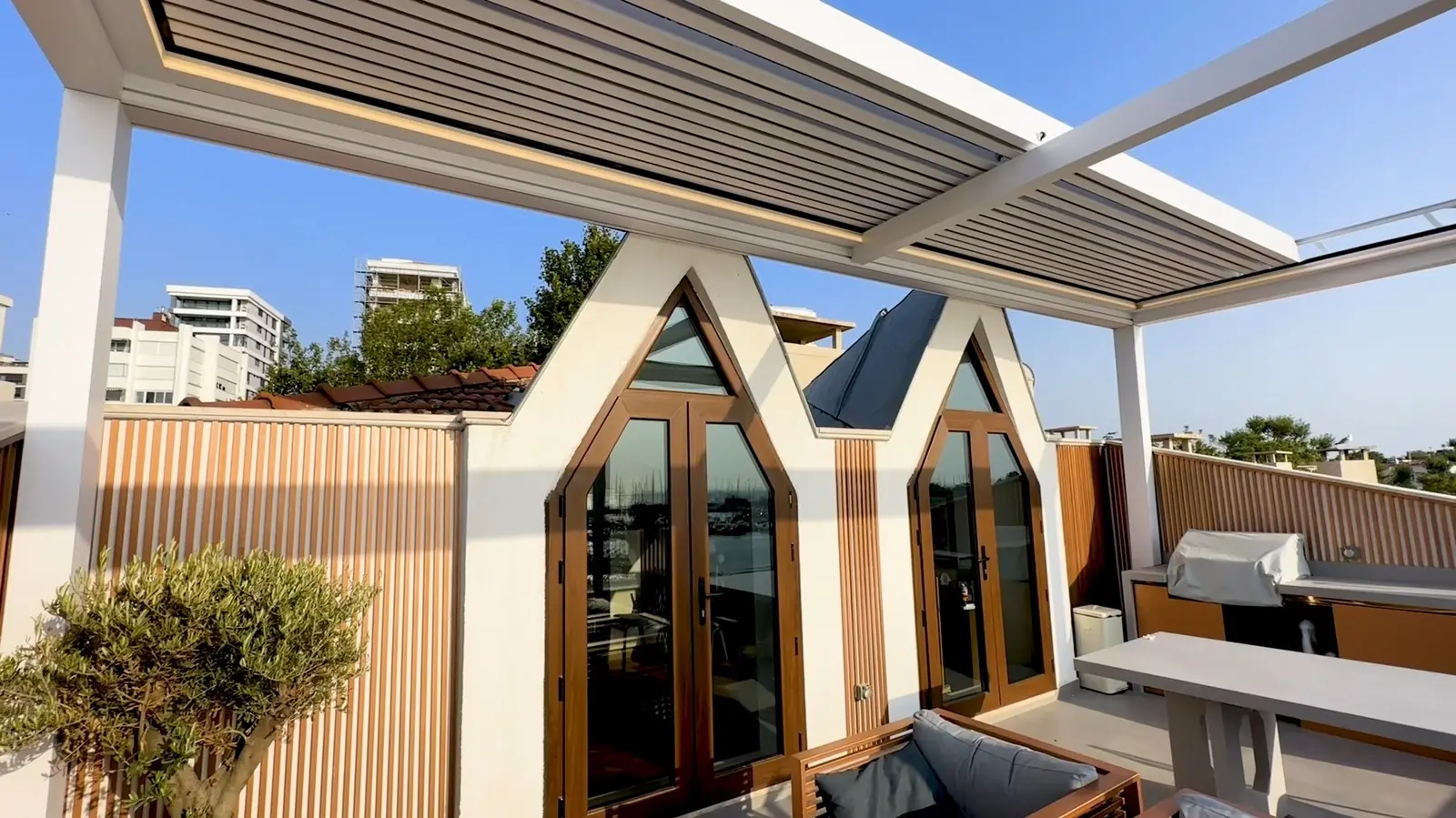
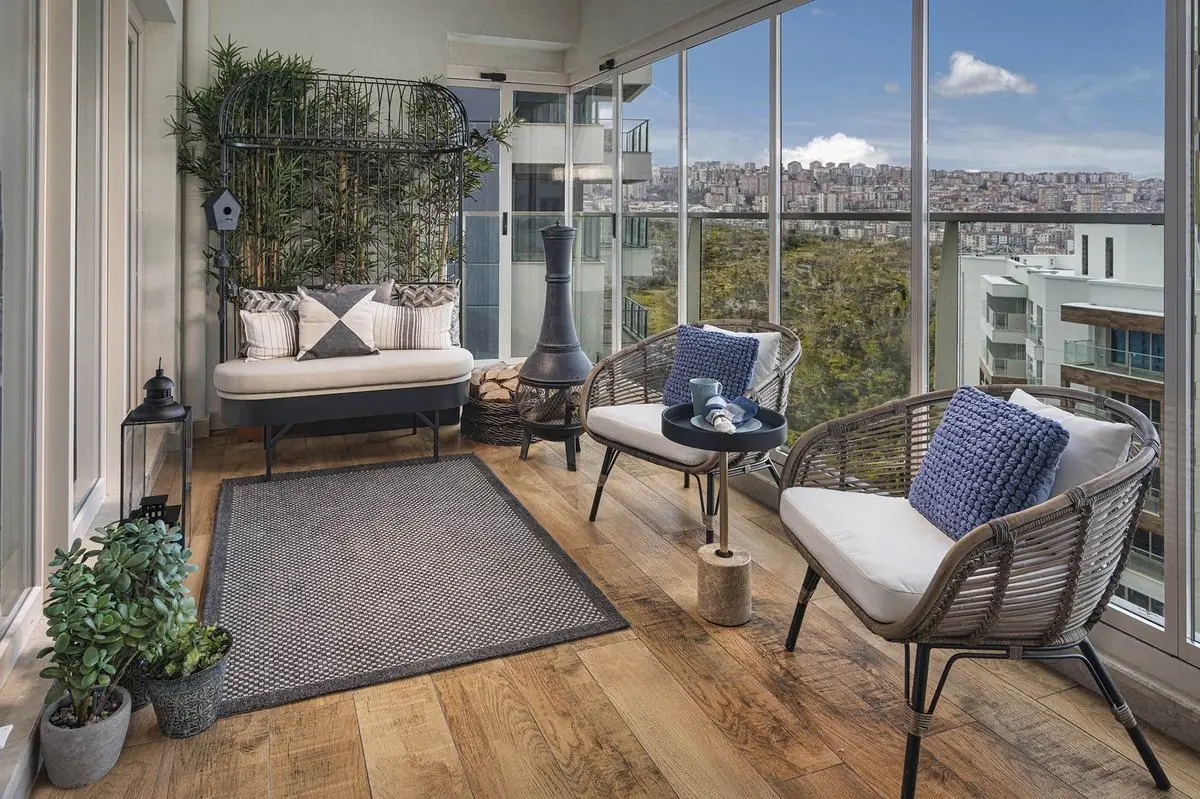
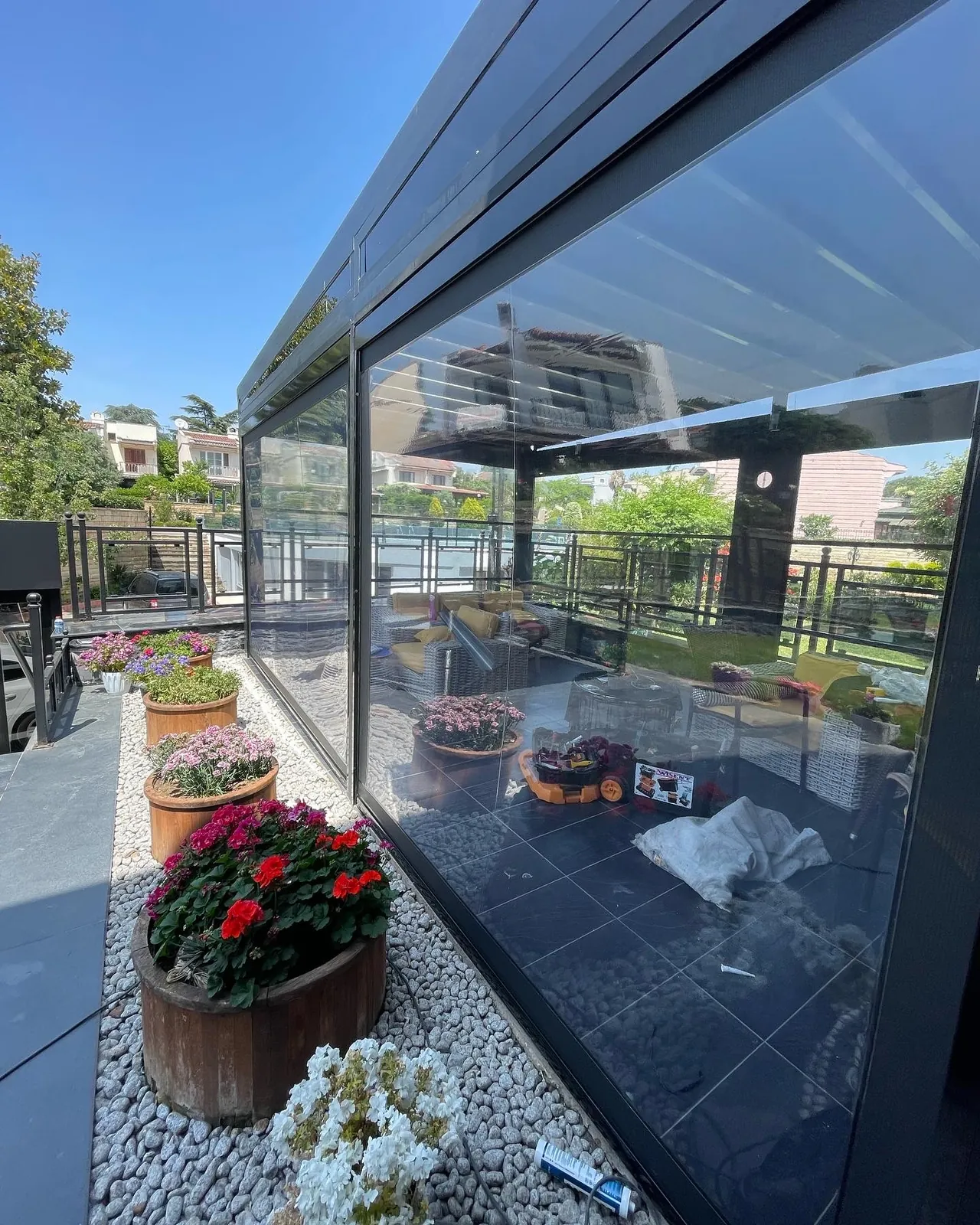
On the sides of pergolas, winter gardens, terraces and balconies. On a bioclimatic pergola it provides both insect protection and shade. One screen is made up to 4500 × 3000 mm; all our products carry a 2-year warranty.
Request a free site survey for a recommendation based on your dimensions.