Motor faults on guillotine glass are almost never seen; in our field experience, motor-related faults stay below even 5 per cent. What matters is having the electrical supply checked regularly and keeping the glass's path clear; on chain systems, objects caught in front of the glass can make the chain jump off.
The short answer: one of the most trouble-free systems
Used correctly, guillotine glass is one of the most trouble-free glass enclosure systems. Most faults come not from the mechanism but from objects getting in the glass's path.
Motor faults are almost never seen: in our field experience, motor-related faults stay below even 5 per cent. The one thing to do on the motor side is to have the electrical installation and supply checked regularly; voltage fluctuations and loose connections are what strain a motor most.
How does the motor work?
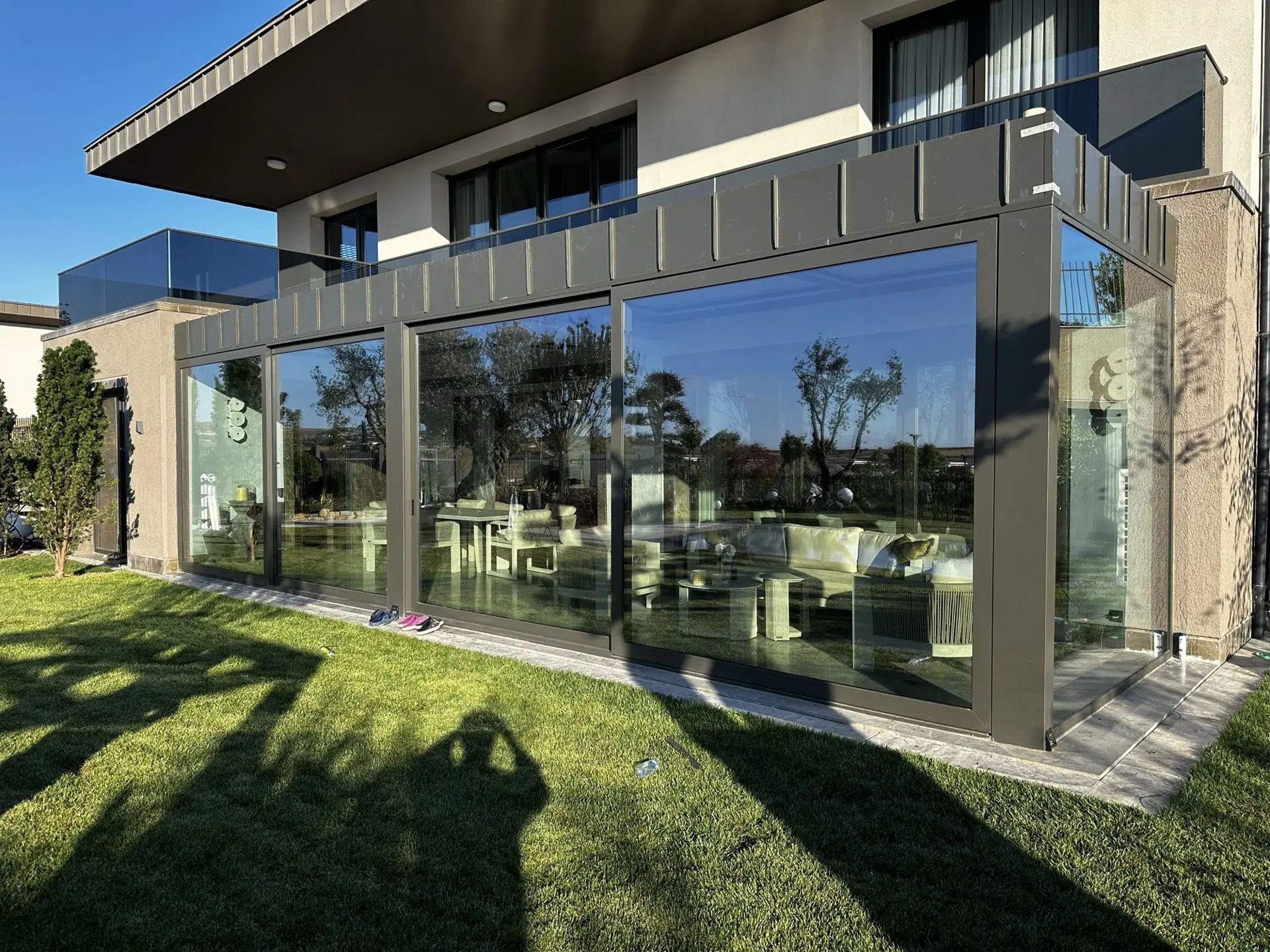
In guillotine glass, the glass panels run on bearings in the side channels. Depending on the system, the motor raises and lowers them with rope-reinforced 3 × 25 mm belts or a durable chain. It works by button or remote, and the glass stops at any height. With several modules, they can be run individually or all together from one remote.
The most important rule in cafés and restaurants
In busy venues such as cafés and restaurants, keep menus, tables, chairs, pots and other objects out of the glass's path. If something catches the glass as it moves, the panel moves unevenly; on chain systems this can make the chain jump off. Setting tables slightly back from the glass and briefing staff prevents most faults. More in: guillotine glass in cafés and restaurants.
Maintenance: one check a year
- Rails: clear dust, leaves and sand from the side rails from time to time — the most important step for smooth movement.
- Seals: check that the brush seals are in place and clean.
- Electrics: have the installation, fuse and supply checked regularly; motor faults are rare and usually electrical in origin.
- Annual service: we recommend checking the belt or chain, bearings and motor connections once a year.
- Lubrication: don't oil the rails at random; oil collects dust. If needed, service uses a suitable product.
Signs of a fault
| Symptom | Likely cause | What to do |
|---|---|---|
| Remote doesn't work | Remote battery, receiver pairing | Change the battery; try the wall button |
| Panel sticks | Debris in the rail | Clean the rail; don't force it if it persists |
| Chain jumped, panel comes down crooked | An object caught in the glass's path | Stop using it and call for service; keep objects away from the glass |
| Louder noise | Bearing or belt | Call for service |
| No response at all | Power, fuse | Check the fuse; then call for service |
Forcing a motorised system or trying to lift it by hand can damage the belt. If the problem persists, call for service.
What if the glass breaks?
Thanks to jointed side rails, glass can be replaced without dismantling the system. The glass is tempered; if it breaks, it shatters into small blunt pieces rather than sharp shards.
Related: Does guillotine glass let the cold in? · Pros and cons