A bioclimatic pergola sets shade gradually and keeps the rain out, but controlled use is essential. It costs more than an awning, needs power, needs regular servicing, and if an enclosed space is heated in winter without dehumidifying, condensation forms on the roof. We set out the pros, cons and solutions plainly.
A quick reminder first
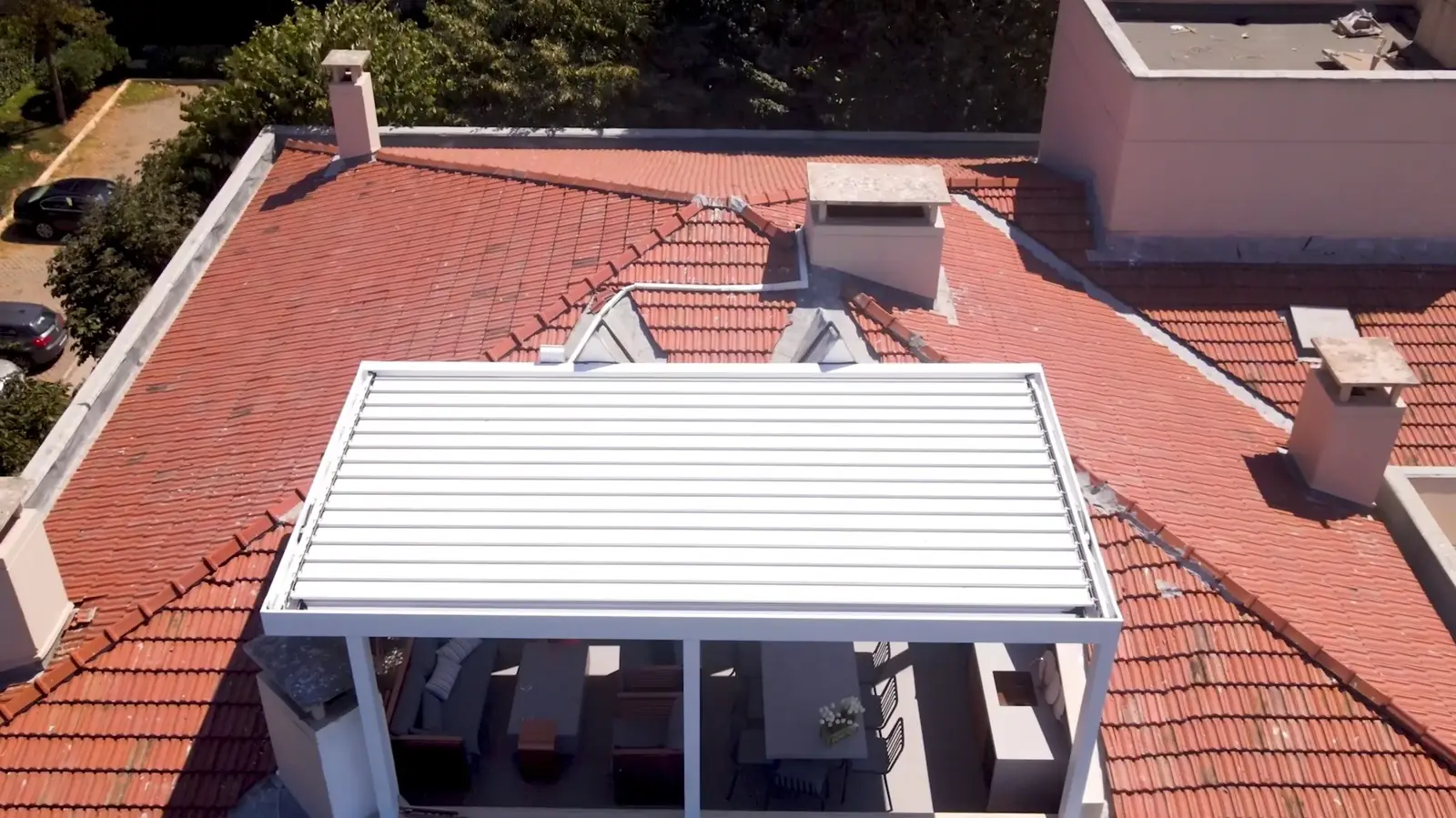
A bioclimatic pergola is a roof whose aluminium louvres rotate on a motor to open and close. Open, sun and air come in; closed, rainwater runs through the louvre channels to the posts.
Disadvantages
- Budget: as a motorised system on aluminium beams, it costs more than a fabric awning or fixed pergola. The most affordable option is the EcoSky (tilt) model, whose louvres only rotate.
- Needs power, and the line must be checked: a supply line is needed near the system for the motor and LEDs. The power lines must be checked, as unstable voltage can damage the electronic boards.
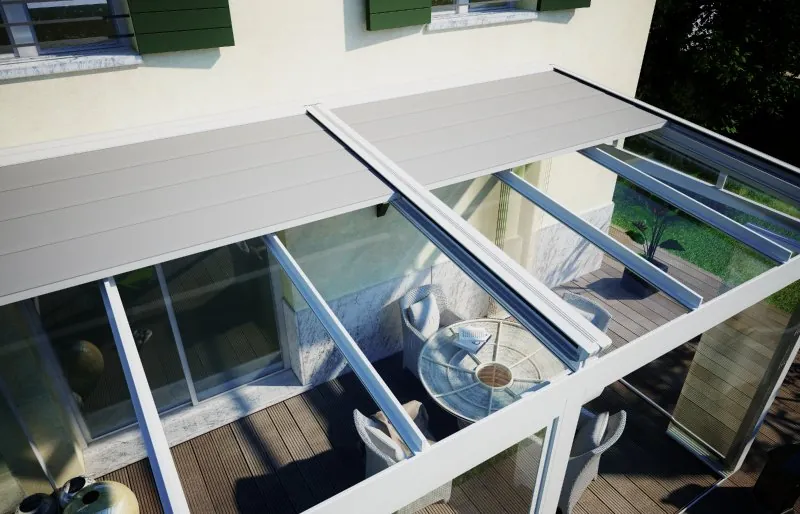
- Less light when closed: with the louvres closed the area is shaded. If you want it bright in winter too, glass panels can be added between the louvres, or consider a retractable glass roof.
- Open sides let in wind and side rain: the roof blocks rain, but slanting rain and wind come in while the sides are open. For year-round use, zip screens or guillotine glass are added to the sides, which adds to the budget.
- Condensation risk in winter: when a space with enclosed sides is heated in winter, warm, humid indoor air meets the cold aluminium louvres and condensation appears on the roof panels. To prevent it, the space must be heated with a system that removes moisture: air conditioning, a fan coil or a dehumidifier. We also recommend setting the louvres to about 5° in ventilation mode. More in: condensation on bioclimatic pergolas.
- Regular servicing is needed: for continuous, trouble-free use the system needs regular servicing. The pistons (on the piston model) and rails should be checked once a year. Systems in gardens, among trees and greenery need servicing more often, as leaves, pollen and dust build up in the gutters faster. Full checklist: bioclimatic pergola maintenance.
- Permits: apartment buildings may need management consent and sometimes municipal permission. See our permit guide.
Controlled use is essential
The key to a trouble-free bioclimatic pergola is controlled use: heating with dehumidification in winter, ventilating at a slight angle instead of leaving the louvres sealed in an enclosed space, keeping the wind and rain sensors active, having the power lines checked, and an annual service. These habits remove most of the disadvantages.
Advantages
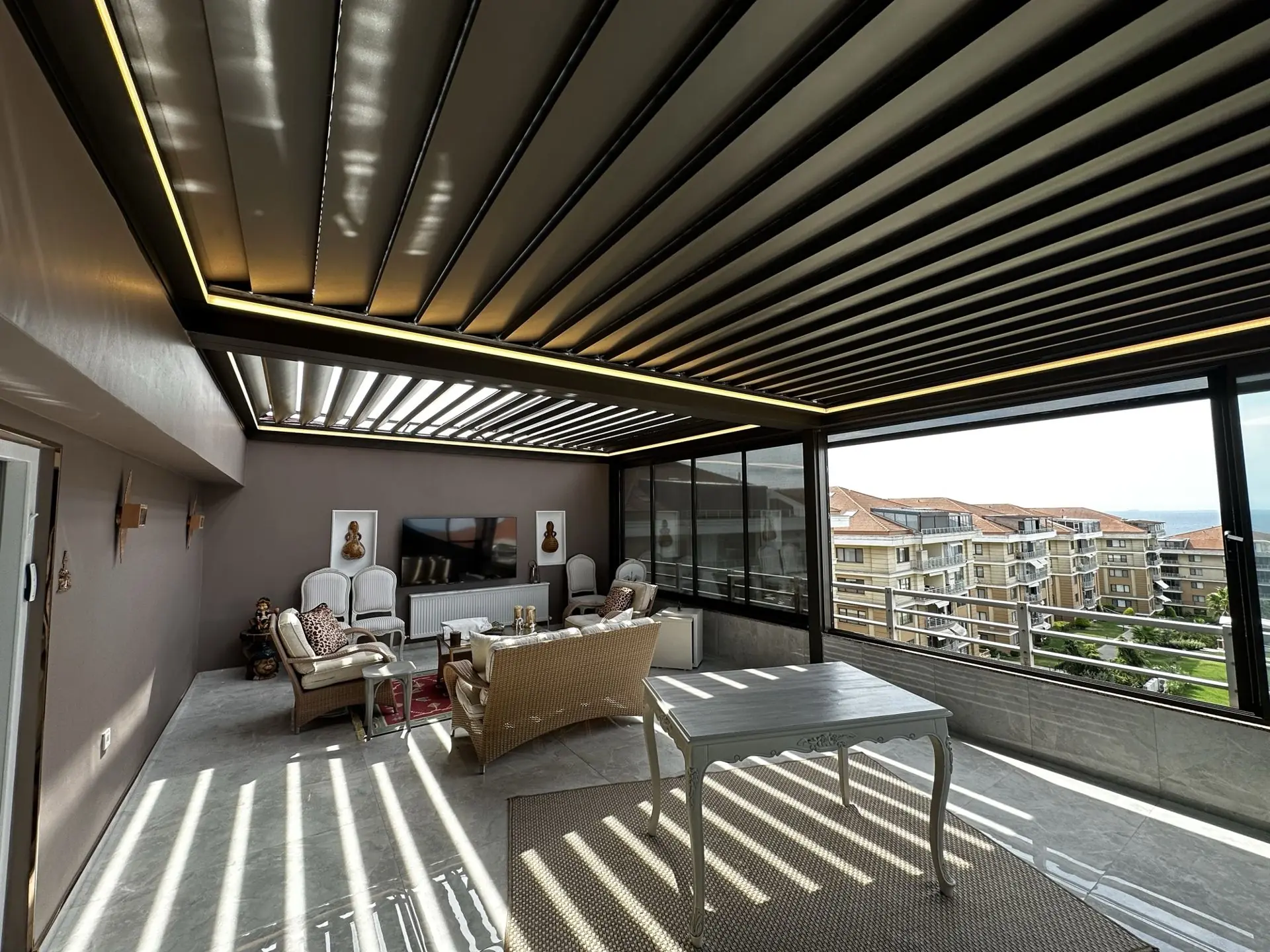
- Shade and daylight are set gradually with the louvre angle, 0°–105°.
- Watertight when closed; closes itself with a rain sensor.
- Designed for 50 kg/m² + 25 kg/m² load and 50 kg/m² wind load.
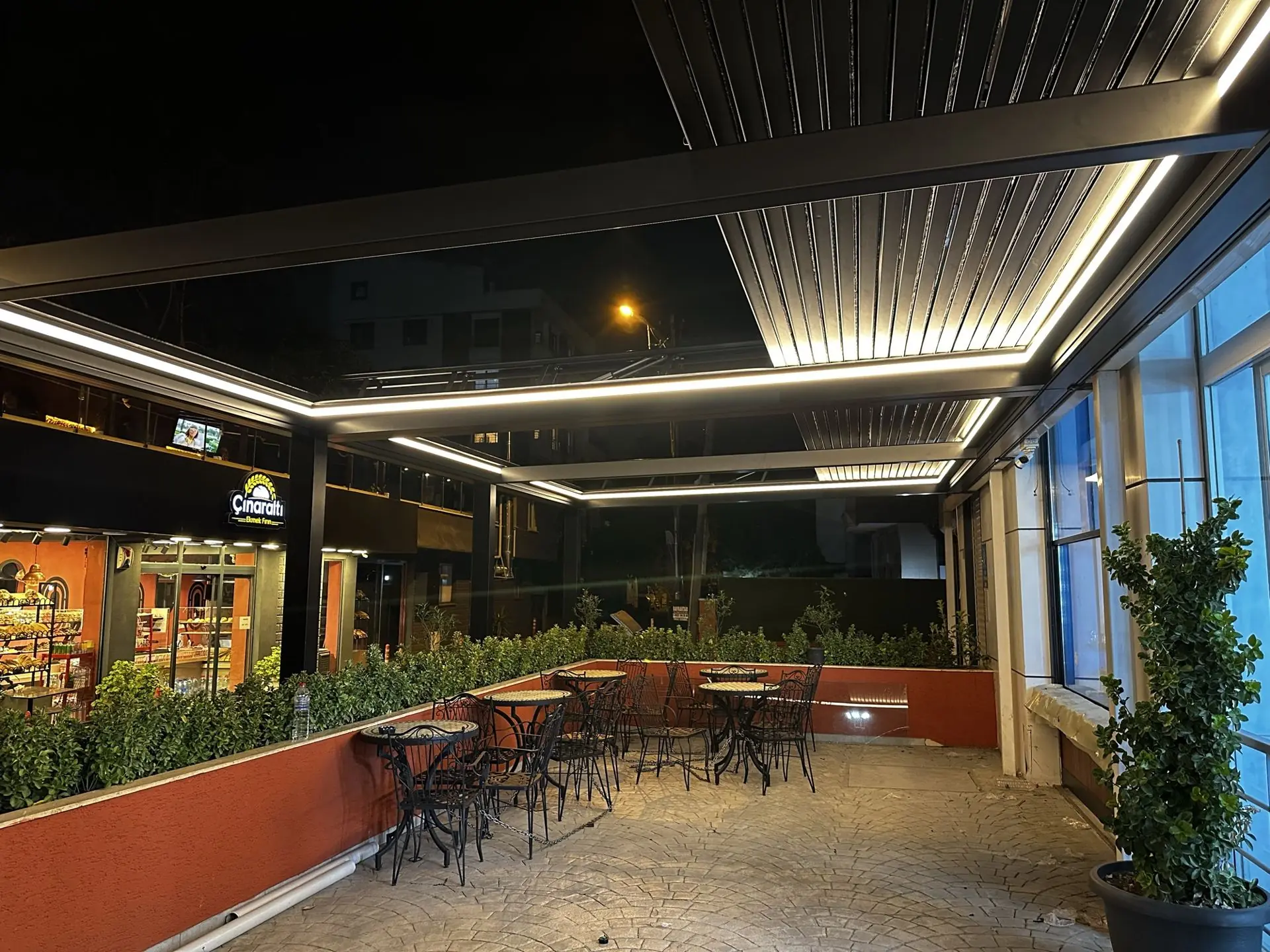
- Concealed LED lighting for evening use.
- Aluminium with electrostatic coating lasts longer than fabric.
Who is it not right for?
| Situation | Better option |
|---|---|
| Summer shade only, low budget | Articulated arm or cassette awning |
| A bright, closed room in winter | Winter garden or retractable glass roof |
| No power available | Fixed pergola |
For a comparison: Bioclimatic pergola, rolling roof or glass roof?