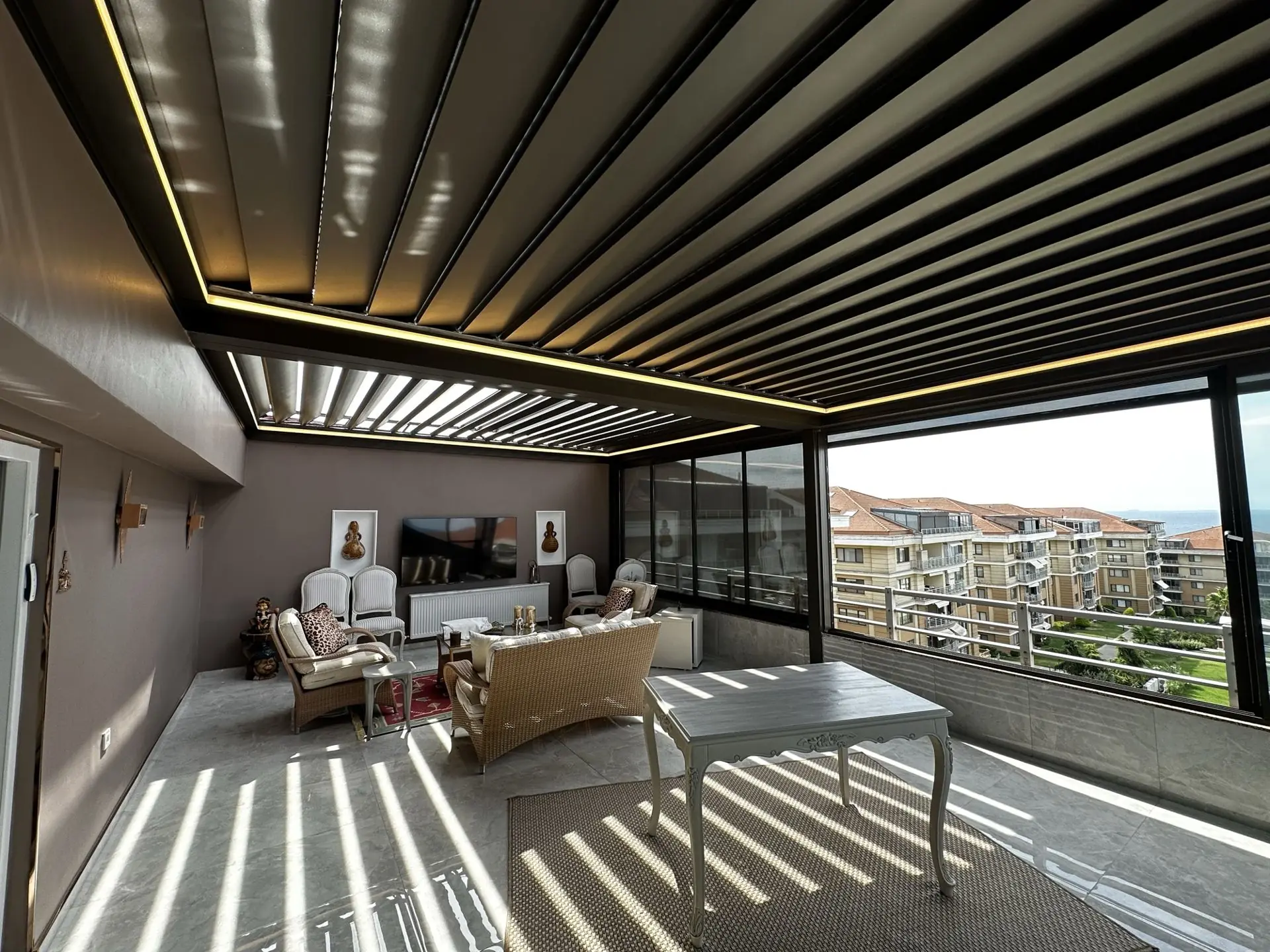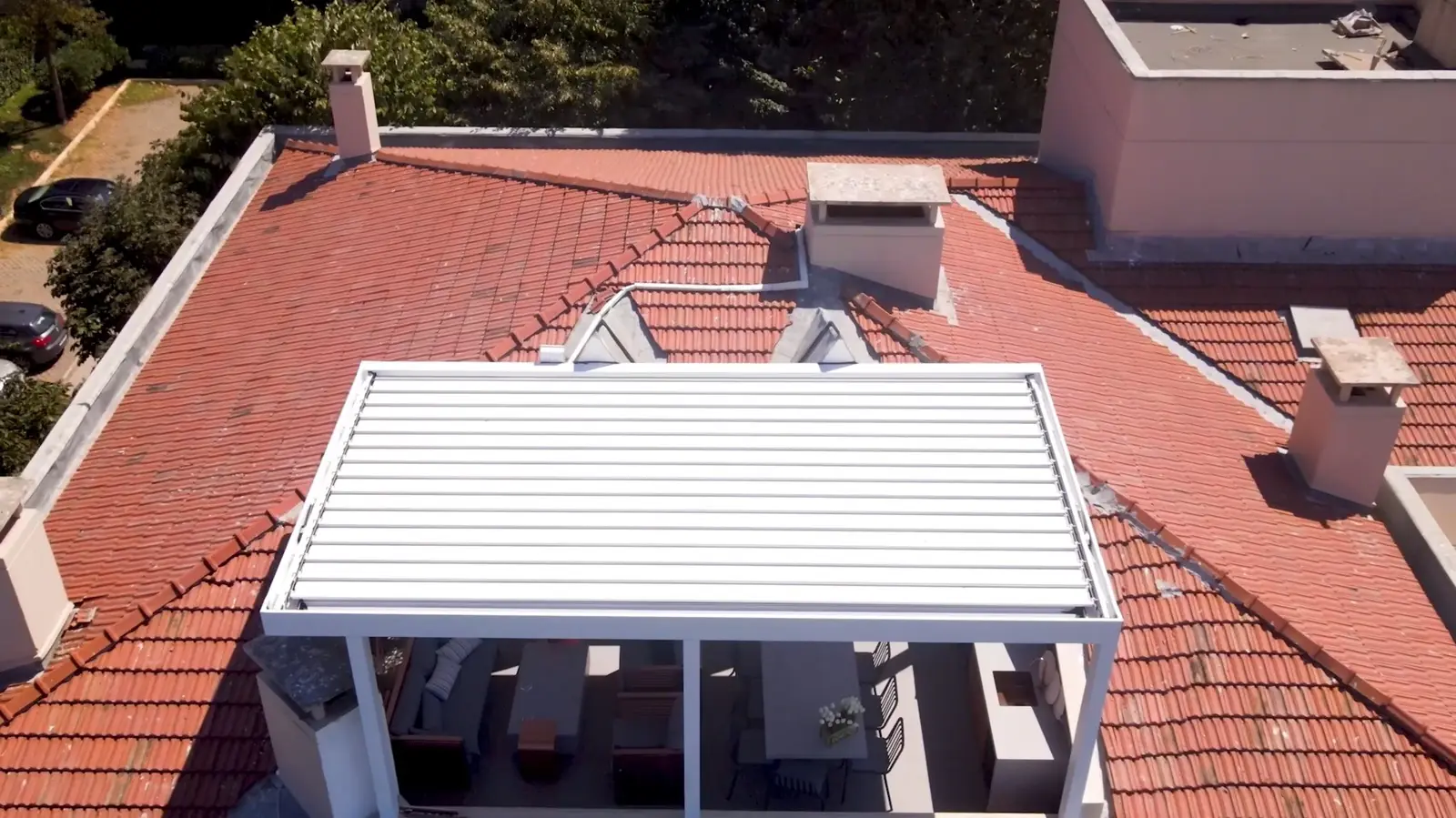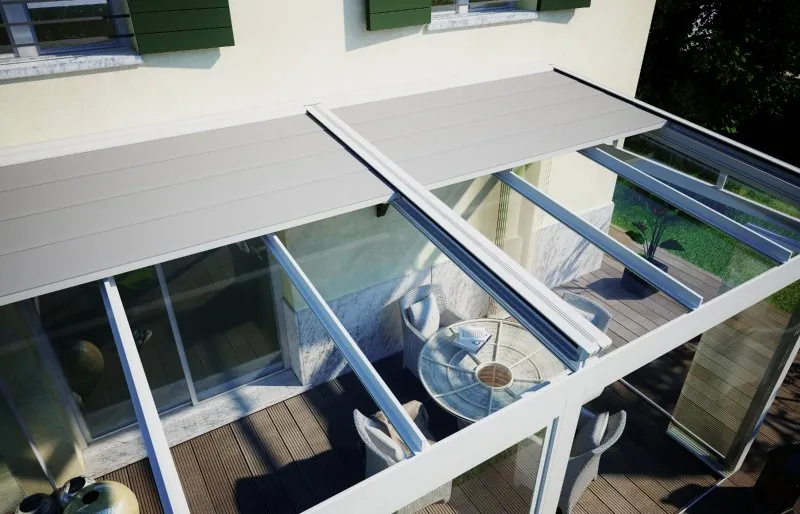
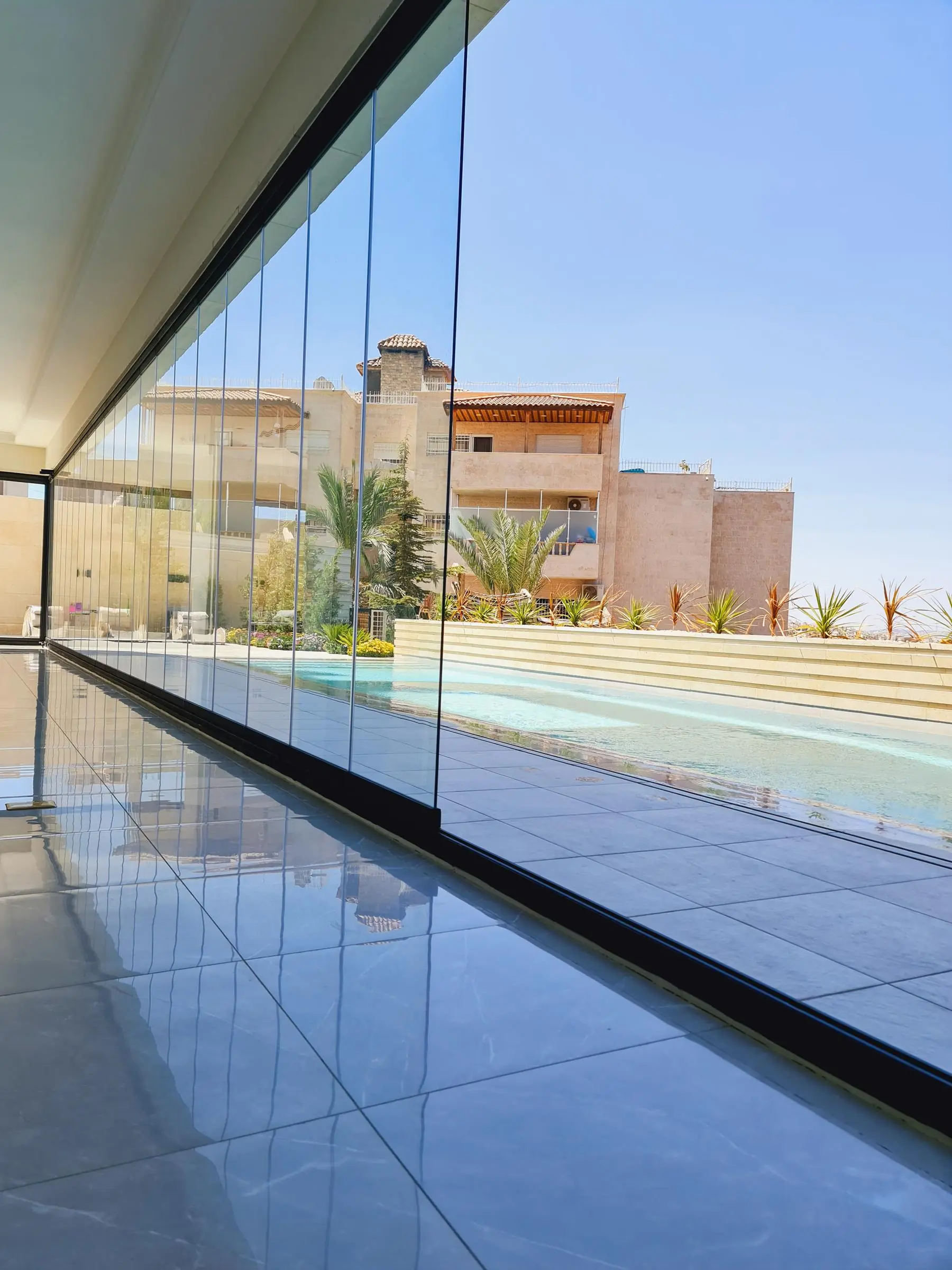
When closed, guillotine glass insulates against heat, sound and water; for better results in winter, choose the 4+12+4 insulated glass model. Brush seals in the side frames reduce draughts. We explain the difference insulated glass makes and how to clean the panels.
Does it let the cold in?
Closed guillotine glass blocks most wind and cold. Brush seals in the aluminium side frames reduce air movement between the panels and the frame. Still, there is a clear difference in winter between the single-glass and insulated-glass models.
Single glass or insulated glass?
| Single glass (8–10 mm tempered) | Insulated glass (4+12+4) | |
|---|---|---|
| Wind and rain | Blocks | Blocks |
| Thermal insulation | Medium | Good |
| Condensation | Possible in the cold | Less |
| Best use | Summer and mid-season, restaurant façades | Balconies and winter gardens used all year |
If you want to use the balcony as a living room in winter, we recommend the insulated glass model. The base profile has a 24 mm inner gap, and the glass thickness can be adjusted to your needs.
How do you clean guillotine glass?
- Lower the panels fully; the inner surfaces can easily be wiped from inside.
- For the outer surfaces, lower the panels step by step and clean each in turn.
- Glass cleaner and a soft cloth are enough; don't use abrasives.
- Dust the side rails and seals from time to time.
Safety
The system uses tempered glass, which is much more impact-resistant than ordinary glass and, if broken, shatters into small blunt pieces rather than sharp shards. When open, the lower panel acts as a balustrade.