The disadvantages of a guillotine glass balcony: it needs power and can't be opened by hand in a power cut, the full opening doesn't open, it costs more than sliding glass and needs regular servicing. In return it keeps the view clear, acts as a balustrade when open and works at one touch.
Short answer
The main disadvantages of a guillotine glass balcony are: it runs on electricity and can't be opened by hand in a power cut, the full opening doesn't open, it needs a higher budget than sliding glass and it needs servicing every 6 months. In return it keeps the view clear, the lower pane acts as a balustrade when open and it works at one touch. Below we explain what each drawback really means and how to deal with it.
How does guillotine glass work?
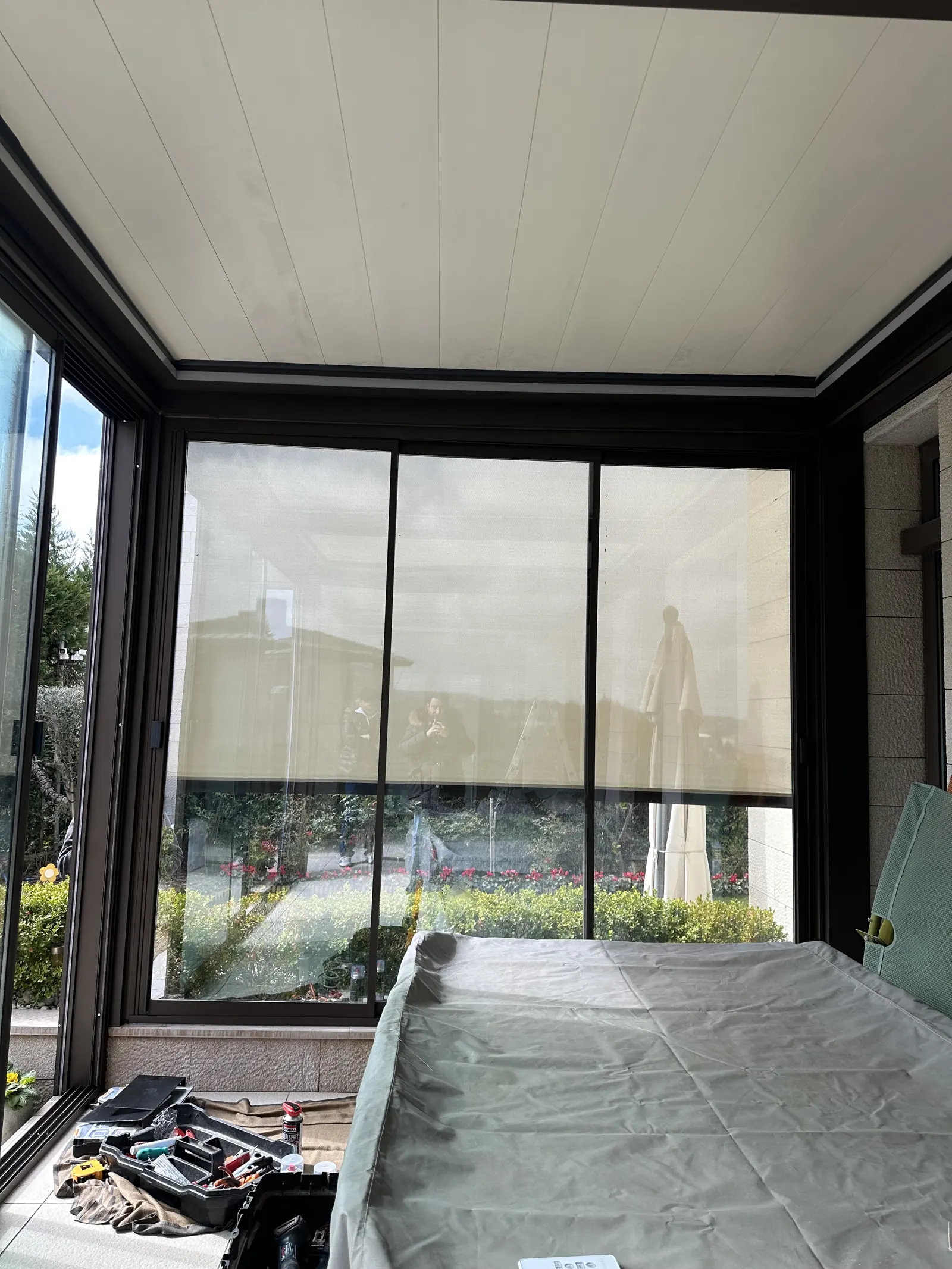
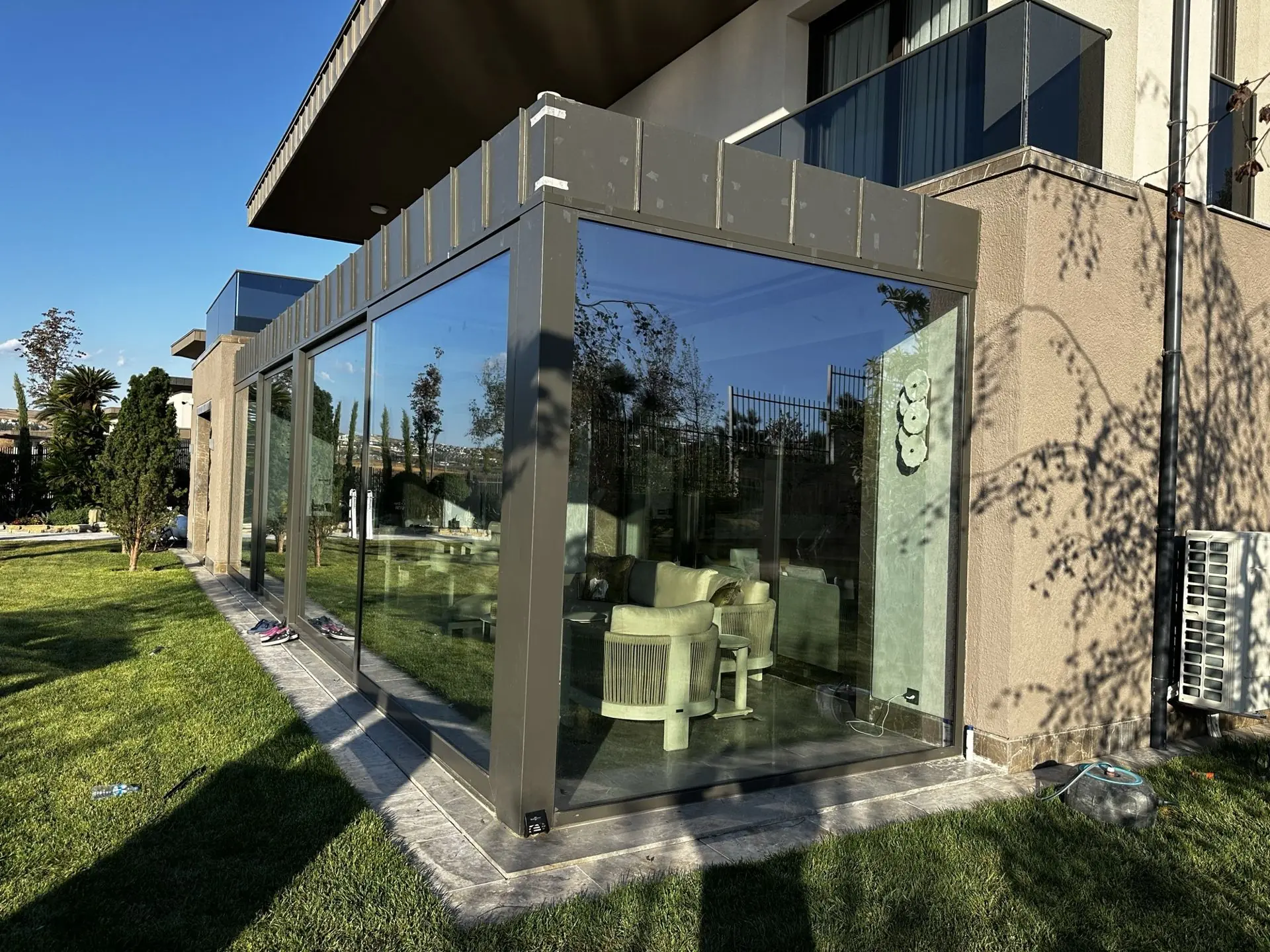
2 or 3 glass panels move up and down on a motor. When open, the panels stack at the bottom and the lower glass acts as a balustrade; when closed, they cover the whole façade.
Disadvantages and solutions
| Disadvantage | What it really means | Solution |
|---|---|---|
| Needs power | It is motorised; the panels are belt-linked to the motor, so it can't be opened by hand in a power cut | A power line is run to the site; a backup power supply (UPS) is recommended (how to open guillotine glass) |
| The full opening doesn't open | As panels stack at the bottom, the open part is about half the height (2 panels) or two-thirds (3 panels) | If the façade must open fully, folding glass |
| Budget | A motorised, more complex mechanism; usually costs more than sliding glass | Price factors: what determines guillotine glass price? |
| Needs servicing | A moving system; belt, rails and limit settings need checking | Service every 6 months; users don't adjust it |
| Not completely airtight | When closed it cuts the cold to a large extent, but moving parts always let in a little air | Insulated glass (4+12+4) improves insulation (does it let the cold in?) |
| Cleaning the outside | On high floors the outer face is hard to reach | The cleanable model, wiped from inside; it can't be added later, so choose it from the start (how to clean it) |
| Keep the path clear | In cafés and restaurants a table in front can make the second pane catch and a tooth skip when lowering | Keep the glass's path clear (chain slipping) |
| Size limit | For healthy operation the recommended maximum is 4000 mm wide × 3000 mm high | Wider façades are split into several modules |
Advantages
- Keeps the view clear: no horizontal profile between waist and head height.
- Safe when open: the lower glass is a balustrade, and no lock is needed. Bottom-up models have an anti-trap sensor.
- Doesn't fall: panes are carried on cables or chains on both sides; if one side breaks the pane jams rather than falling (can guillotine glass fall?).
- One-touch operation: by button or remote; the glass stops at any height.
- Ventilation without draughts: leave a small gap at the top for fresh air.
- Takes no space: the sashes don't swing in or stack to the side.
- Easy servicing: jointed side rails allow glass replacement without dismantling the system.
- Faults are rare: motor faults are very rare; if one occurs the motor is replaced on site.
Who does it suit?
| Need | Recommendation |
|---|---|
| Balcony or terrace with a view | Guillotine glass |
| Restaurant and café façades | Guillotine glass (keep the path clear) |
| A façade that opens fully | Folding glass |
| Economical, insulated enclosure | Insulated sliding glass |
| High floor, outside cleaning matters | Cleanable guillotine |
| Side of a pergola | Guillotine glass or zip screen |
In apartment buildings, check the management plan and the municipality's view first (is guillotine glass allowed?). Our detailed comparison: guillotine, sliding and folding glass.
As an authorised Albert Genau manufacturing dealer, SkyArt Group manufactures, installs and services guillotine glass in Istanbul. To see whether it suits your balcony, request a free survey.