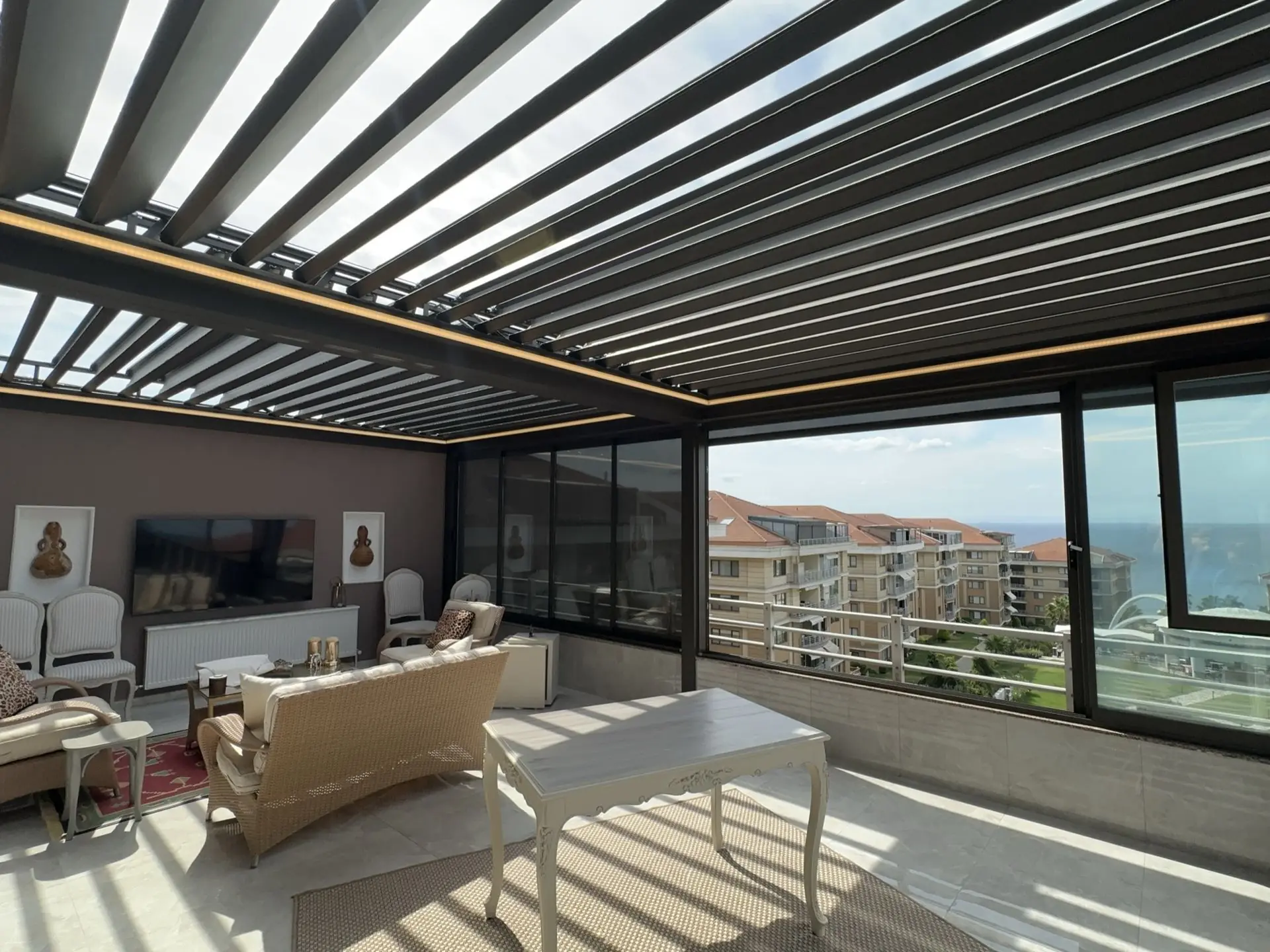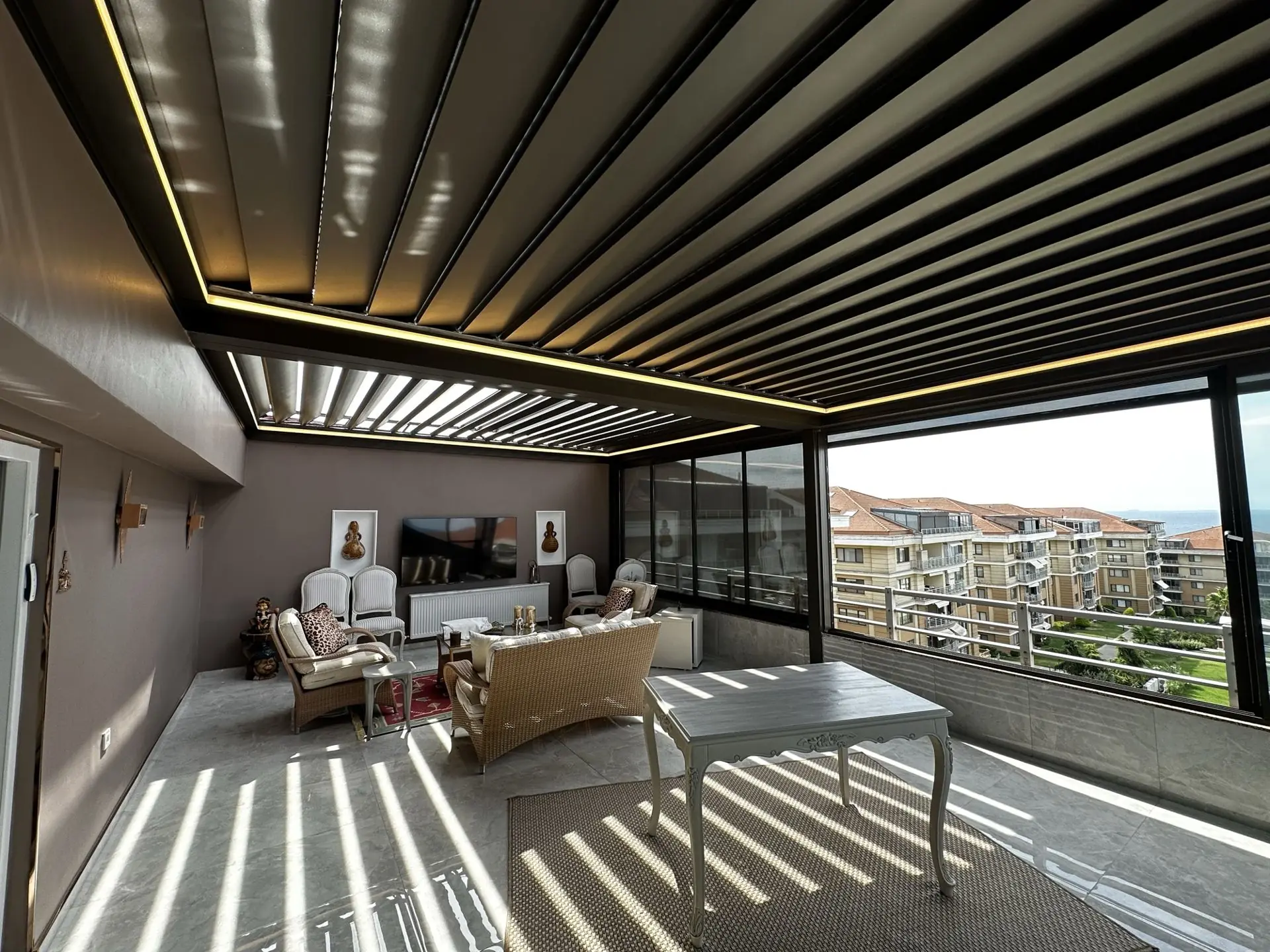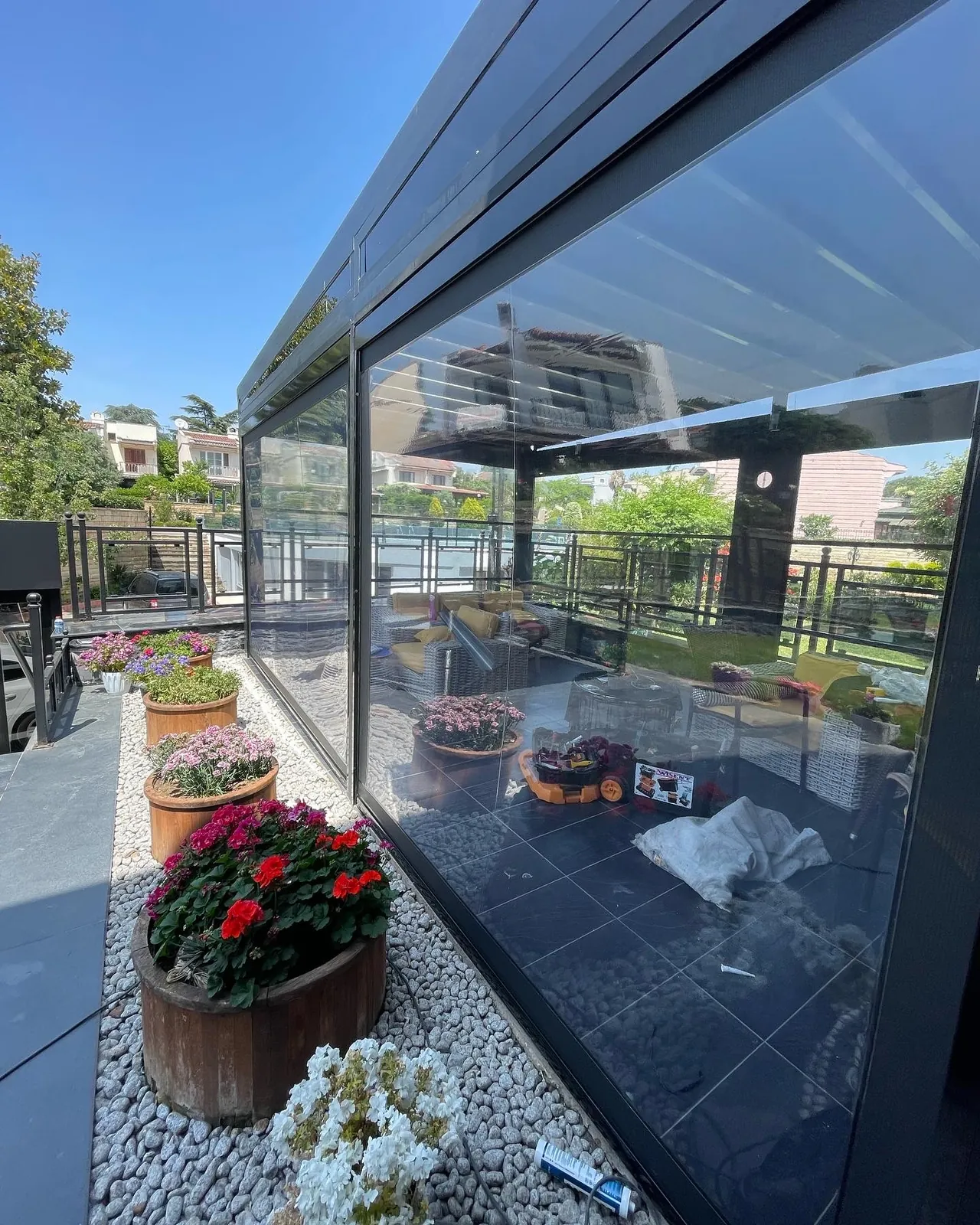
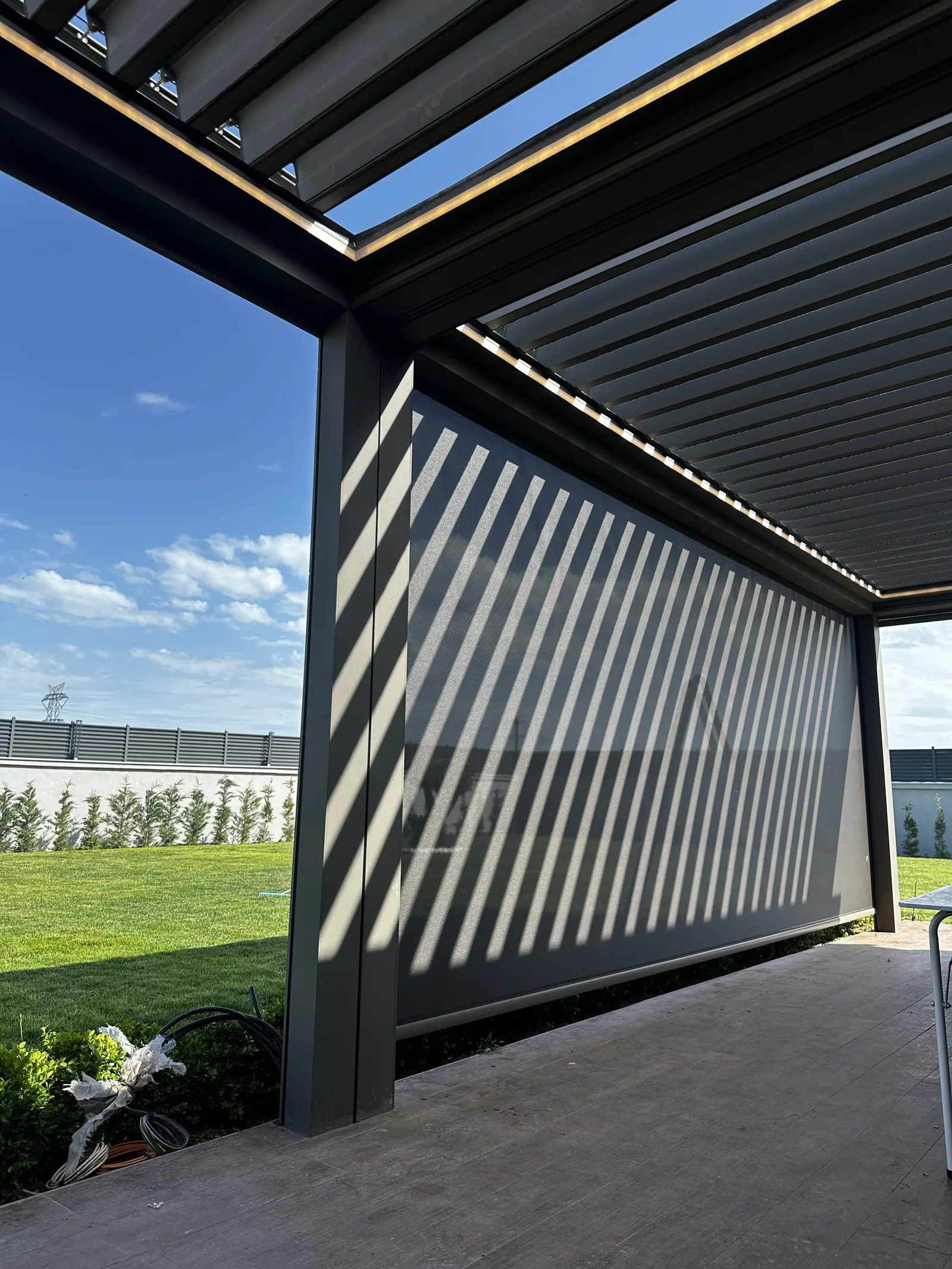
A zip screen fits a balcony and works like an insect screen; by day it is hard to see in from outside. In an apartment it may count as a facade change, so ask the management and your municipality.
How it is used on a balcony
A motorised zip screen is fitted to the open side of the balcony, its fabric locked into side rails. It cuts sun and wind, airflow continues through the micro-perforated fabric, and it also acts as an insect screen (insect-screen post). A single screen is at most 4500 × 3000 mm; wider balconies are divided.
Does it show the inside?
By day it is hard to see in from outside; at night, if the interior is lit, silhouettes may show. For privacy we choose the fabric openness together at the survey (fabric guide).
Pros and cons
| Pros | Cons |
|---|---|
| Cuts about 70% of wind | No thermal insulation |
| Filters sun, works as an insect screen | Branches or leaves in front can catch in the channel |
| Motorised, remote control | Average life 5–7 years |
Apartment permission
Fitting a system may change the facade. Most apartments need management-plan and owners' approval, and the municipality's view can vary. We cannot give a legal ruling; ask your management and municipality. See also the comparison with shutters and roller blinds; for glass see guillotine glass.
Book a free survey for size and model.