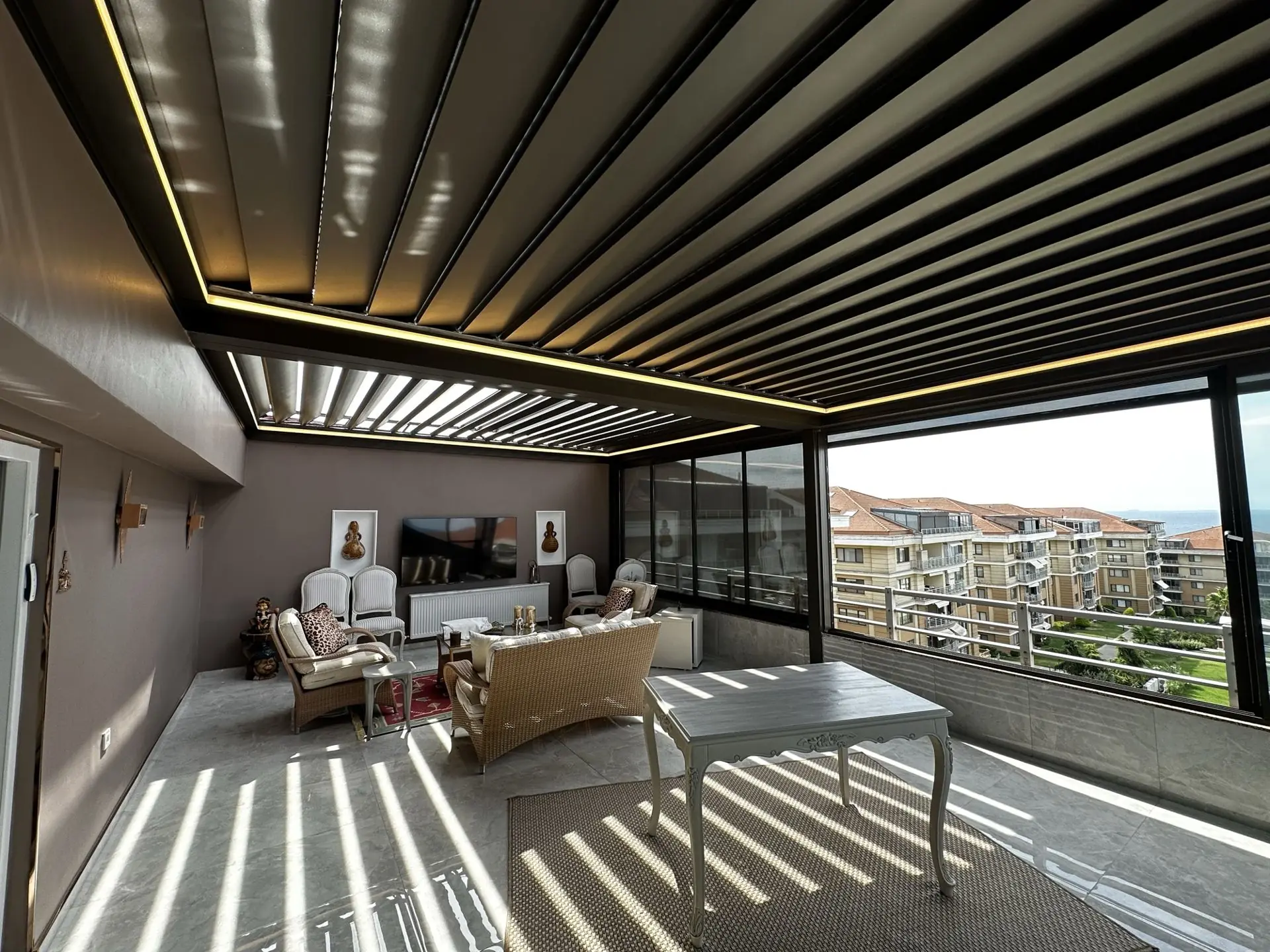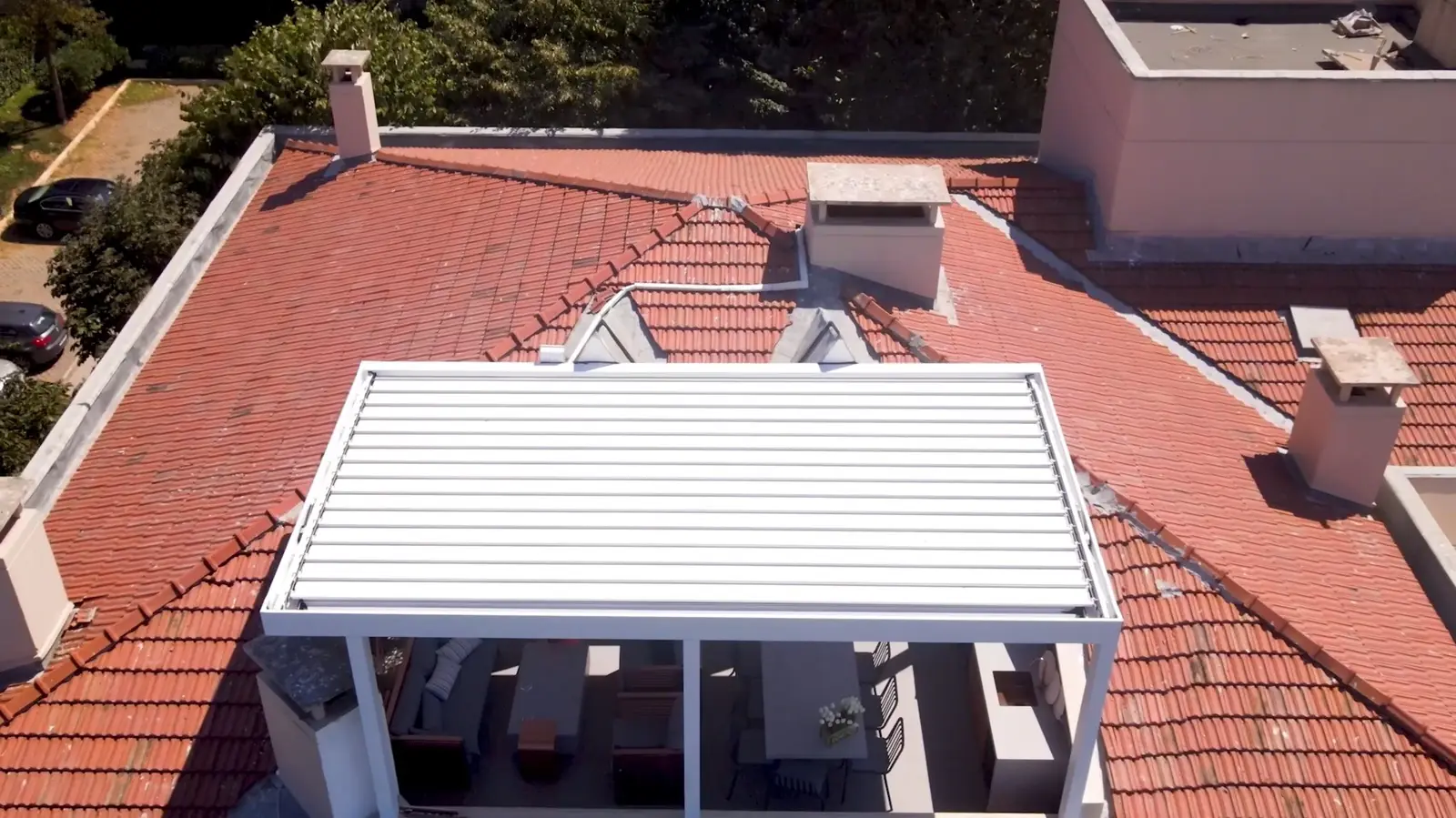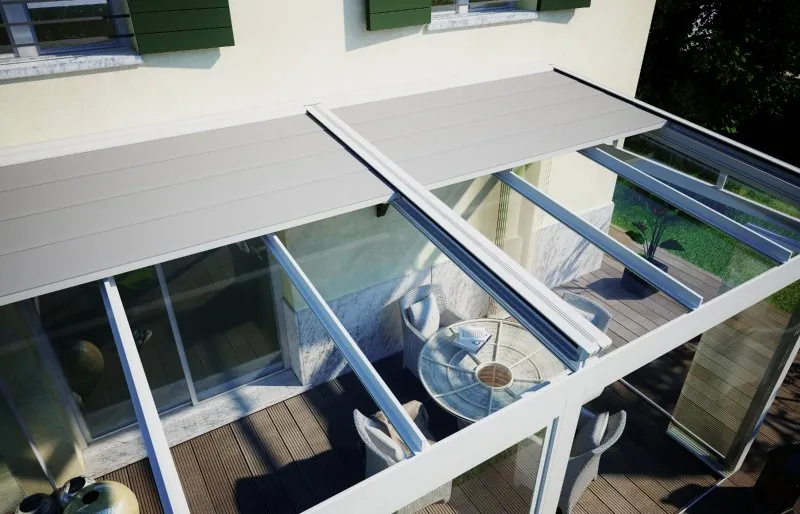
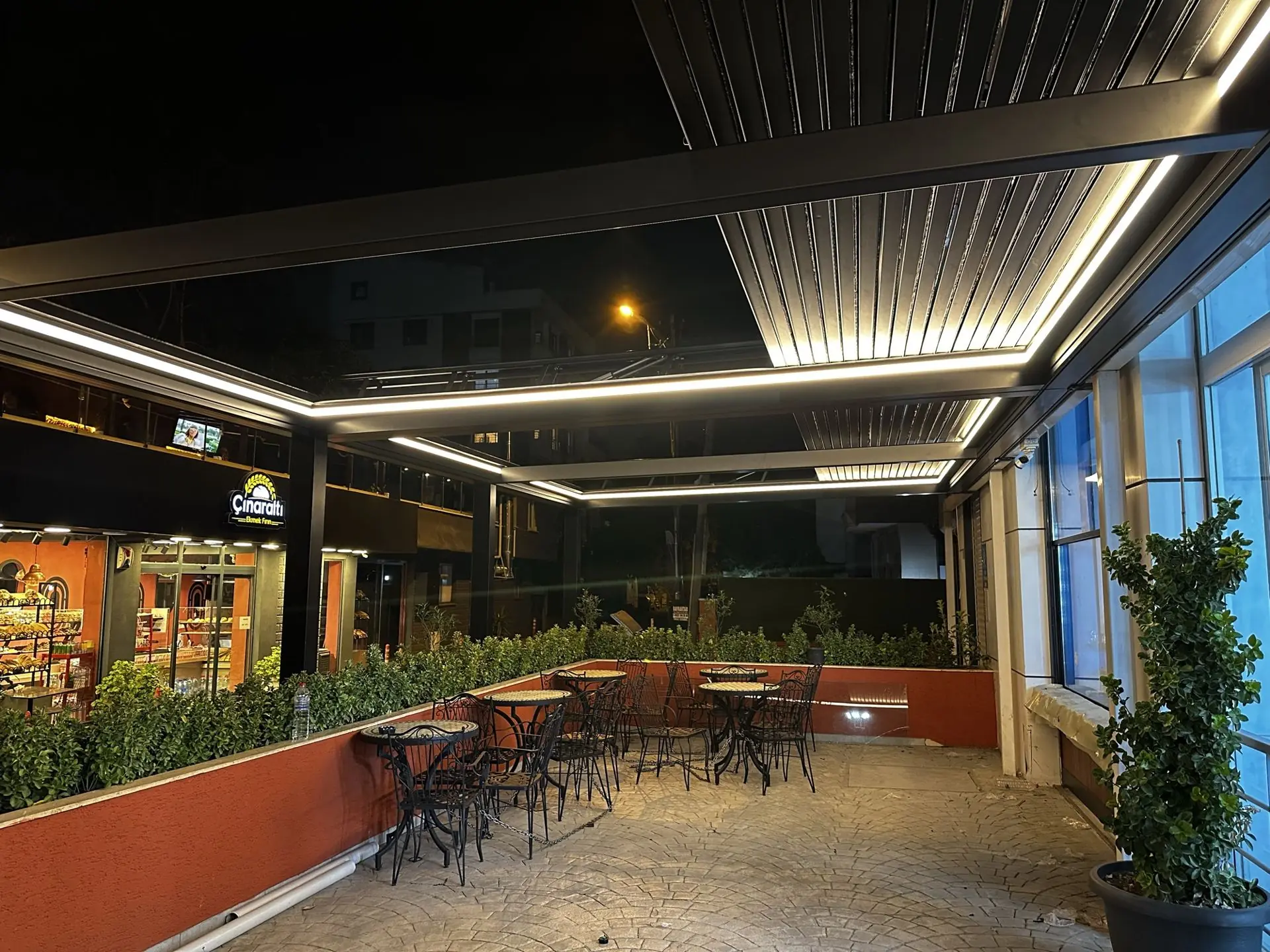
To close a terrace, balcony or pergola with a blind, three options stand out: a zip screen with its edges locked into rails, an aluminium-slat shutter and a conventional roller blind. We compare them for wind, view, darkening and everyday use.
The short answer
If you want to block sun and wind while still seeing out, choose a zip screen; for full blackout and security, a shutter; if light indoor shading is enough, a roller blind. For terraces, pergolas and winter gardens, the zip screen is the most popular choice.
Comparison
| Zip screen | Shutter | Conventional roller blind | |
|---|---|---|---|
| Material | Micro-perforated technical fabric | Aluminium slats | Fabric |
| Edges | Zipped into the rails | Slats in a rail | Free |
| Wind | Does not flap | Resistant | Flaps; not suitable outdoors |
| View out | Yes | No (when closed) | Depends on fabric |
| Airflow | Yes | Very little when closed | Yes |
| Insects | Insect-screen effect | — | Get in at the edges |
| Blackout and security | Partial | Full | None |
| Best for | Pergolas, terraces, winter gardens, balconies | Windows, doors, shop fronts | Indoors |
What makes a zip screen different: the edges
On a zip screen, a zip strip sewn onto both edges of the fabric runs in a channel inside the side rail. Because the fabric is held at both edges, it does not flap in the wind, does not leave the rail and leaves no gaps at the sides — the very problem that makes ordinary roller blinds unsuitable outdoors.
When is a shutter better?
If you want complete darkness at night, extra security against burglary or protection from hard impacts such as hail, a shutter is the better fit. But it blocks the view completely when closed and is a heavy solution for wide pergola openings.
Using them together
On many projects we fit zip screens to the sides of a bioclimatic pergola and guillotine glass to the side facing the view. In winter gardens, Sky Zip provides overhead shade.