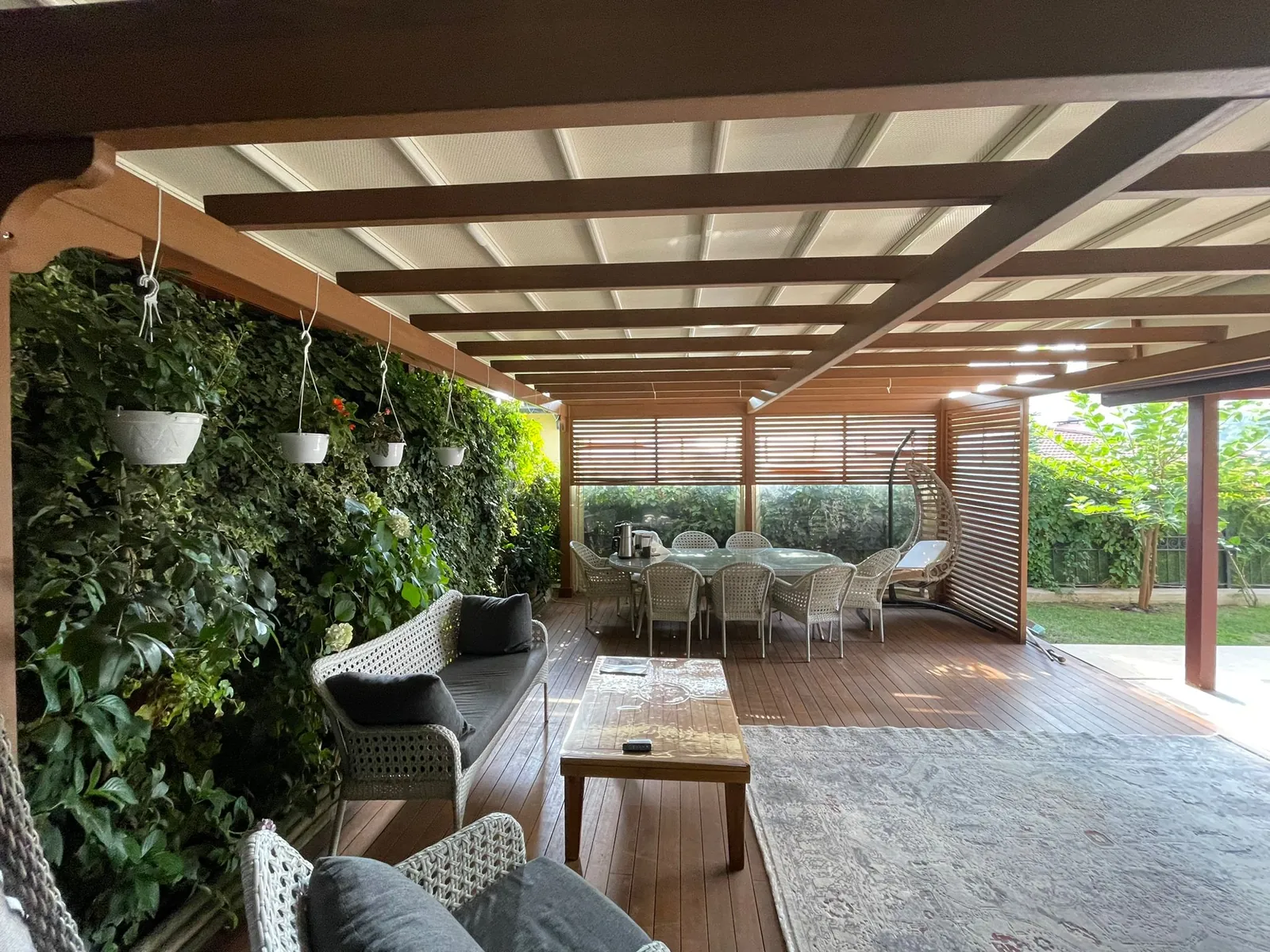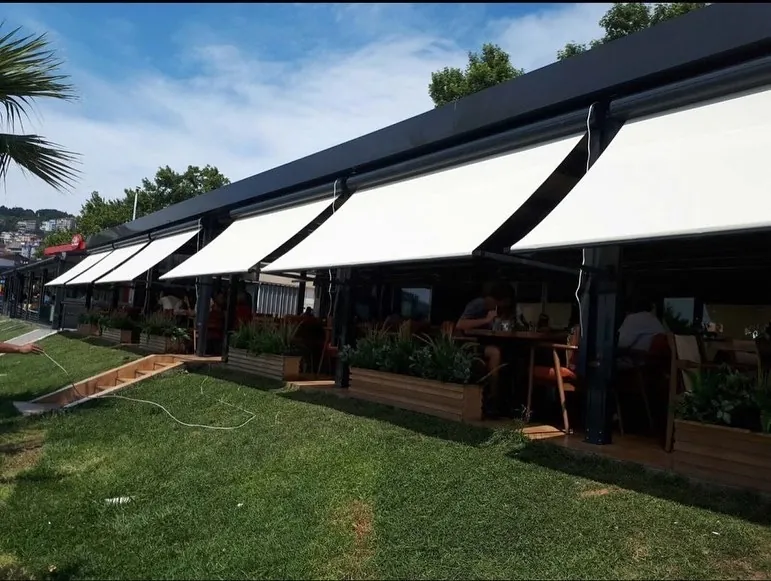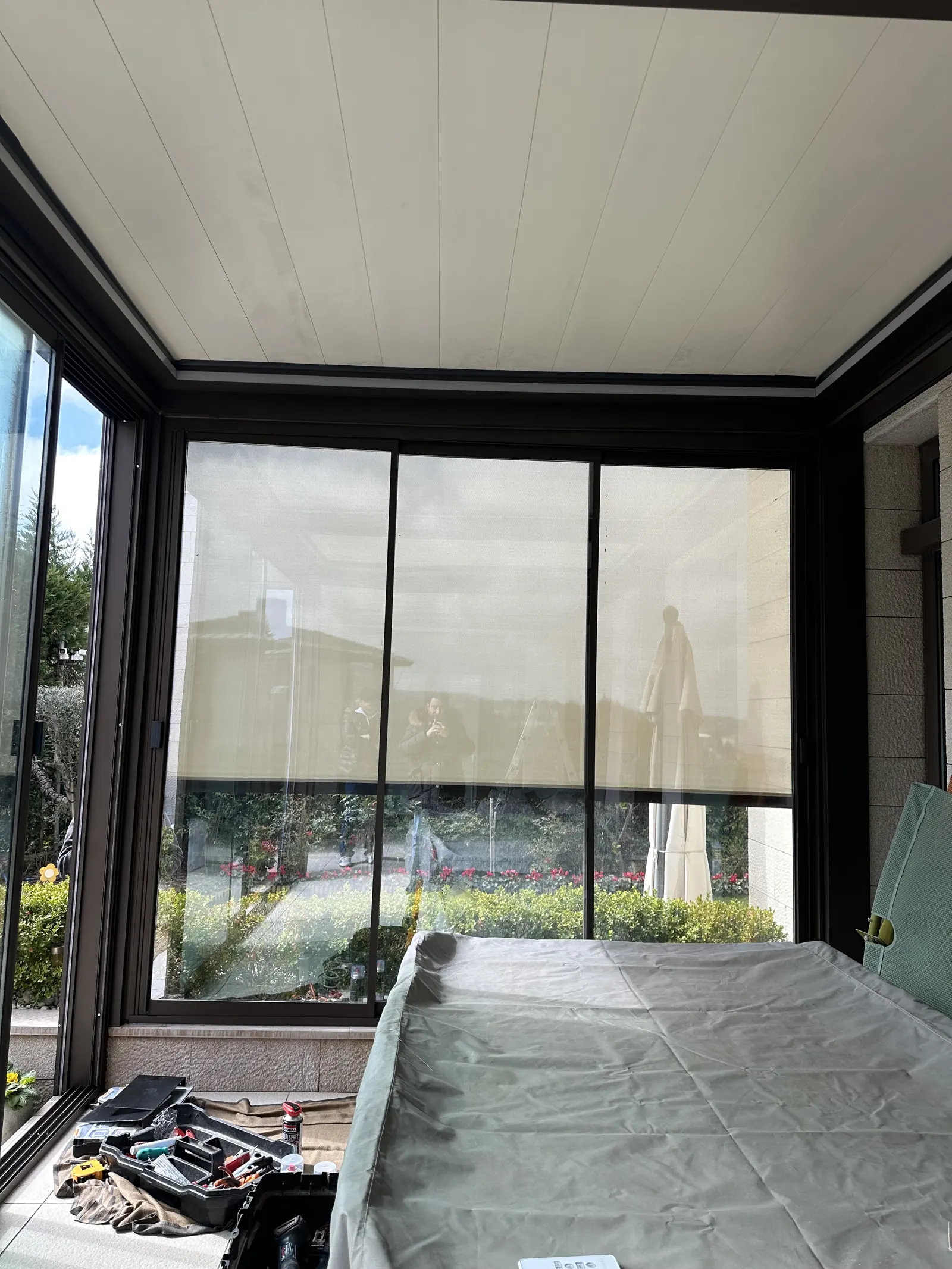
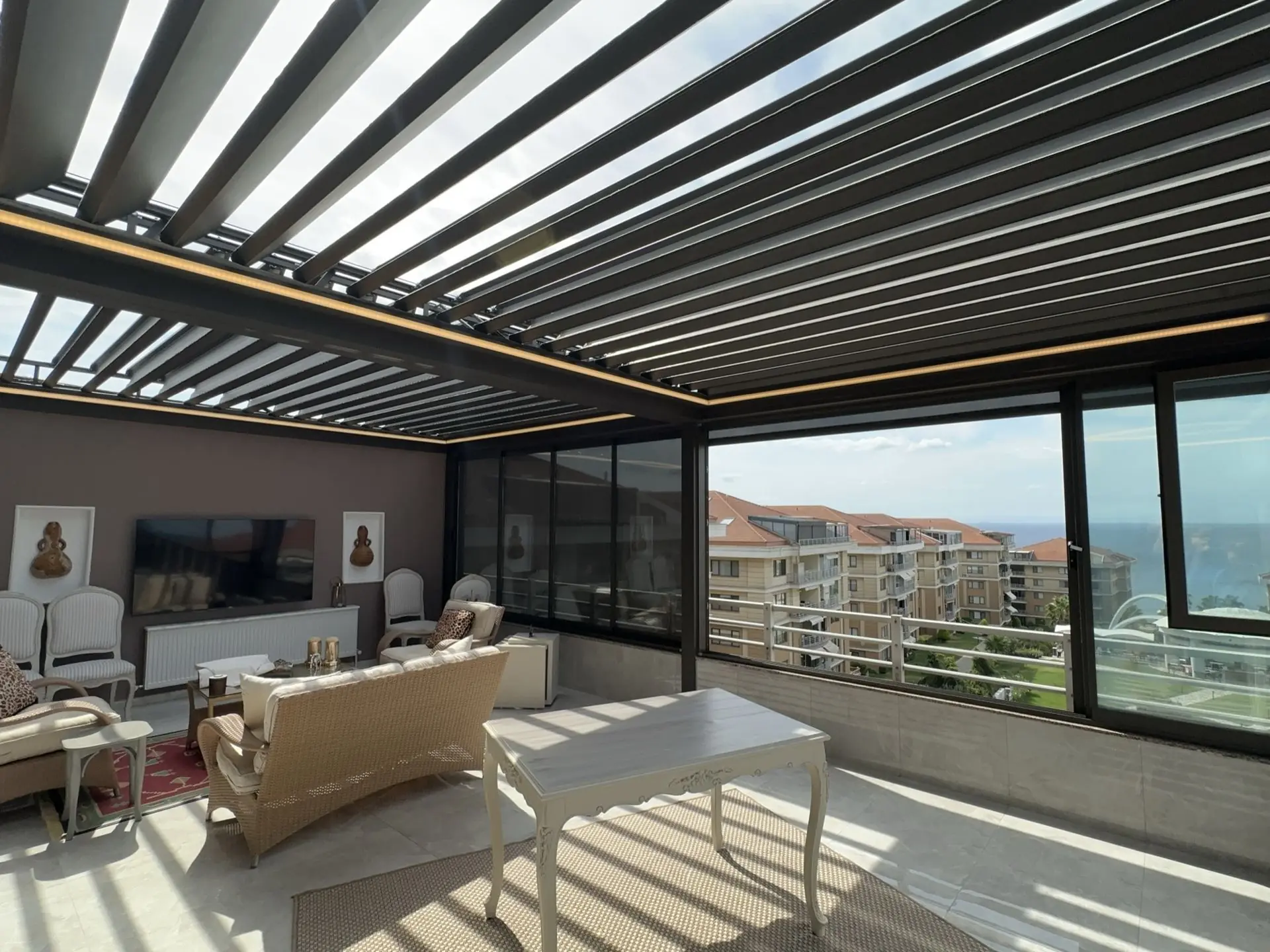
A glazed bioclimatic pergola has a motorised louvre roof that opens and closes, with the sides closed by glass or zip screens; a conservatory has a fixed glass roof. Choose the pergola if you want an openable roof, the conservatory if you want constant light and a fully enclosed room.
In short
What people search for as a "glazed bioclimatic pergola" is really two parts: a motorised aluminium louvre roof (bioclimatic pergola) and side closures such as guillotine glass, sliding glass or zip screens. A conservatory is a permanent structure with a fixed glass roof and glass walls on an aluminium frame.
As an Albert Genau authorised manufacturing dealer, SkyArt Group builds and installs both; we explain the brand in our Albert Genau post.
Comparison
| Glazed bioclimatic pergola | Conservatory | |
|---|---|---|
| Roof | Louvres rotate; open lets sun and air in, closed channels rain into gutters | Fixed glass roof; light always enters |
| Sides | Guillotine glass, sliding glass or zip screens | Guillotine, double-glazed sliding or folding glass |
| Summer heat | Louvres give shade and ventilation | Glass roofs can overheat; a Sky Zip roof screen solves it |
| Long-term leaks | On glass-panel roofs and walls the seals between panels can deteriorate over time | Fine in the first years; over time the seals between the glass panels deteriorate and it starts to leak |
| Winter humidity | Condensation can occur in a closed space; dehumidifying or air-conditioning needed | Condensation is the most common issue; heat with a dehumidifier or air-conditioning |
| Area | At most 36 m² per unit | At least 15 m²; smaller areas are priced as 15 m² |
What we see in the field: seals and leaks
Conservatories and glass-panel roof systems are lovely at first. Over the years, however, the seals between the glass panels deteriorate and the system starts to let water in. It is the most common long-term problem we see. If you choose such a system, plan from the start for the seals to be checked regularly and replaced when needed.
Which to choose
- You want to see the sky and open the roof on summer nights: bioclimatic pergola.
- You want a bright all-winter room for plants: conservatory.
- If the sides of a pergola are fully glazed the space becomes largely enclosed, so check permissions first.
Permissions
Whether a glazed structure counts as an enclosed area or affects floor-area ratio depends on local regulations. In apartment buildings the management plan and owners' approval may be needed; for houses, the municipality. We do not give legal rulings; see our permit guide and ask your municipality.
Also read about glass roof alternatives and condensation. Book a free survey and we will assess your terrace together.