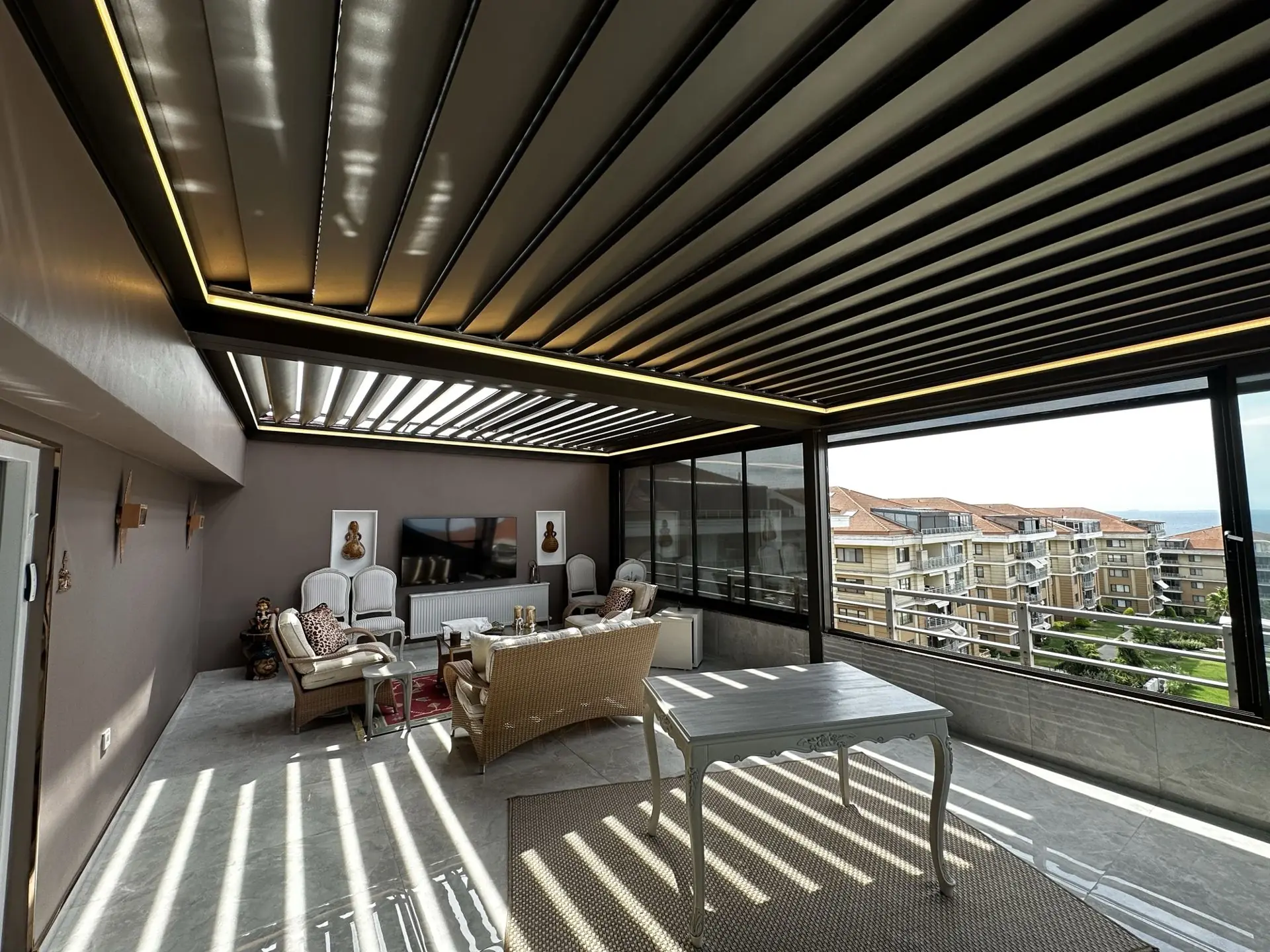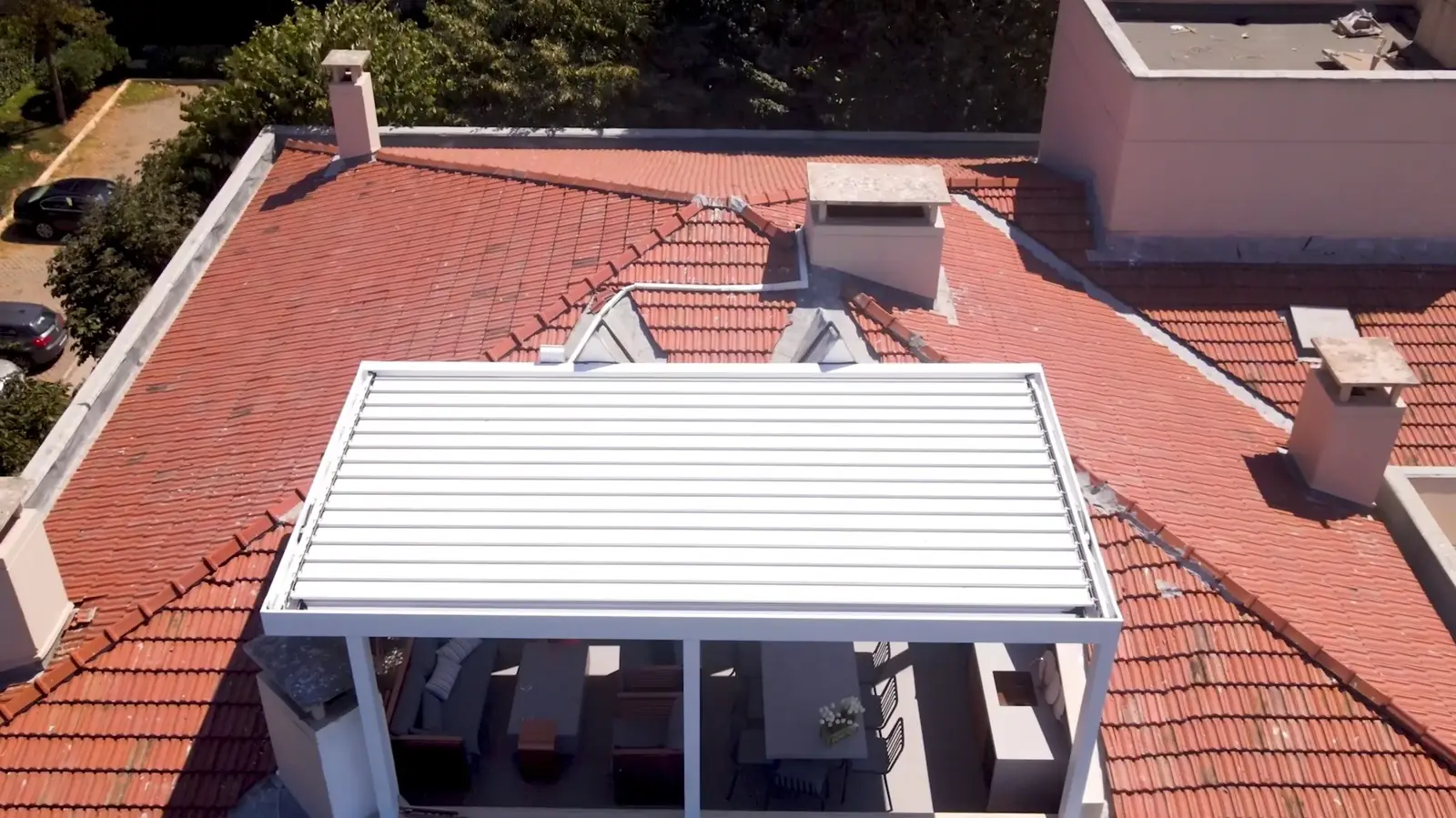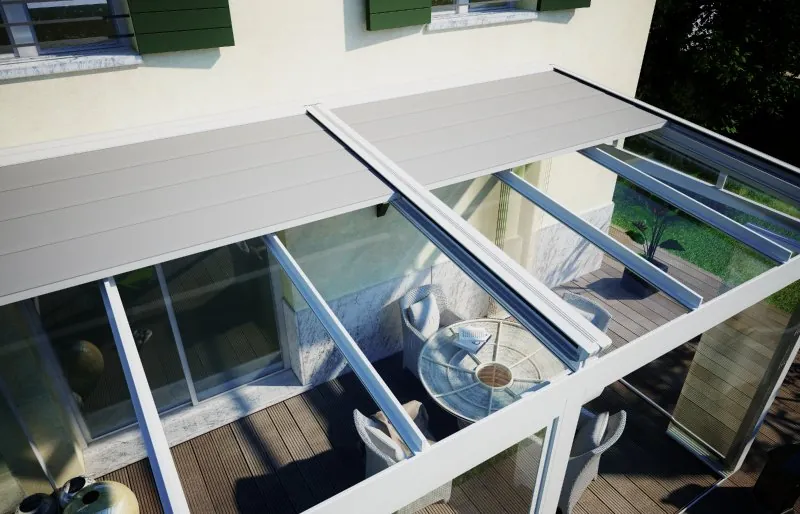
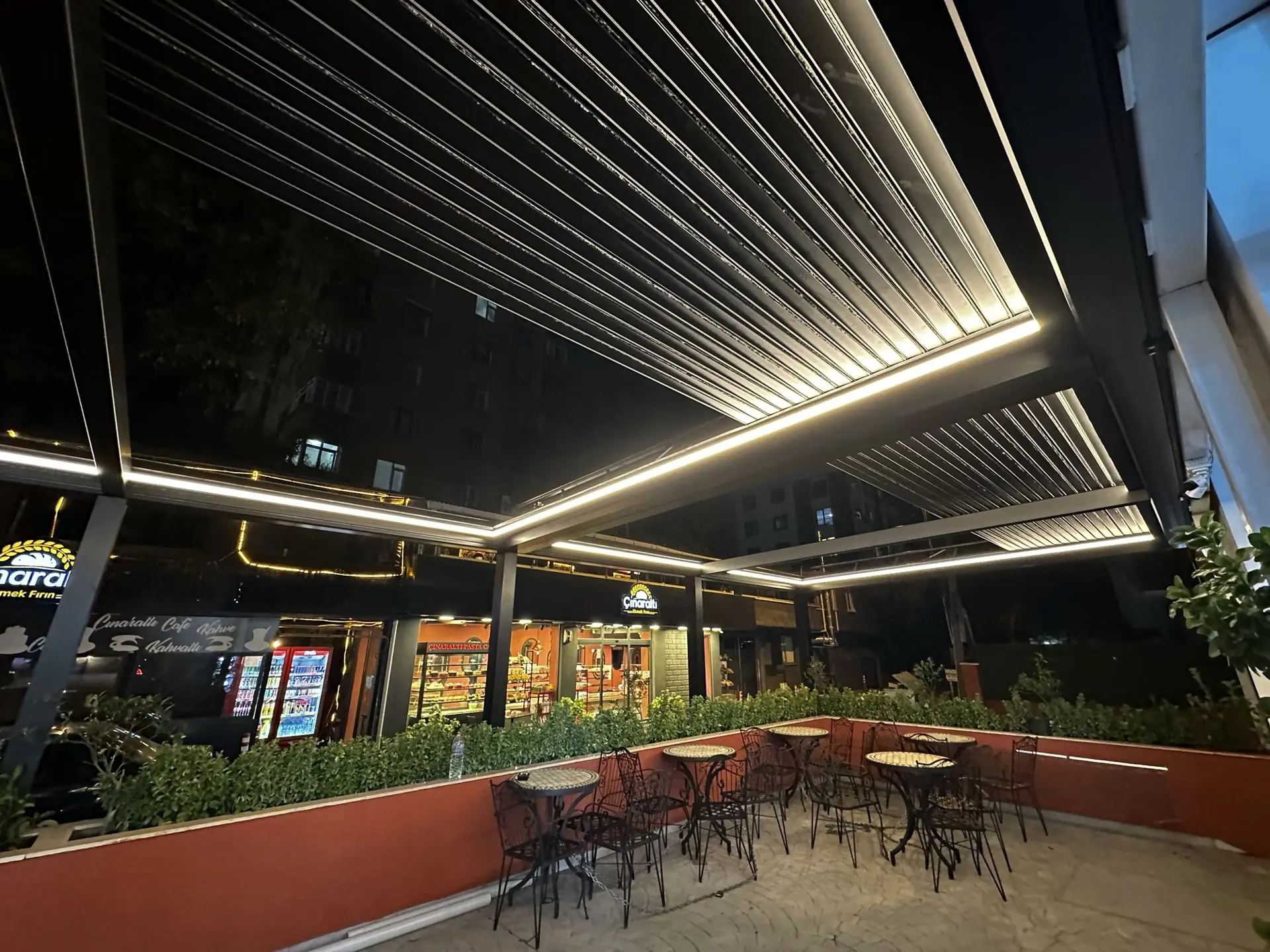
If a bioclimatic pergola with enclosed sides is heated in winter without dehumidifying, warm, humid indoor air meets the cold aluminium louvres and condensation forms on the roof panels. The fix: heat with air conditioning, a fan coil or a dehumidifier, and set the louvres to about 5° in ventilation mode. Controlled use is essential.
Why does condensation form?
In winter, when it is cold outside, the aluminium louvres of a bioclimatic pergola are cold too. When a space with sides enclosed by guillotine glass or zip screens is heated from inside, warm, humid air touches the cold louvres and droplets form on the surface, just as on the outside of a cold glass. This is condensation. Where food is cooked, many people gather or there are plants, humidity is higher and so is the risk.
Fix 1: heat with a system that removes moisture
In winter the enclosed space must be heated with a system that also removes moisture:
| System | How it helps |
|---|---|
| Air conditioning | Lowers humidity while heating |
| Fan coil | Heats by circulating air, reducing humid air building up at the roof |
| Dehumidifier | Directly removes moisture from the air; can be used alongside other heaters |
Spaces heated with a heater that does not remove moisture (for example devices that only warm the air and add humidity) are very likely to see condensation.
Fix 2: louvres at 5°, ventilation mode
Rather than leaving the louvres sealed in an enclosed space, we recommend setting them to about 5° in ventilation mode. This small opening lets the humid air collecting under the roof escape, while heat loss stays limited.
Controlled use is essential
- Heat the enclosed space in winter with dehumidification: air conditioning, fan coil or dehumidifier.
- Don't leave the louvres fully closed; use them at about 5° in ventilation mode.
- Where food is cooked, consider an extractor hood or extra ventilation.
- In the mornings, open the louvres a little more for a few minutes to change the air.
- Have the gaskets and gutters checked at the annual service.
Does condensation damage the system?
Condensation is not a manufacturing fault but a physical effect, prevented by correct use. If it keeps happening, though, dripping water can damage furniture and floors and reduces comfort. So if you plan to use the space enclosed in winter, we plan heating and ventilation together at the start of the project.
Related: Bioclimatic pergola disadvantages · How to heat a winter garden · Maintenance checklist