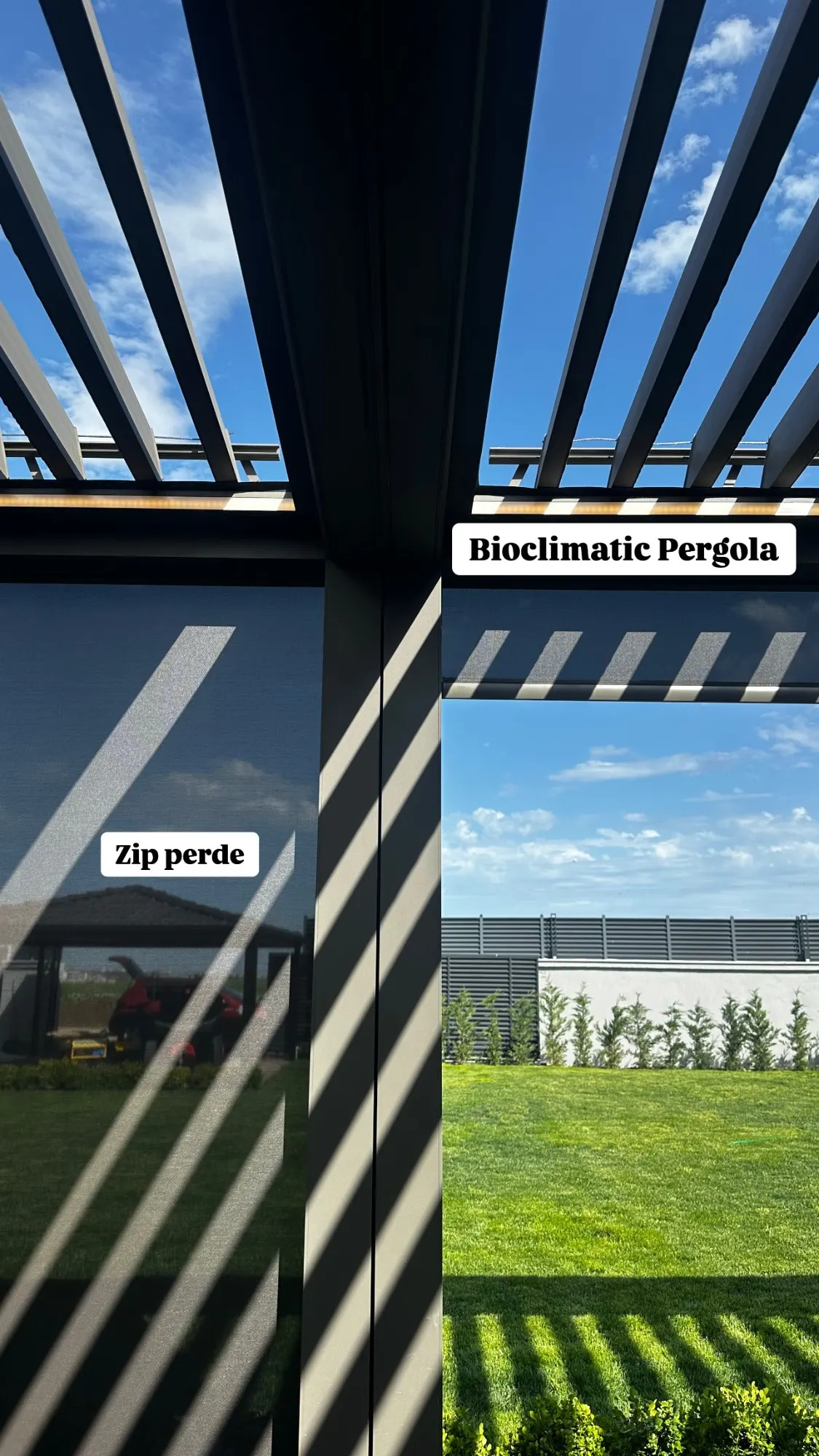
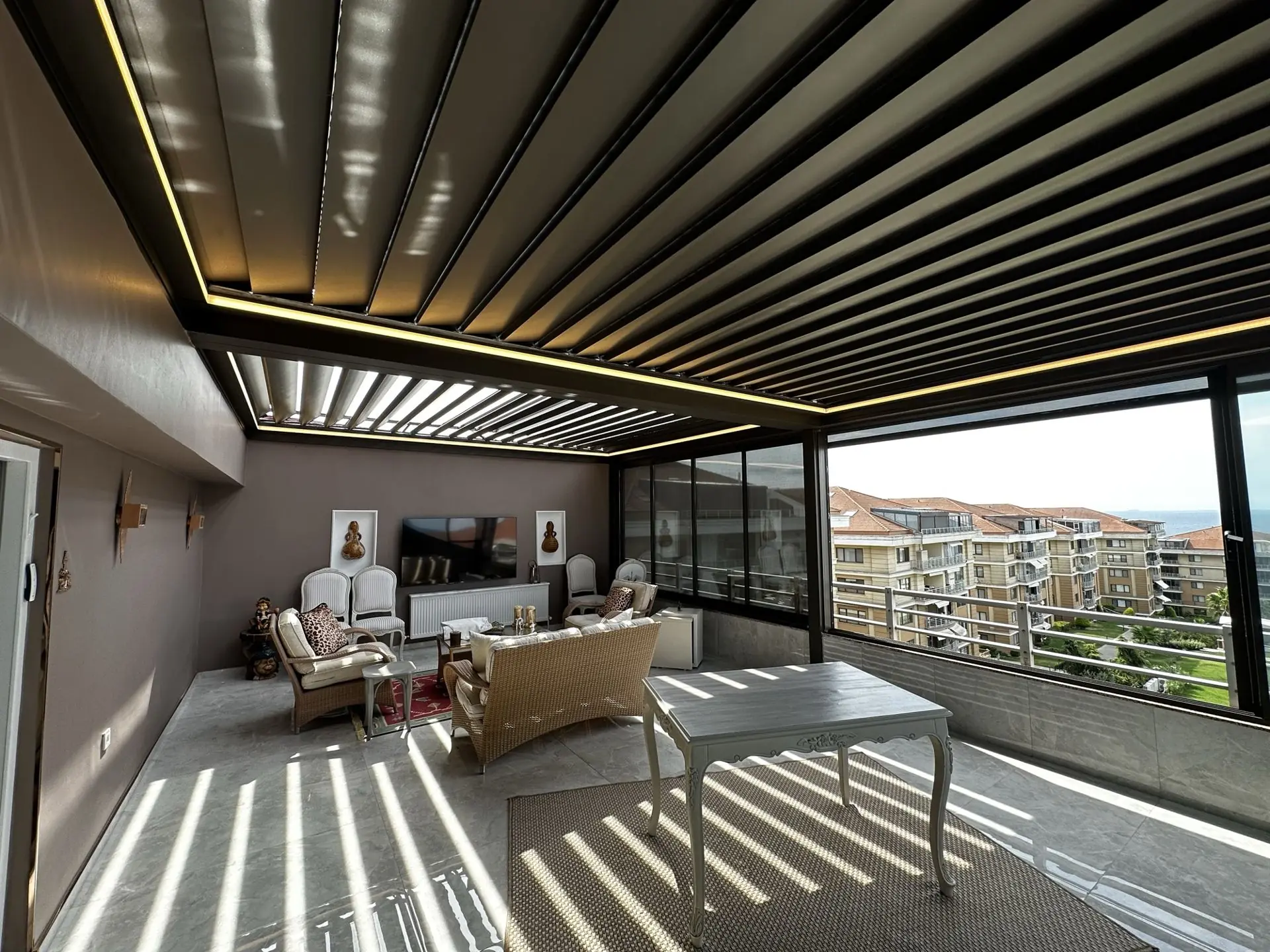
On a bioclimatic pergola the louvres are closed in rain, snow and wind; on sunny days an angle gives shade, and open on a cool evening they ventilate. There is no rain or wind sensor, so you close them with the remote.
Short answer
On a bioclimatic pergola the louvres are closed in rain, snow and windy weather; on a sunny day they are angled for shade and ventilation. The system has no rain or wind sensor; you close it with the remote. Controlled use decides both lifespan and comfort.
Louvre position by situation
| Situation | Louvre position | Why |
|---|---|---|
| Rain or snow | Closed | Water and snow load are directed to the gutter on closed louvres |
| Windy weather | Closed | Wind strains the mechanism on open louvres |
| Sunny day | Angled (sun breaker) | On the piston model the louvres rotate up to 110°; shade and air together |
| Cool evening | Open | Sky view and ventilation |
| Heating an enclosed space | About 5° ventilation mode | Reduces condensation on the ceiling |
| Unused winter day | Closed | Keeps leaves and dirt out |
Piston vs scissor model
- Piston: louvres rotate in place (sun breaker, wind/rain position, ventilation mode); they can also gather to the back. When opened in place, gaps remain at the front and back.
- Scissor: the roof opens front to back and leaves a ventilation gap at the front; simpler, with less electronics (how it works).
Common mistakes
- Leaving the louvres open when rain starts; with no sensor, the remote is yours to use.
- Closing them fully on a winter day while heating an enclosed space, with no dehumidifier or air conditioner; see the condensation guide.
- Trying to close the louvres by hand in a power cut: there is no manual lever; a power supply unit is recommended.
- Expecting to pair a spare remote in advance: it cannot be paired beforehand; if one fails, service pairs a new one (remote guide).
See our maintenance guide; for a new pergola request a free survey.