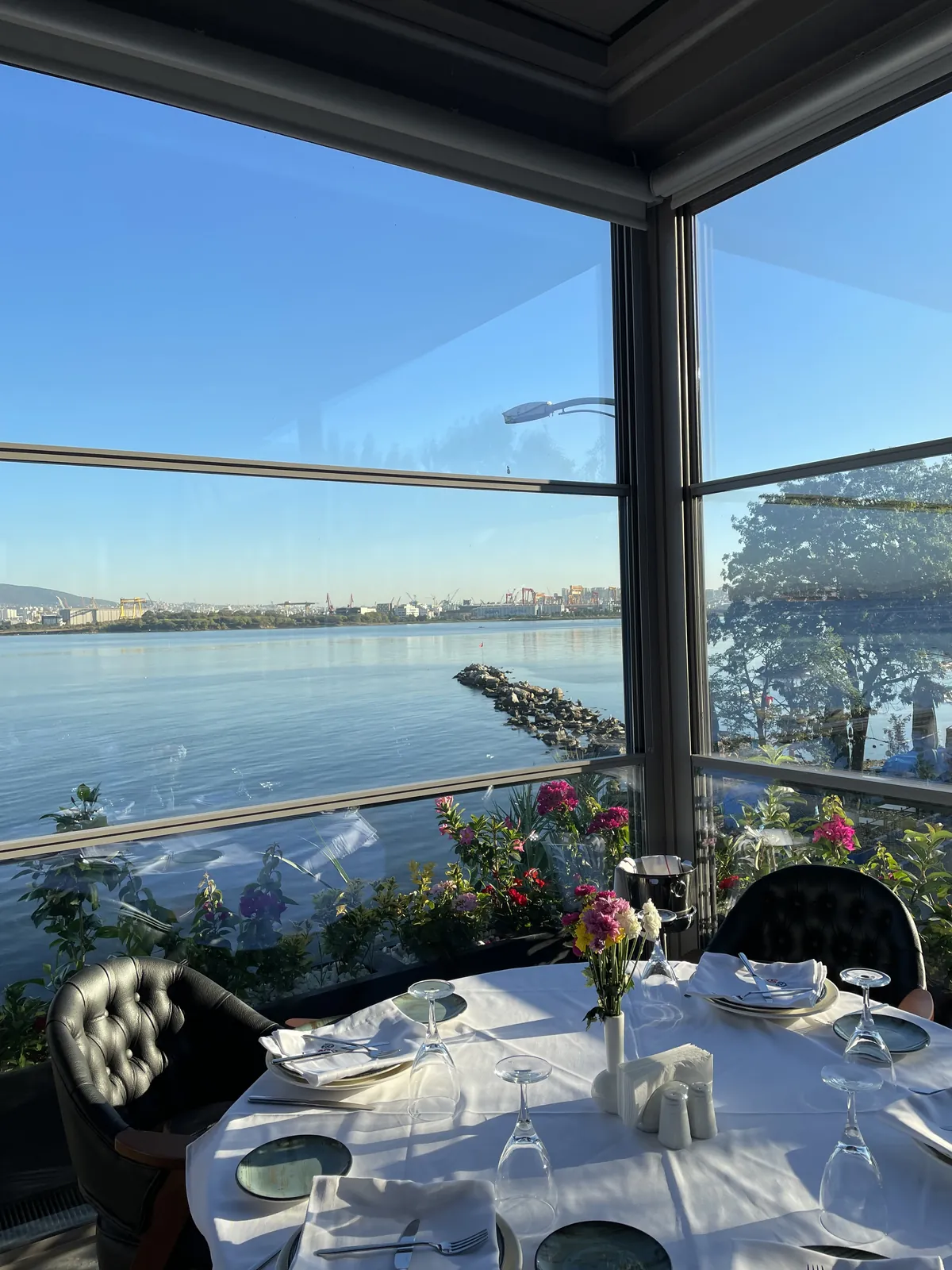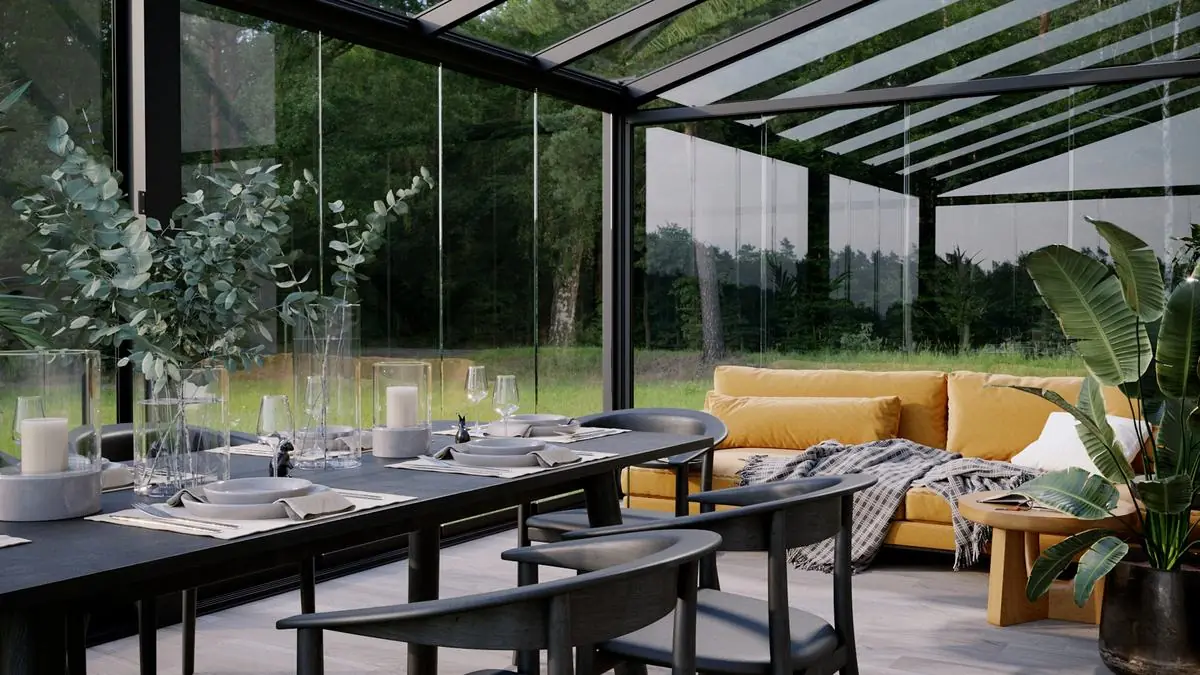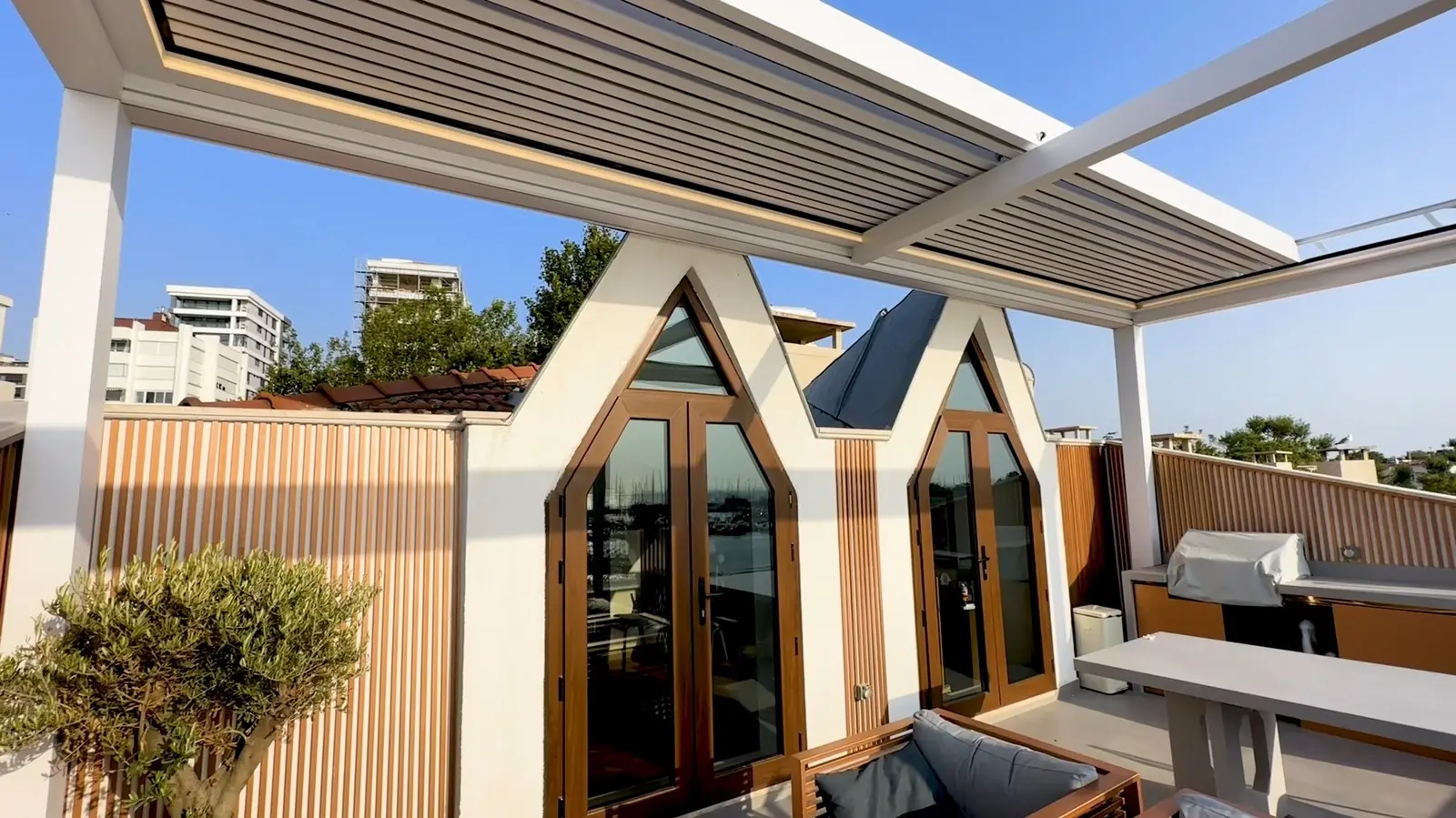
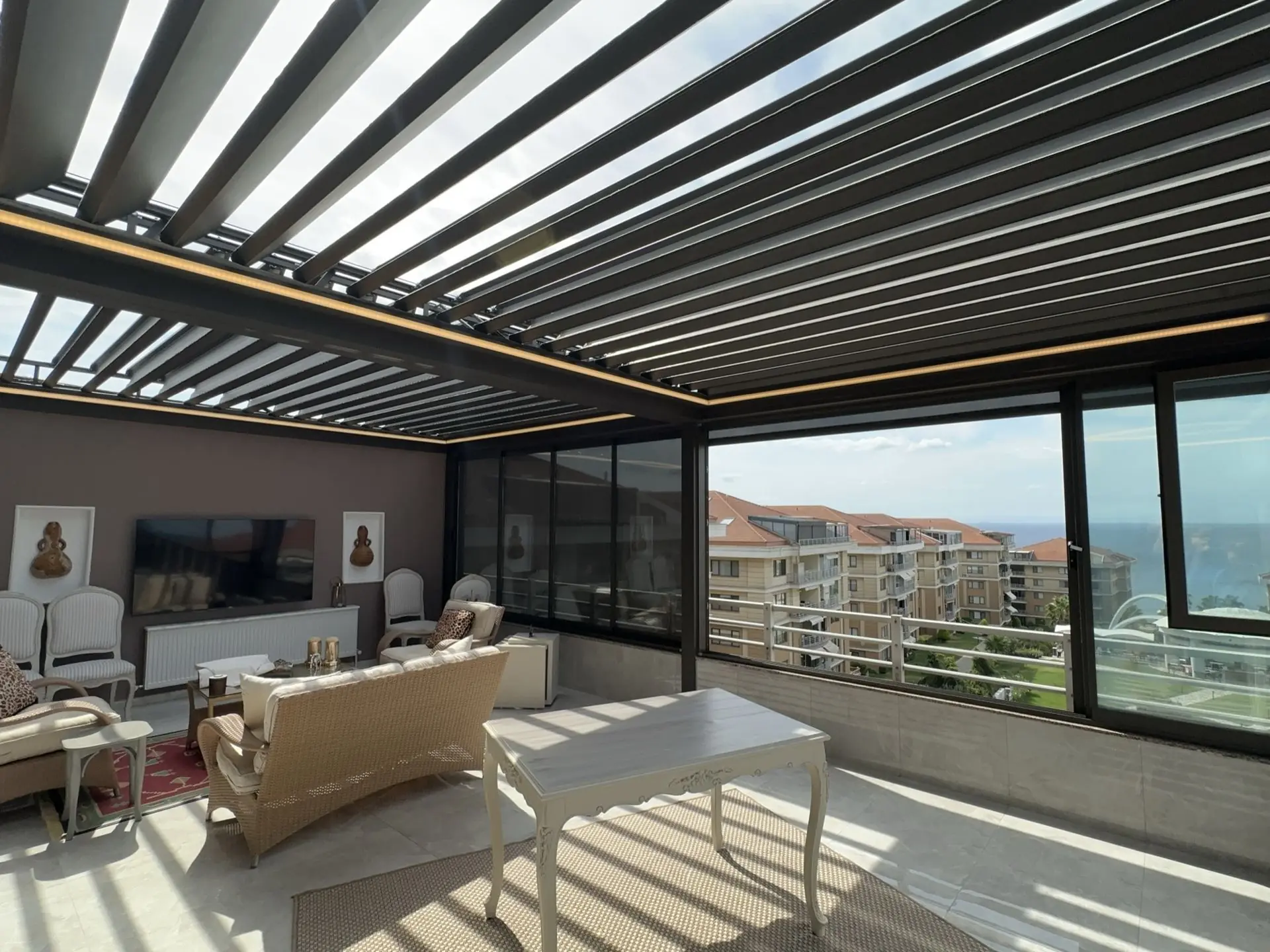
Louvres can optionally be filled with 20-density strafor and glass panels added between them. In winter the biggest difference comes from closing the side façades.
Short answer
Bioclimatic pergola louvres are hollow-section aluminium profiles; as an option, 20-density polystyrene (strafor) can be placed inside the louvre for thermal insulation, and glass panels can be added between the louvres to increase daylight. So a standard pergola is a shade and rain cover; if you expect it to be as insulated as a closed room, consider the insulated louvre option or glazing for the side façades. As an authorised Albert Genau manufacturing dealer, SkyArt settles these options together with you at the survey.
Options
| Option | What it gives |
|---|---|
| Standard louvre | Channelled aluminium; stops rain when closed and directs water to the gutters, ventilates when open. |
| 20-density strafor-filled louvre (optional) | Thermal insulation inside the louvre. |
| Glass-panel louvre (optional) | Glass between the louvres increases daylight. |
| Closing the side façades | Guillotine glass reduces wind and cold; a zip screen cuts sun and wind. |
What to expect and not expect
- No insulation figures: we do not publish measured thermal values, so we do not claim a specific temperature difference; filled louvres insulate, but a pergola does not replace a closed room.
- Side façades decide: for winter use the biggest difference comes from closing the sides with guillotine glass or zip screens.
- Snow load: the system is designed for 50–60 kg/m² snow load and 50 kg/m² wind load.
- Fill and glass together: whether daylight or insulation is the priority is decided together at the survey.
See does a bioclimatic pergola make it hot in summer, winter use, glazed pergola or winter garden and pergola profiles.
To plan a bioclimatic pergola with guillotine glass or a zip screen, book a free survey.