Yes, it can be used in winter; louvres stay closed in rain and wind and the closed system is designed for a 50–60 kg/m² snow load. Winter guide to condensation, gutters and heating.
Short answer
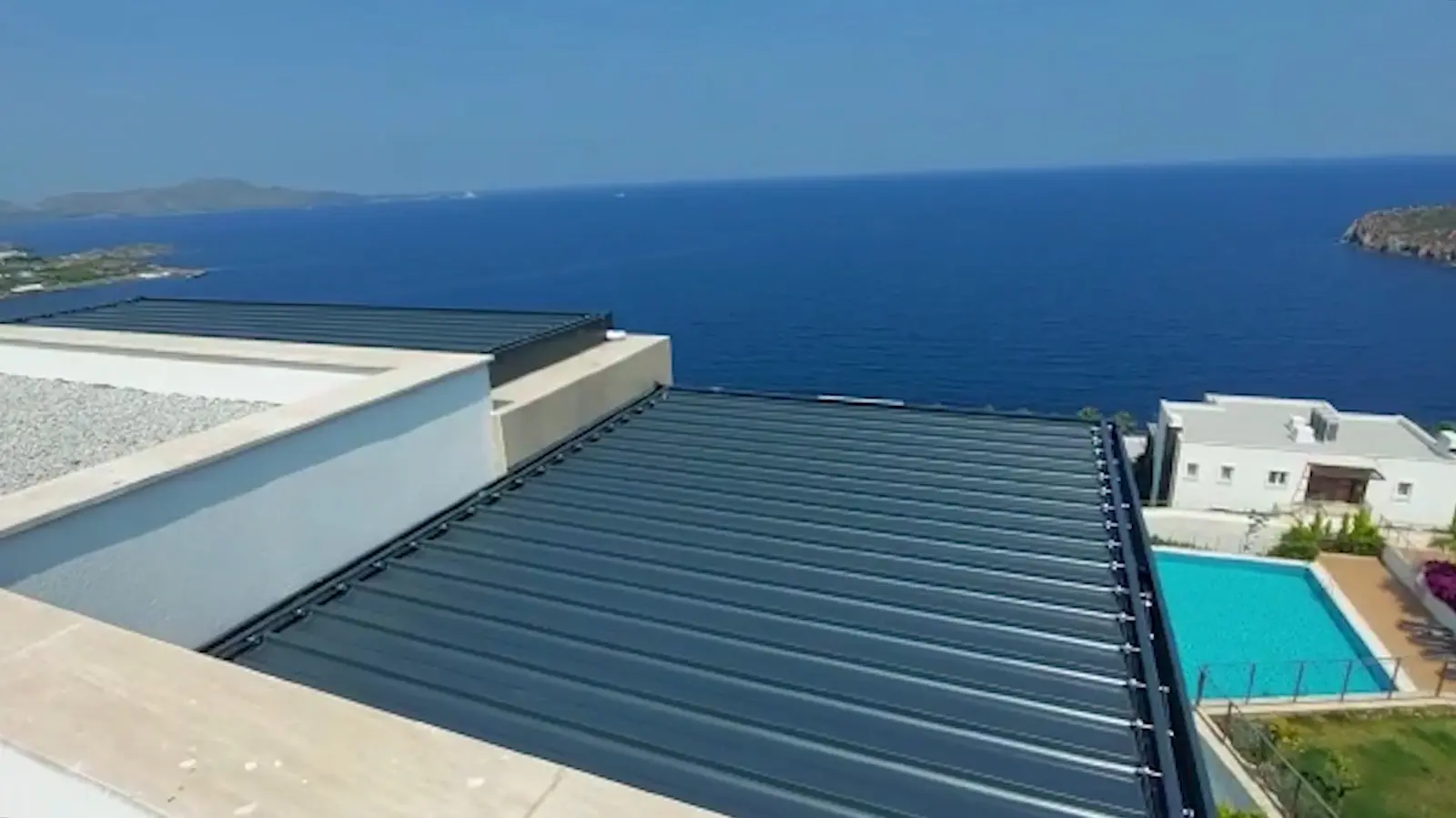
Yes, a bioclimatic pergola can be used in winter, but the louvres must stay closed in rain, snow and wind. When closed, the system is designed for a 50–60 kg/m² snow load. If you want to use it as a winter seating area, heating and humidity control must be planned separately.
What to watch in winter
| Topic | What to do |
|---|---|
| Snow and rain | Close the louvres; water drains through the gutters and inside the columns |
| Wind | Keep the louvres closed in windy weather |
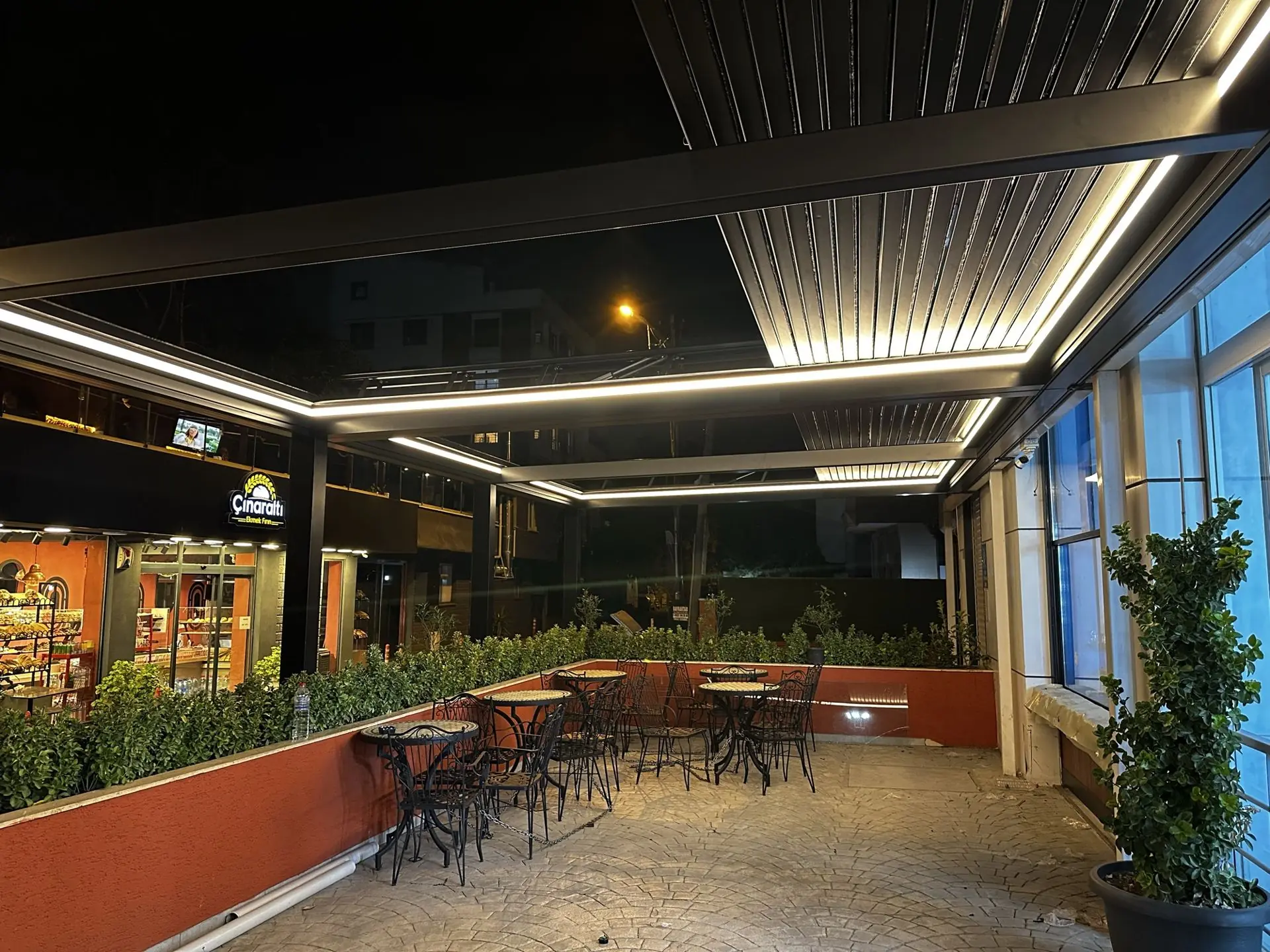
| Condensation | Heat the enclosed space with air conditioning, fan coil or a dehumidifier; the louvres can be left in a ventilation position of about 5° |
| Gutters and drains | Clear leaves, twigs and bird droppings at the start of autumn and spring |
| Electricity | Unstable voltage harms the electronic boards; a voltage regulator is recommended |
Semi-open use through winter
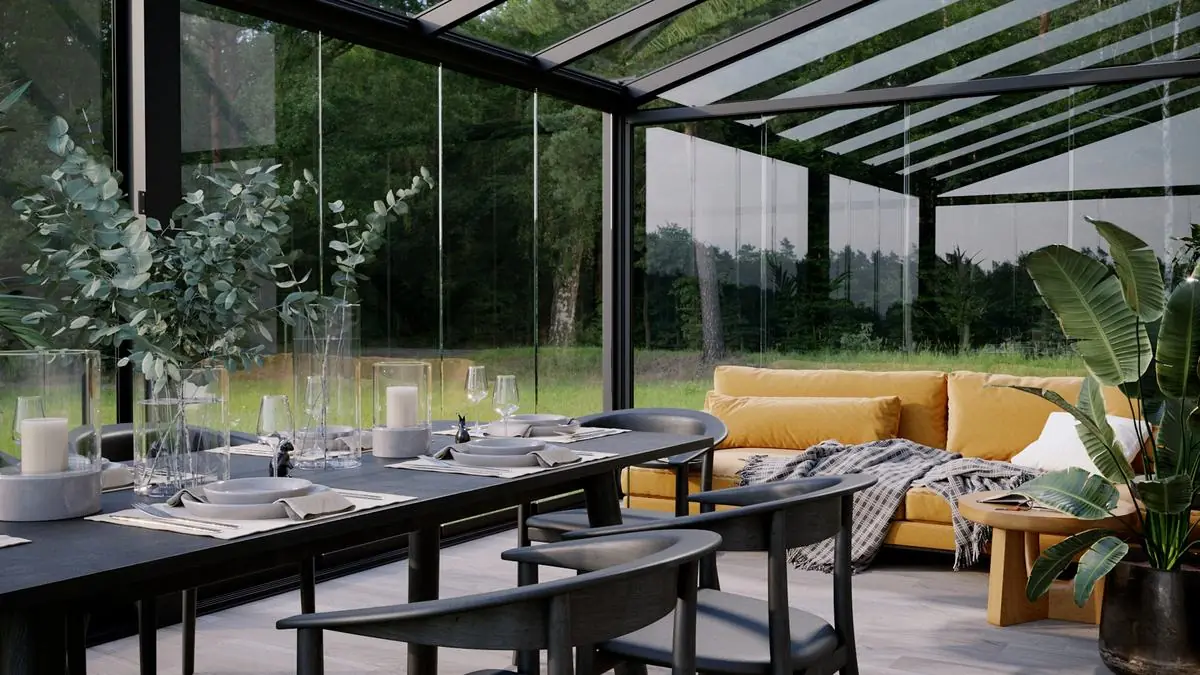
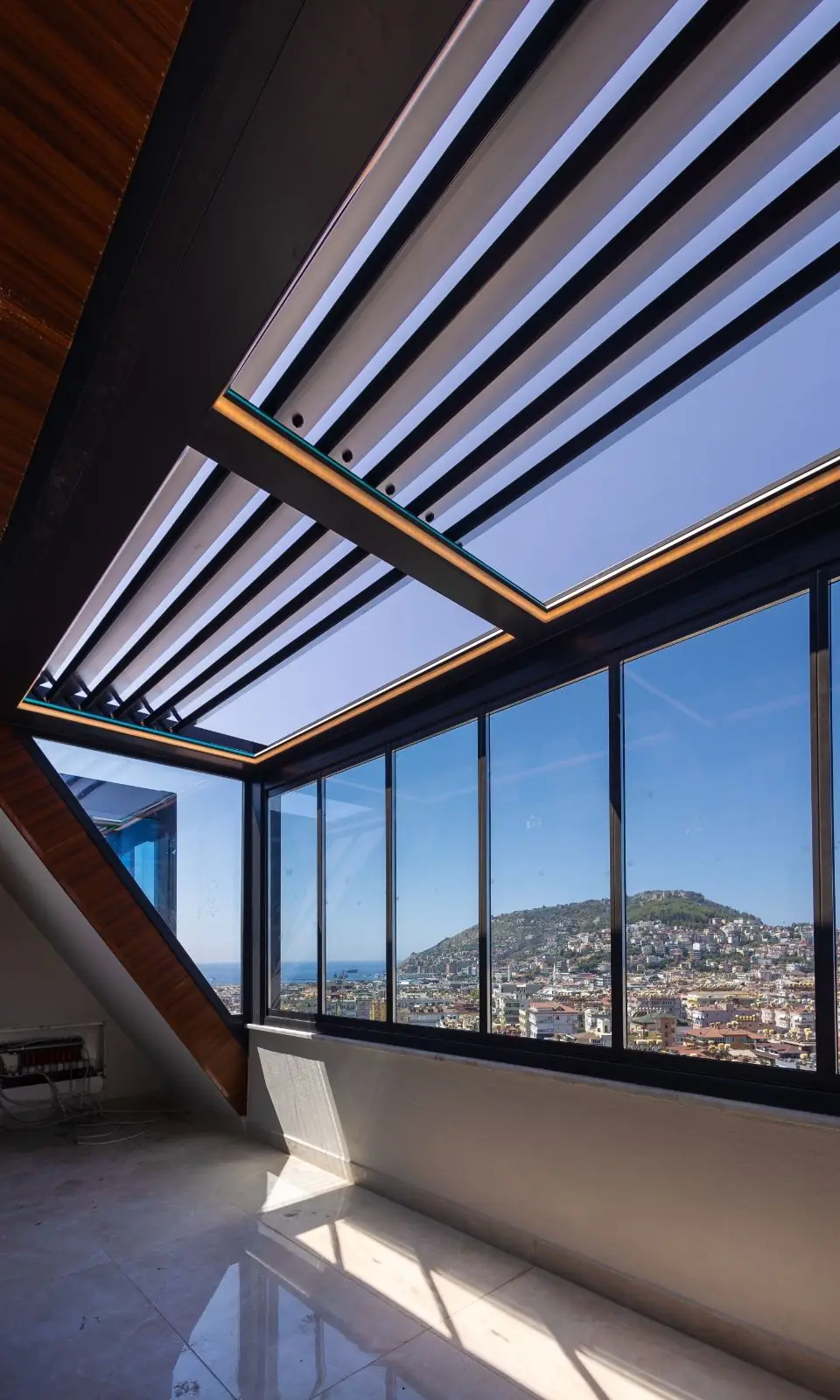
To enclose and heat the sides, read glazed bioclimatic pergola or winter garden? For side façades you can use guillotine glass or zip screens; a zip screen cuts wind by about 70%.
Pre-winter checklist
- Clean gutters and column inlets.
- Open and close the louvres to test movement; call service if something is wrong.
- Have maintenance done every 6 months; maintenance guide.
To check whether a bioclimatic pergola suits your space, request a free site visit.