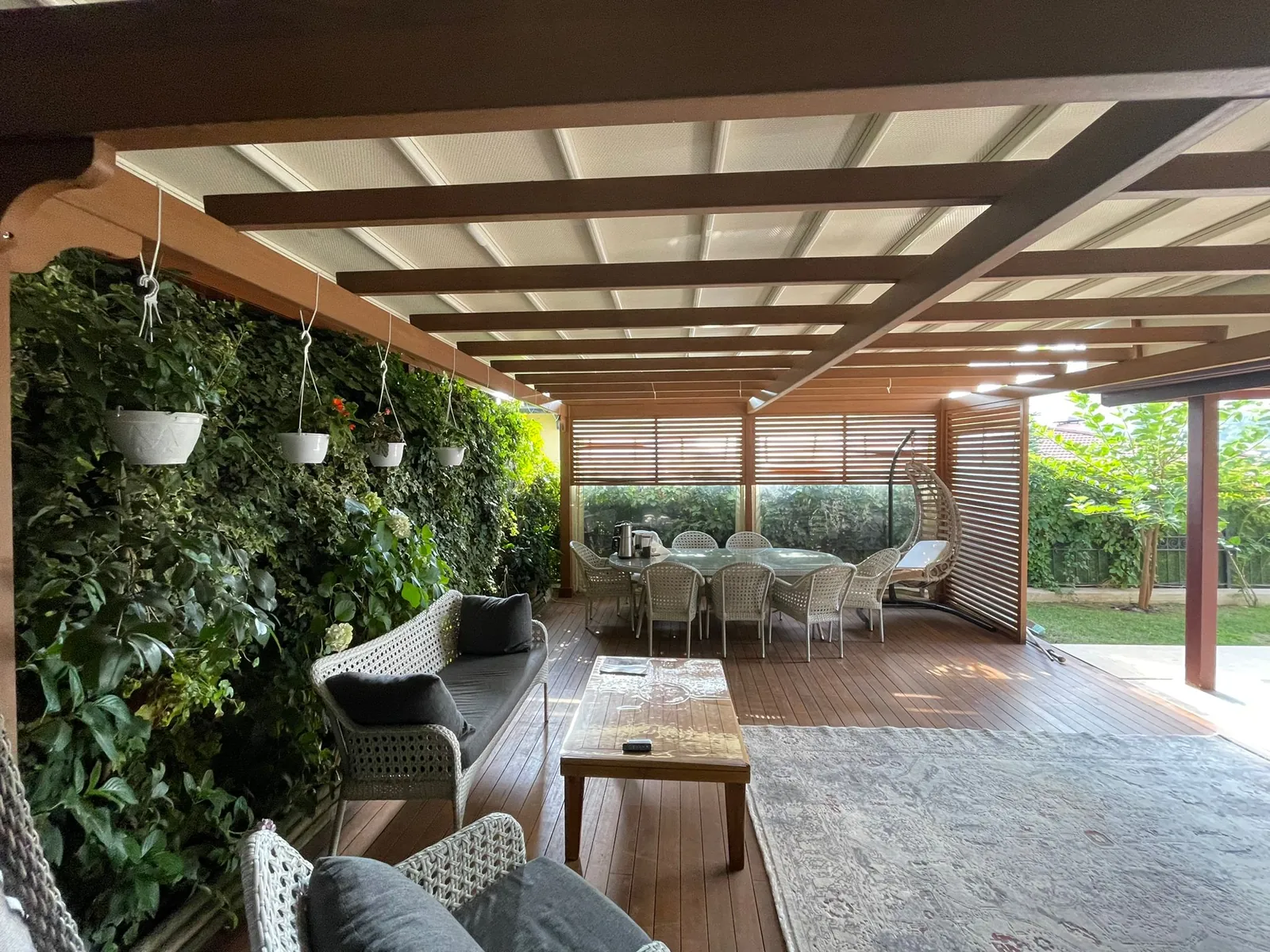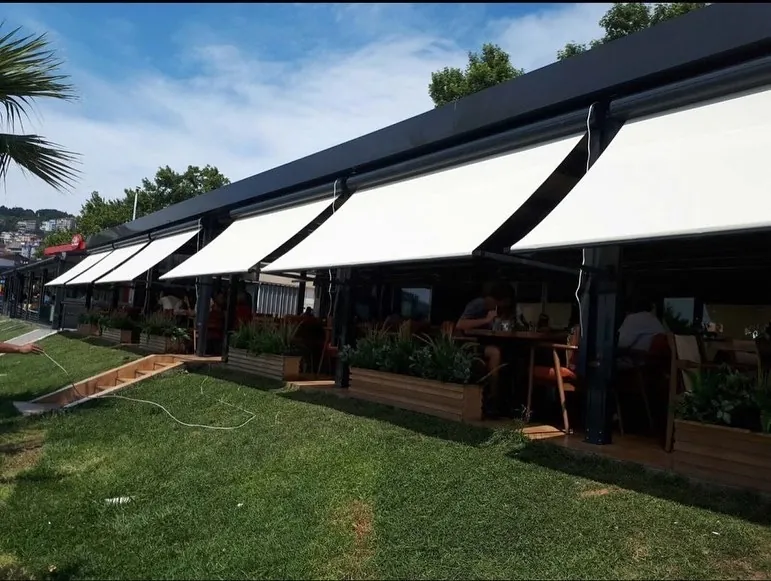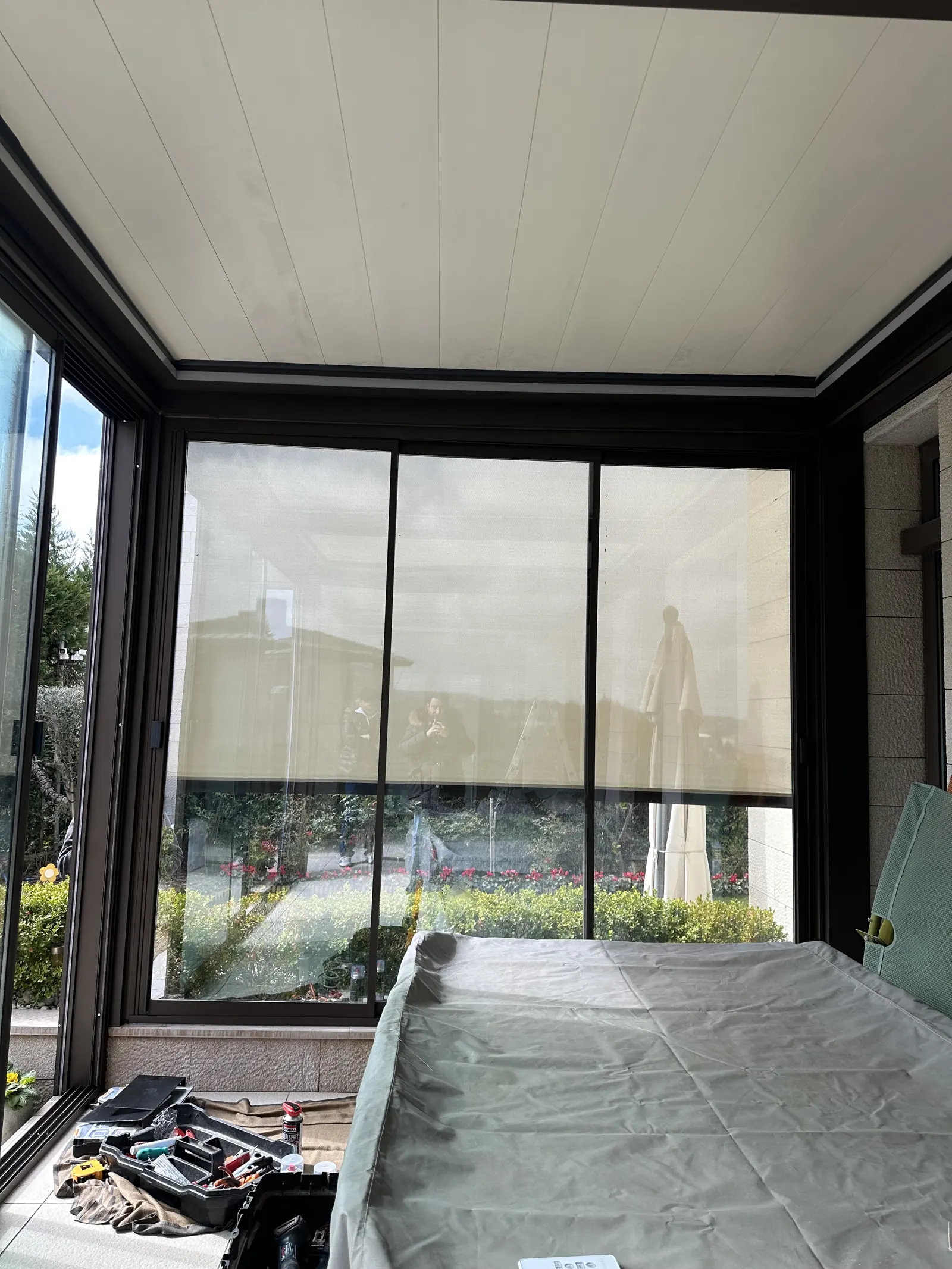
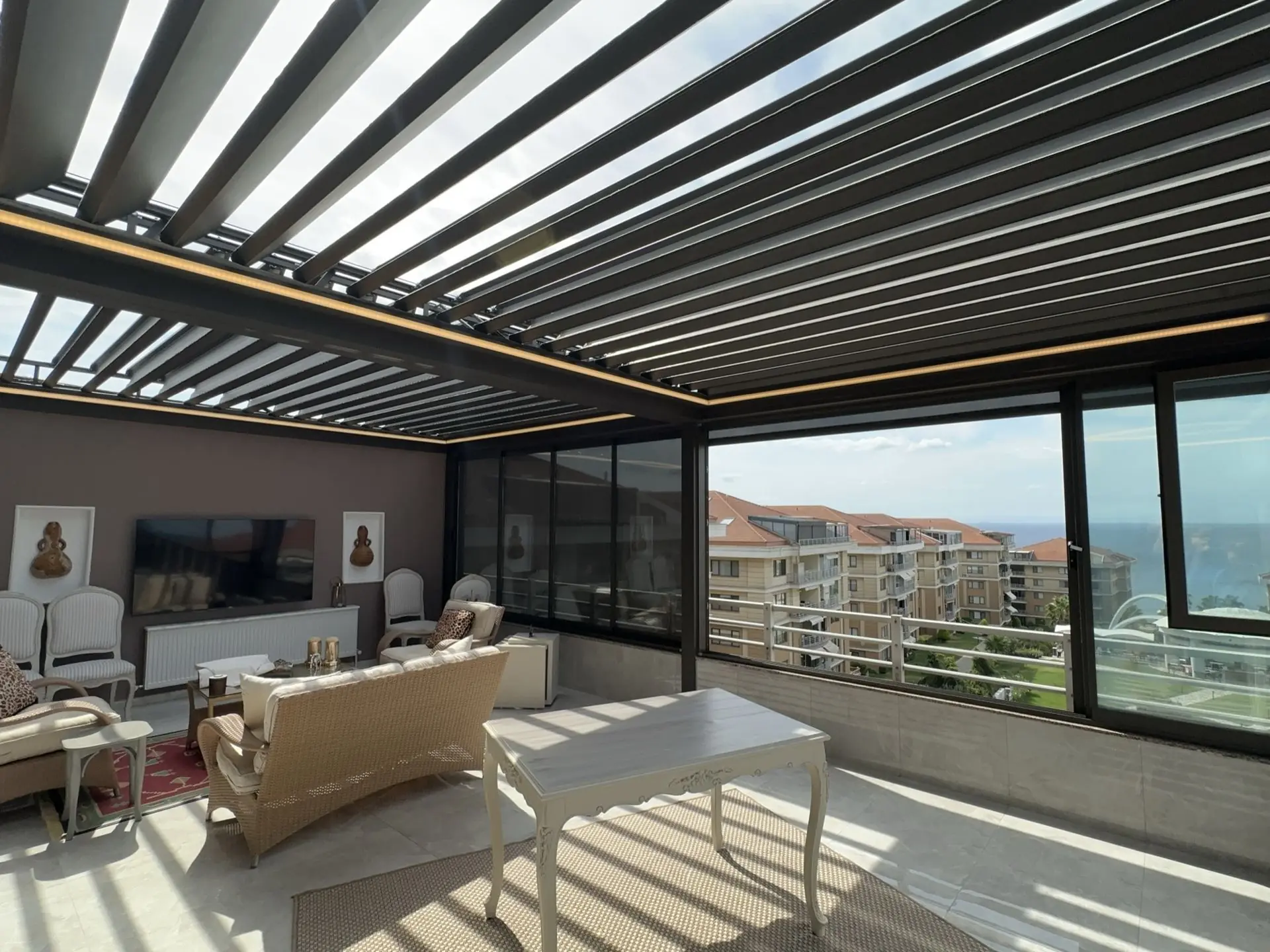
A bioclimatic pergola does not make a space hot in summer when used correctly: tilting the louvres gives shade and airflow. Avoid leaving them fully closed; use a ventilation angle and shade the sides with a zip screen.
Short answer
A bioclimatic pergola is built for outdoor shade; when the louvres are tilted they cut the sun and air passes between them. Summer problems usually come from leaving the louvres fully closed, which traps air under a solid roof. Used correctly it works as a summer shade. As an authorised Albert Genau manufacturing dealer, this is based on field use; we do not quote a measured temperature drop because it varies with orientation and surroundings.
How to use it in summer
| Situation | Louvre position | Why |
|---|---|---|
| Midday sun | Tilted (graded between 0° and 105°) | Shade is adjusted and air passes through the gaps |
| Cool evening | Wide open | Opens the sky and airflow |
| Rain and wind | Closed | Water drains through the gutters to the posts; close in wind |
| Space with closed sides | Ventilation angle (about 5°) | Hot, humid air does not build up under the roof |
Extra measures that reduce heat
- Shade the sides: low sun enters from the side; a zip screen shades it and still lets air through.
- Louvre insulation: optional 20-density polystyrene can be fitted inside the louvres.
- Airflow: keep at least one side open for cross-ventilation.
- Close in rain and wind: the pergola has no rain or wind sensor; close the louvres by remote.
For winter use see can a bioclimatic pergola be used in winter? and for condensation the condensation guide. We set the right angle and side screens with you at a free survey.