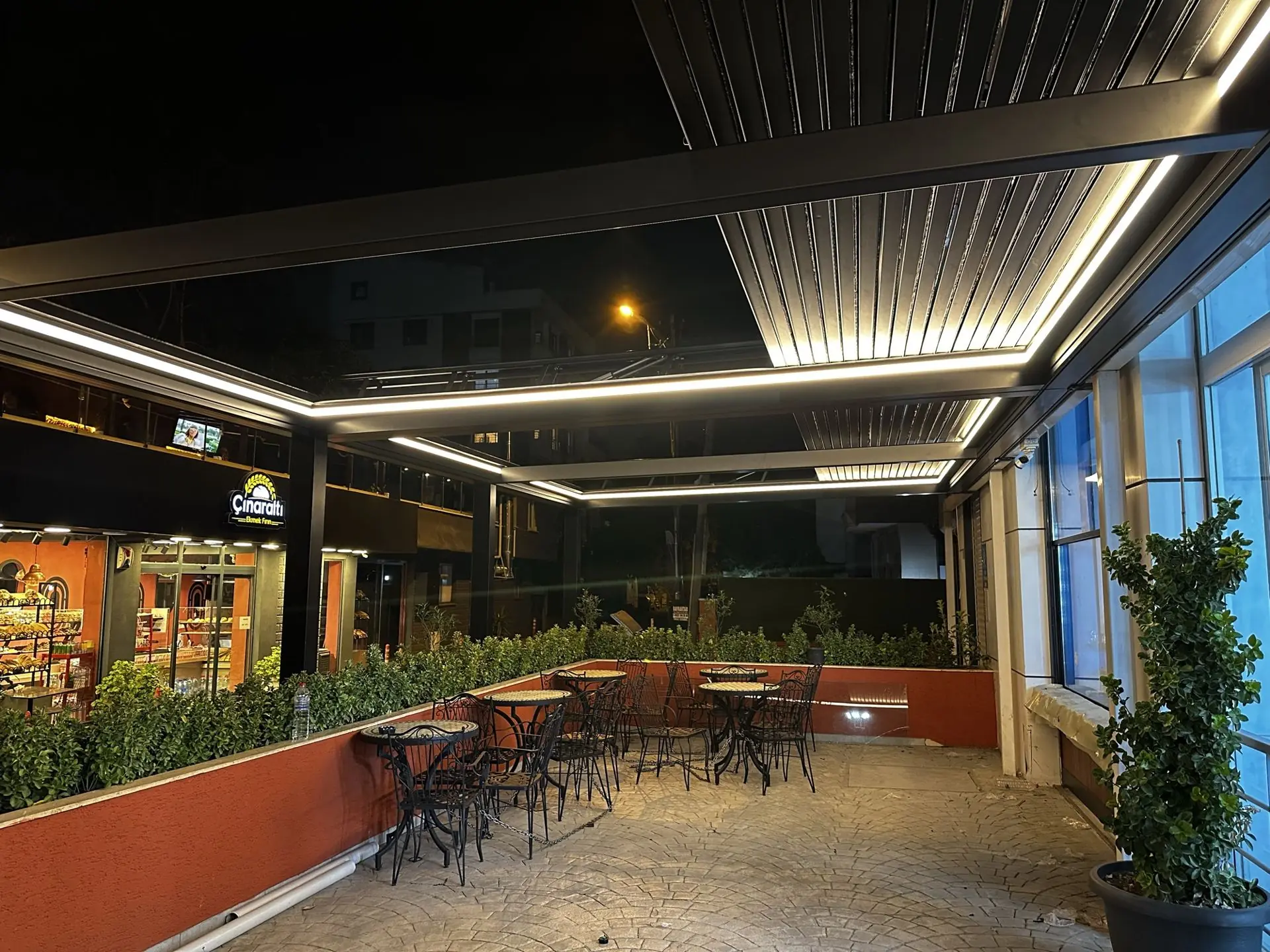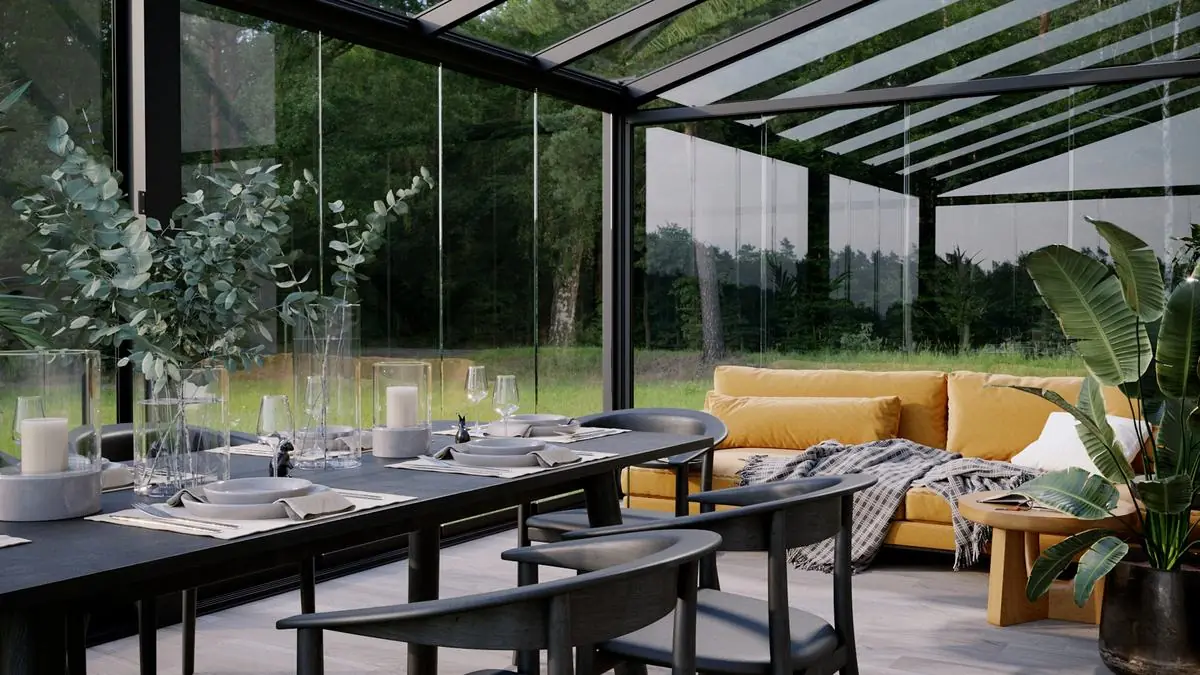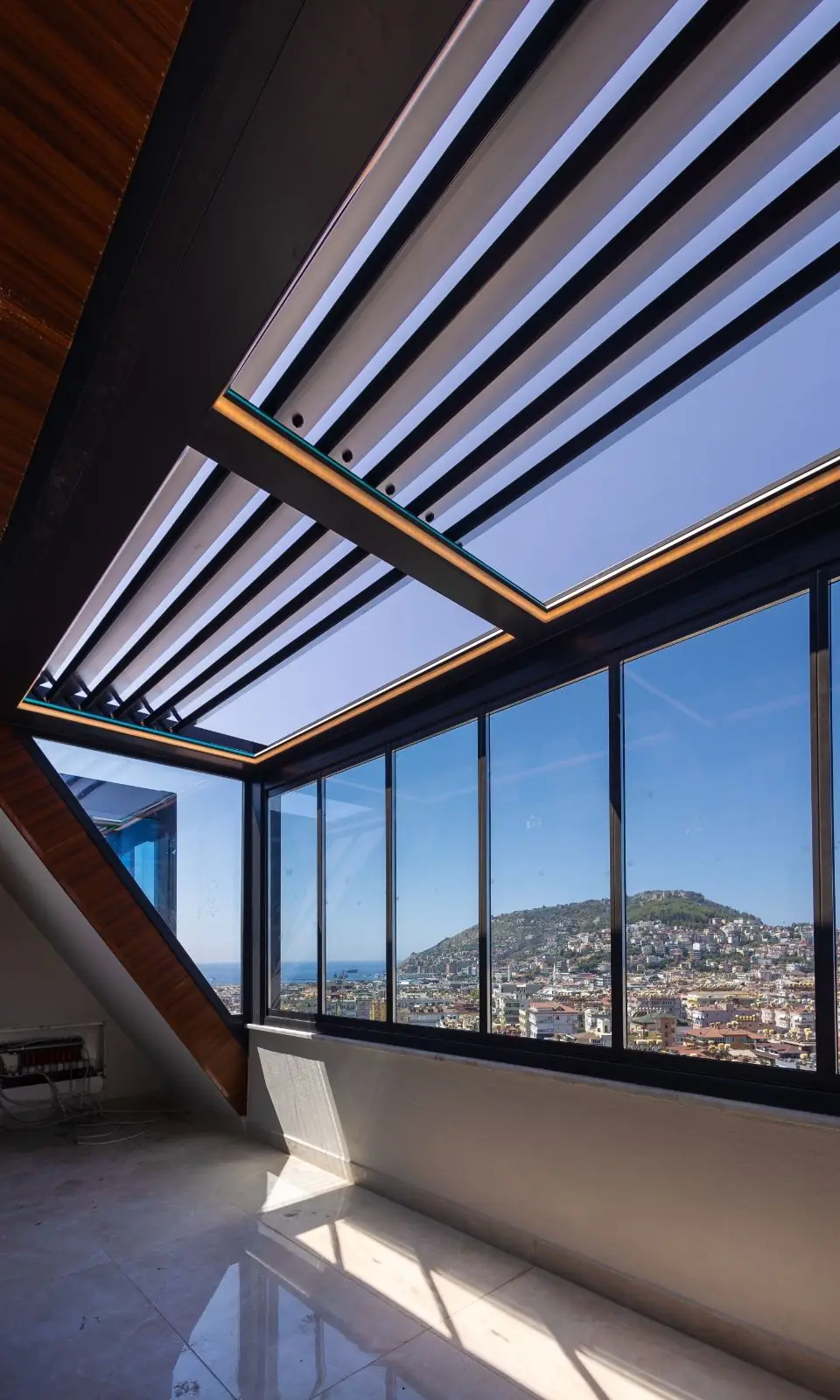
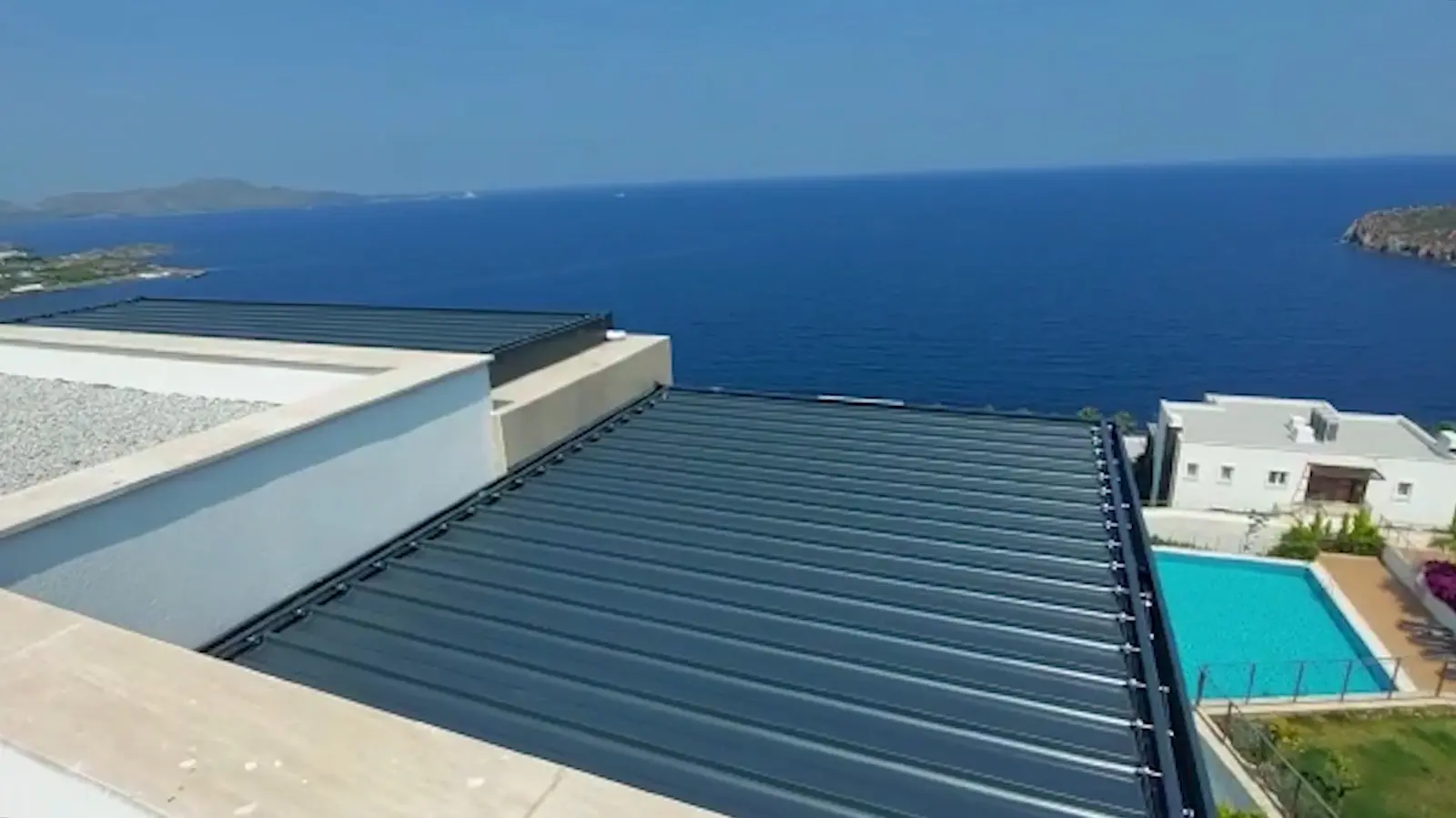
Pergolas fall into four types: louvred (bioclimatic), sliding-panel (rolling roof), retractable fabric and fixed fabric. We compare them by use, slope, area and maintenance.
Short answer
Pergola types differ by roof material and how they work: louvred (bioclimatic), sliding-panel (rolling roof), retractable fabric and fixed fabric. The right one depends on how you use the space. SkyArt Group builds all four; for most customers the starting point is the bioclimatic pergola.
Choosing by use
| Need | Suitable model | Why? |
|---|---|---|
| Shade and ventilation, used most of the year | Bioclimatic pergola | Louvres rotate by motor; closed in rain and wind |
| Roof that opens completely | Rolling roof | Panels slide and stack; up to 36 m² per unit |
| Light look, retractable shade | Pergola roof | Waterproof PVC fabric moves by motor on rails |
| Fixed shade | Fixed pergola | Fabric stays tensioned and does not open |
Three questions before choosing
- Is there a slope? The bioclimatic pergola works without slope (about 5 cm of level difference is enough to direct water); fabric systems work with a 15% slope.
- How much area? On bioclimatic and rolling roof a single unit is at most 36 m²; larger areas are solved with several units.
- How much maintenance? A bioclimatic pergola needs servicing every 6 months among trees, yearly otherwise.
For the aluminium structure see what is an aluminium pergola?; for louvres versus fabric see bioclimatic or fabric? To see which fits your space, request a free site visit.