To enclose a terrace or balcony with glass there are three main options: guillotine glass that moves vertically, sliding glass that moves sideways and folding glass that stacks like an accordion. We compare how each affects the view, insulation and everyday use.
The three systems in brief
- Guillotine glass: The glass panels move up and down on a motor. When open, the panels stack at the bottom and act as a glass balustrade.
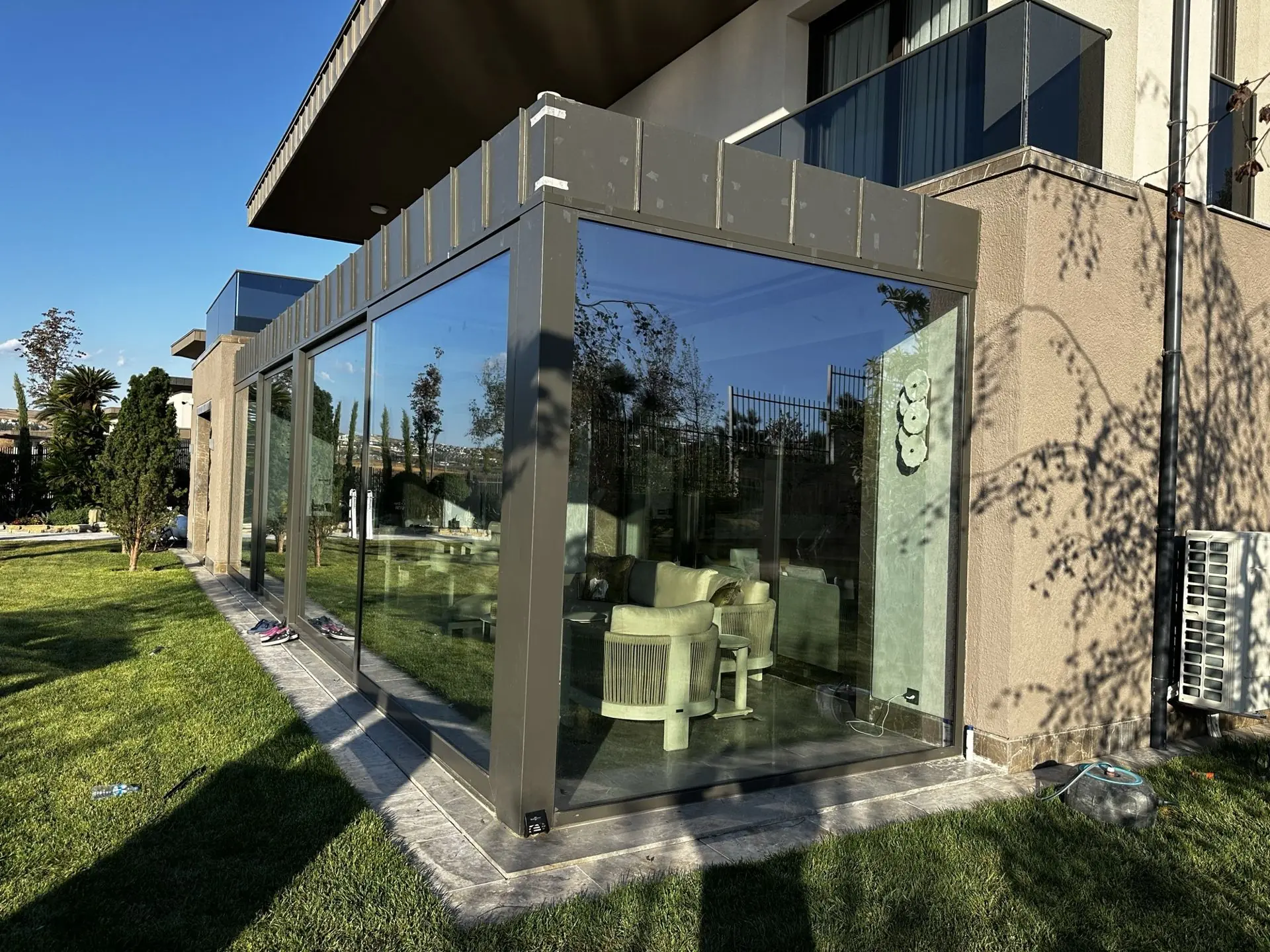
- Sliding glass: The sashes slide sideways on rails. Insulated-glass versions insulate well.
- Folding glass: The sashes fold to one side like an accordion; the opening is almost completely cleared.
Comparison
| Guillotine | Sliding | Folding | |
|---|---|---|---|
| Movement | Vertical, motorised | Horizontal, by hand | Horizontal, folding |
| When open | Lower glass becomes a balustrade | Sashes overlap | Opening fully cleared |
| View | No horizontal profile across the middle | Vertical profiles visible | Vertical profiles when closed |
| Insulation | Good with insulated glass | Good with insulated glass | Medium–good with sealed models |
| Operation | Remote or push button | Slide by hand | Fold by hand |
| Best for | Restaurants, cafés, terraces with a view | Balconies, winter gardens | Façades that should open completely |
Which should you choose?
If the view comes first
Guillotine glass. With no horizontal profile in the middle and the glass acting as a balustrade when open, the view is not cut. It stops at whatever height you choose with the remote.
If you want an economical, insulated solution
Insulated sliding glass. With 4+12+4 insulated glass and sealed rails it performs well on winter gardens and balconies.
If you want the façade to open completely
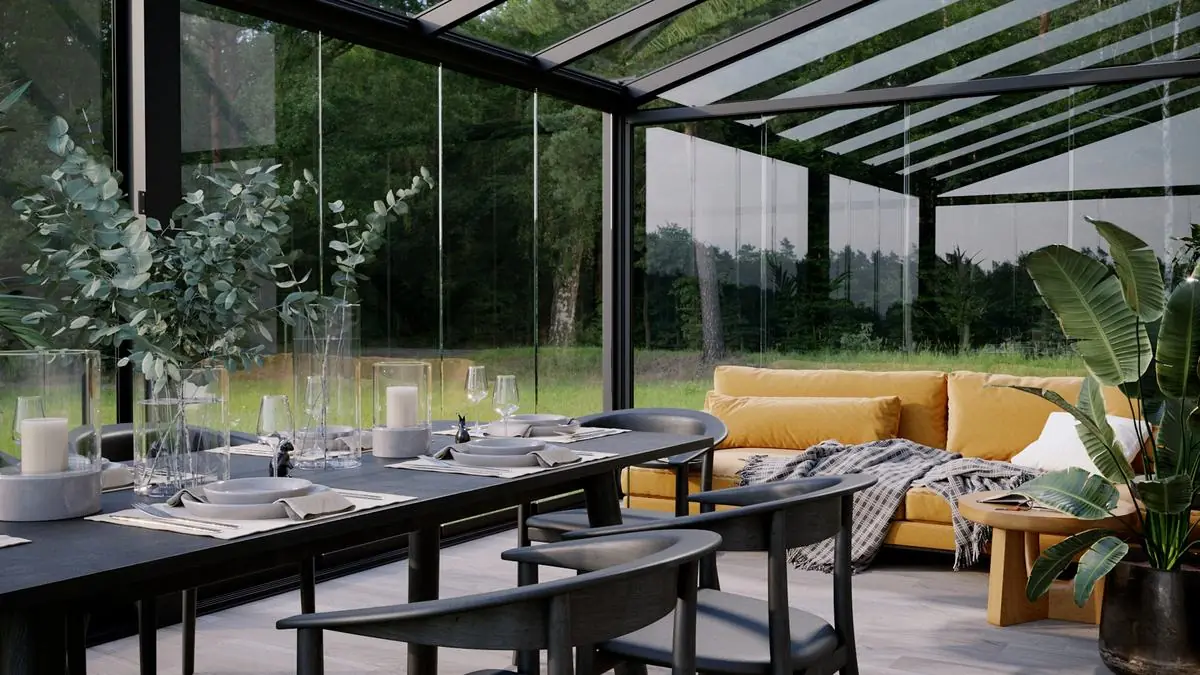
Folding glass. The sashes stack in one corner and in summer the space becomes fully open.
Can they be combined?
Yes. In a winter garden, guillotine glass on the side facing the view and sliding glass on the sides is a solution we use often. For sun control, a zip screen can be added outside the glass.