Conservatory side walls can use insulated profiles or single glass; the difference is cost. We recommend insulated profiles. Cost, insulation and condensation compared in a table.
Short answer
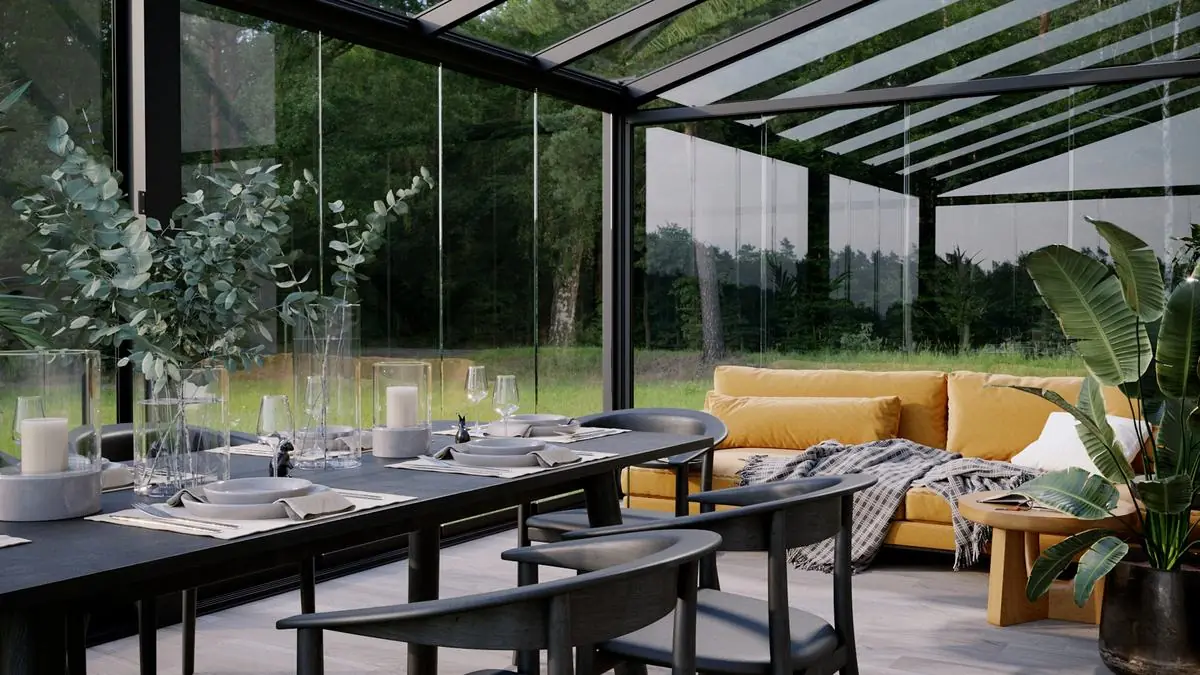
The side walls of a conservatory can be built with thermally insulated profiles or with single glass; the difference is cost. We recommend insulated profiles; if you want to use the space all year, this choice eases heating and condensation. At SkyArt, an authorised Albert Genau manufacturing dealer, the roof is fixed glass and the side closure can be guillotine, insulated sliding or folding glass.
Comparison
| Criterion | Insulated profile (double glazed) | Single glass |
|---|---|---|
| Cost | Higher | Lower |
| Thermal insulation | Better; the recommended choice for winter use | Weaker; the side wall becomes a cold surface |
| Condensation | Generally less | Higher risk on cold surfaces |
| Who for? | All-year users | Tight budgets, seasonal use |
Systems for the side walls
- Guillotine glass: 8–10 mm tempered glass or 4+12+4 double glazing; the panels stack when open. It does not let the cold in, but takes in a very small amount of air at moving parts; do not call it fully airtight. See does guillotine glass let the cold in?
- Insulated sliding and folding glass: preferred for side walls that open and close with the season.
- Screens: a Sky Zip can be added under the roof to reduce summer heat. See curtain options for a conservatory.
Heating and condensation
Insulated or not, we recommend a dehumidifying air conditioner for heating; infrared, stoves and dry-air blowers are not recommended because they can bring humidity and damp. See how to heat a conservatory and, for summer, does a conservatory overheat in summer?
For the general choice see conservatory or glazed balcony?. For a conservatory and guillotine glass that suit your space, request a free site visit; the minimum conservatory size is 15 m².