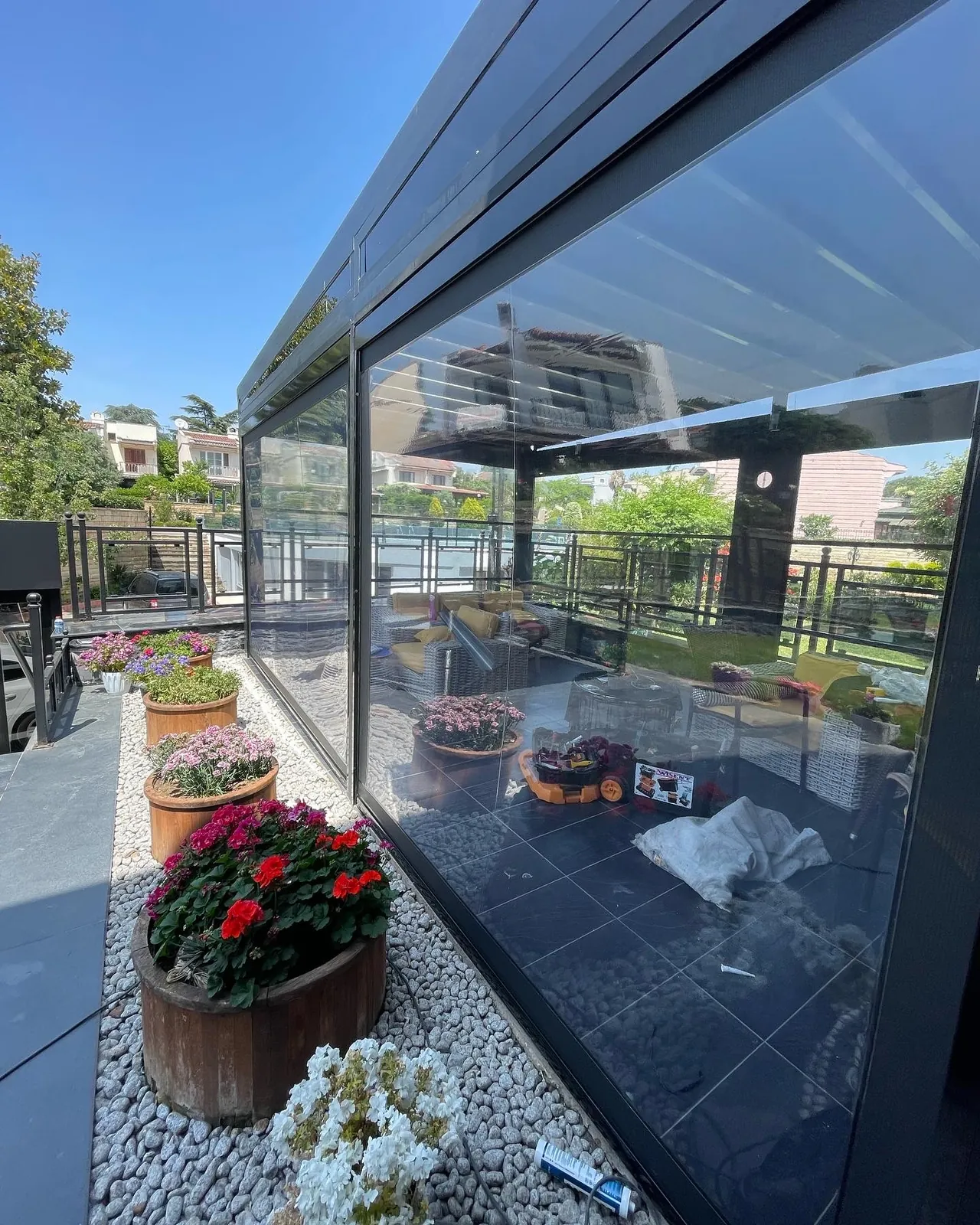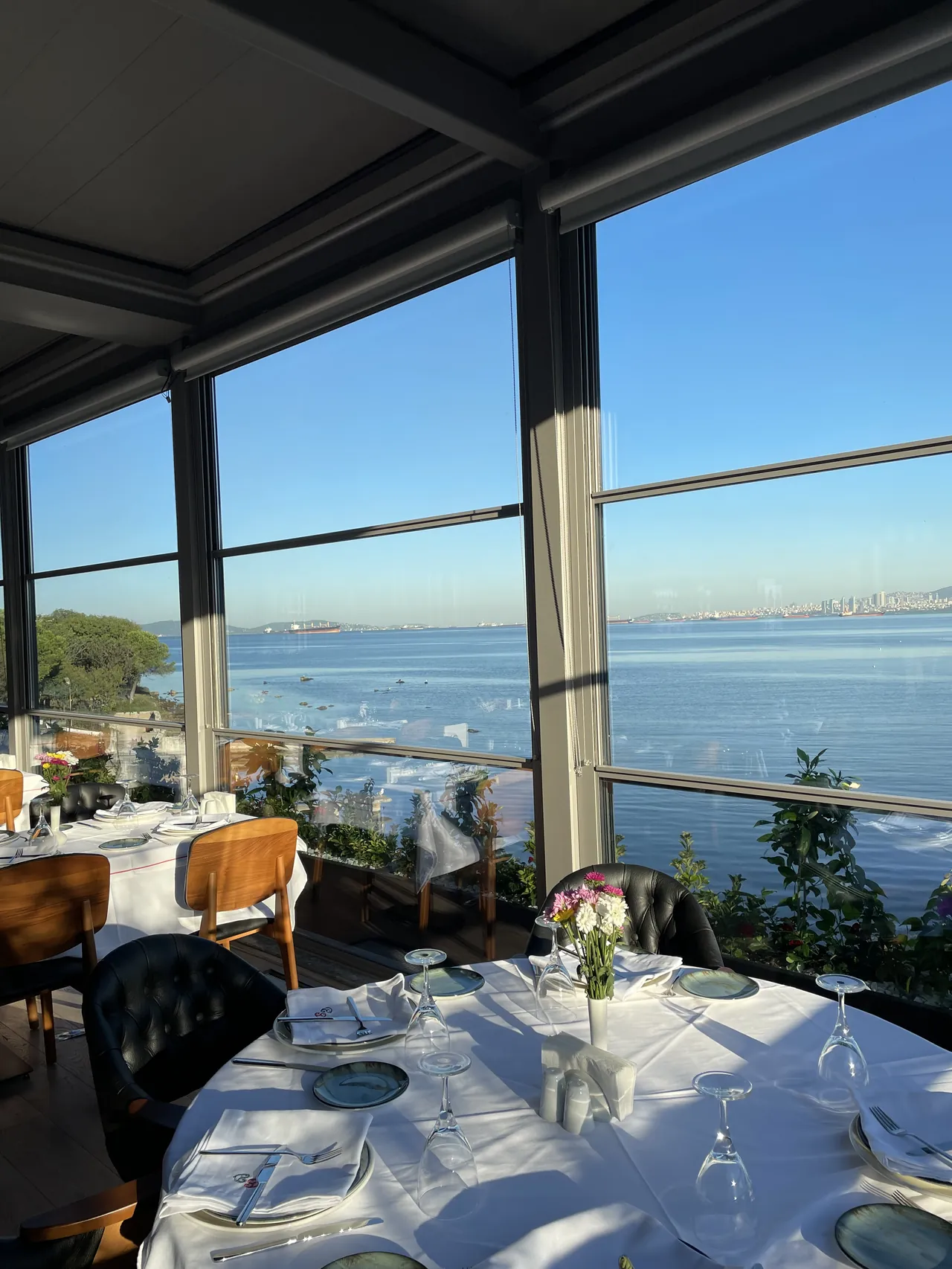
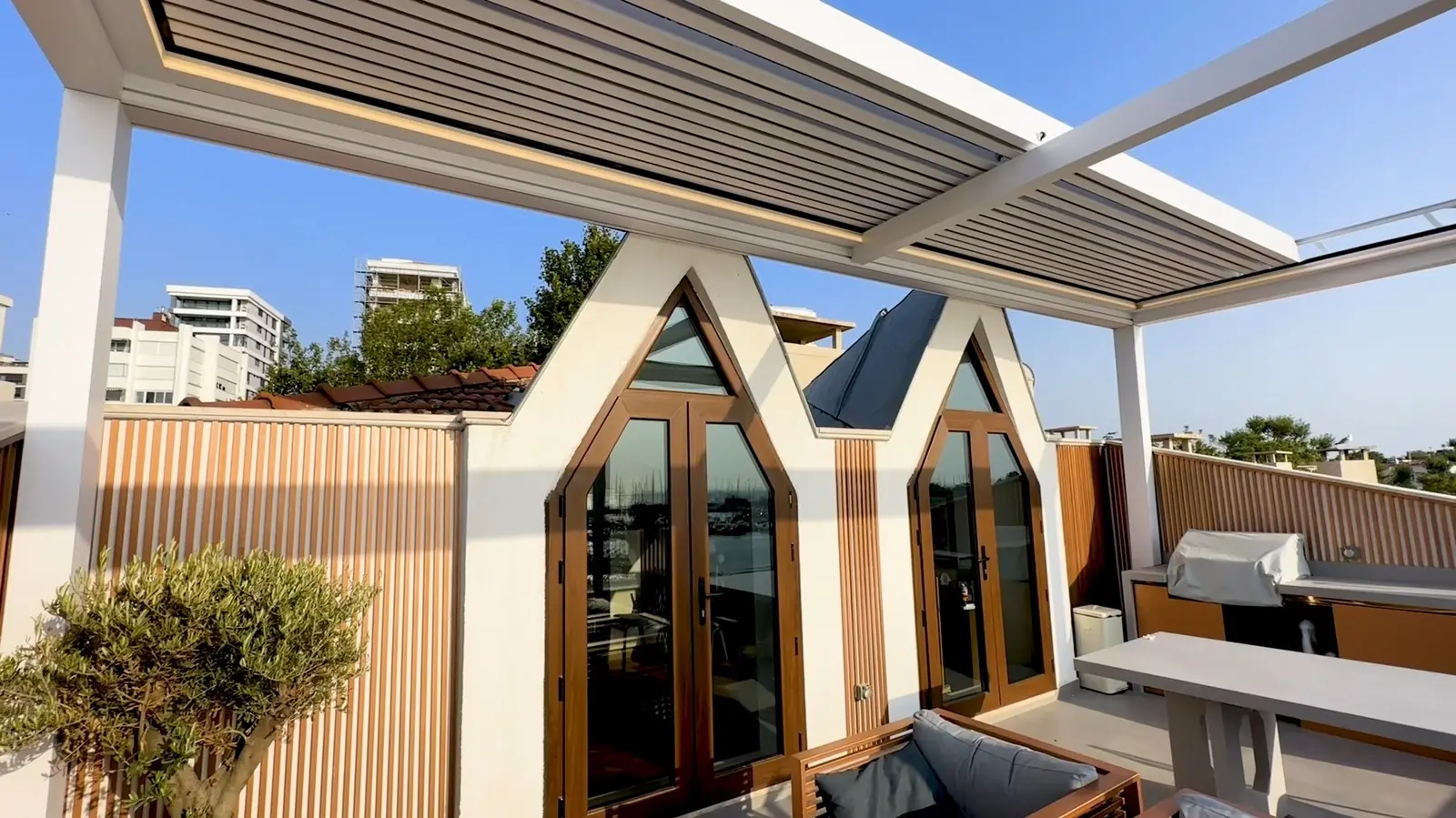
A fabric (pergola awning) roof opens and closes and costs less, but must be retracted in wind and snow. A glass-roofed winter garden is a closed room for all four seasons but needs summer shading. We compare use, maintenance, winter and summer performance.
Two approaches
Fabric roof (pergola awning): a motorised PVC fabric roof running on aluminium rails. Our fabric is 780 g/m², three-layer, blackout, waterproof and flame-retardant (CL2 – UNI EN 13773).
Glass-roofed winter garden (winter garden): a fixed glass roof on aluminium beams, 4+4 laminated glass with an optional argon-filled insulated unit; sides closed with guillotine, sliding or folding glass.
Comparison
| Fabric roof | Glass roof | |
|---|---|---|
| Opens? | Yes, retracts by motor | No, fixed |
| Light | Dark when closed | Plenty of daylight |
| Winter | Limited; retract in heavy snow | All seasons with heating |
| Wind | Retract in windy weather | Closed structure |
| Summer | Open and airy, or shaded | Needs shading (Sky Zip under the roof) |
| Budget | Lower | Higher |
| Warranty | 2 years | 2 years |
Fabric roof: pros and cons
- Pro: opens fully in summer; waterproof; usually more economical.
- Con: must be retracted in wind and heavy snow (snow damage is not covered by warranty); wheel channels need cleaning at least monthly; dark when closed.
Glass roof: pros and cons
- Pro: a real room used all year; daylight and sky views; no retracting in snow or wind.
- Con: heats up in summer without shading and ventilation; higher budget; glass needs periodic cleaning.
Which one?
- Restaurant terraces, mainly summer use: fabric roof.
- A four-season room at home: glass-roofed winter garden.
- Opening and winter-proof: a bioclimatic pergola or sliding glass roof.
See also: how to heat a winter garden.