A zip screen is a motorised outdoor blind whose fabric is locked into the side rails by a zip strip on both edges. Because the fabric stays taut in the rails, it does not flap in the wind. We explain how it works, where it is used and what to look for when choosing one.
How does a zip screen work?
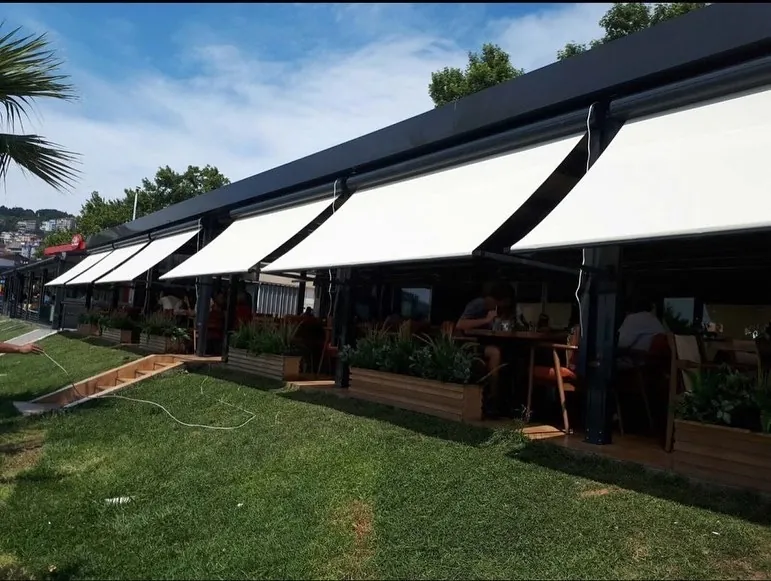
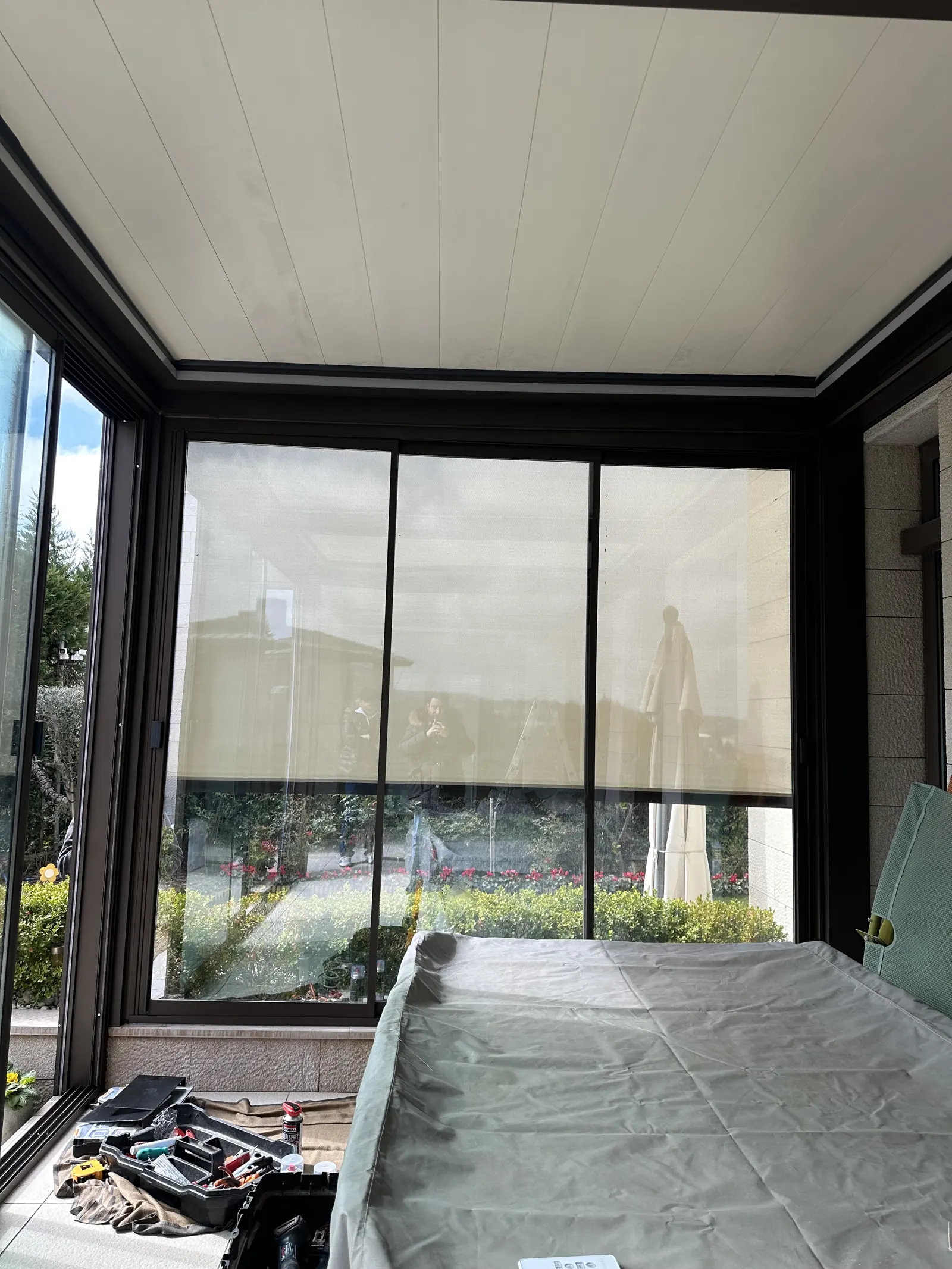
The system has four parts: the cassette at the top with the motorised roller, the rails on both sides, the technical fabric and the bottom bar that keeps the fabric taut. A zip strip sewn onto both edges of the fabric runs in a channel inside the rail. As the screen comes down, the zip slides in the rail and the fabric is held at both edges, with no gaps at the sides as with ordinary blinds.
Is it wind-resistant?
This is what sets the zip screen apart from other outdoor blinds. Because the fabric is locked into the rails on both edges, it does not flap or pull out of the rail. Even so, retracting it in very strong wind is recommended.
Does it block sun, rain and insects?
- Sun: The micro-perforated technical fabric blocks sun and heat while the space stays bright.
- Air: The fabric breathes; air keeps flowing even when it is closed.
- Insects: With no gaps at the edges it works like an insect screen.
- Rain: It blocks most side rain, but it is not fully watertight like glass.
Where is it used?
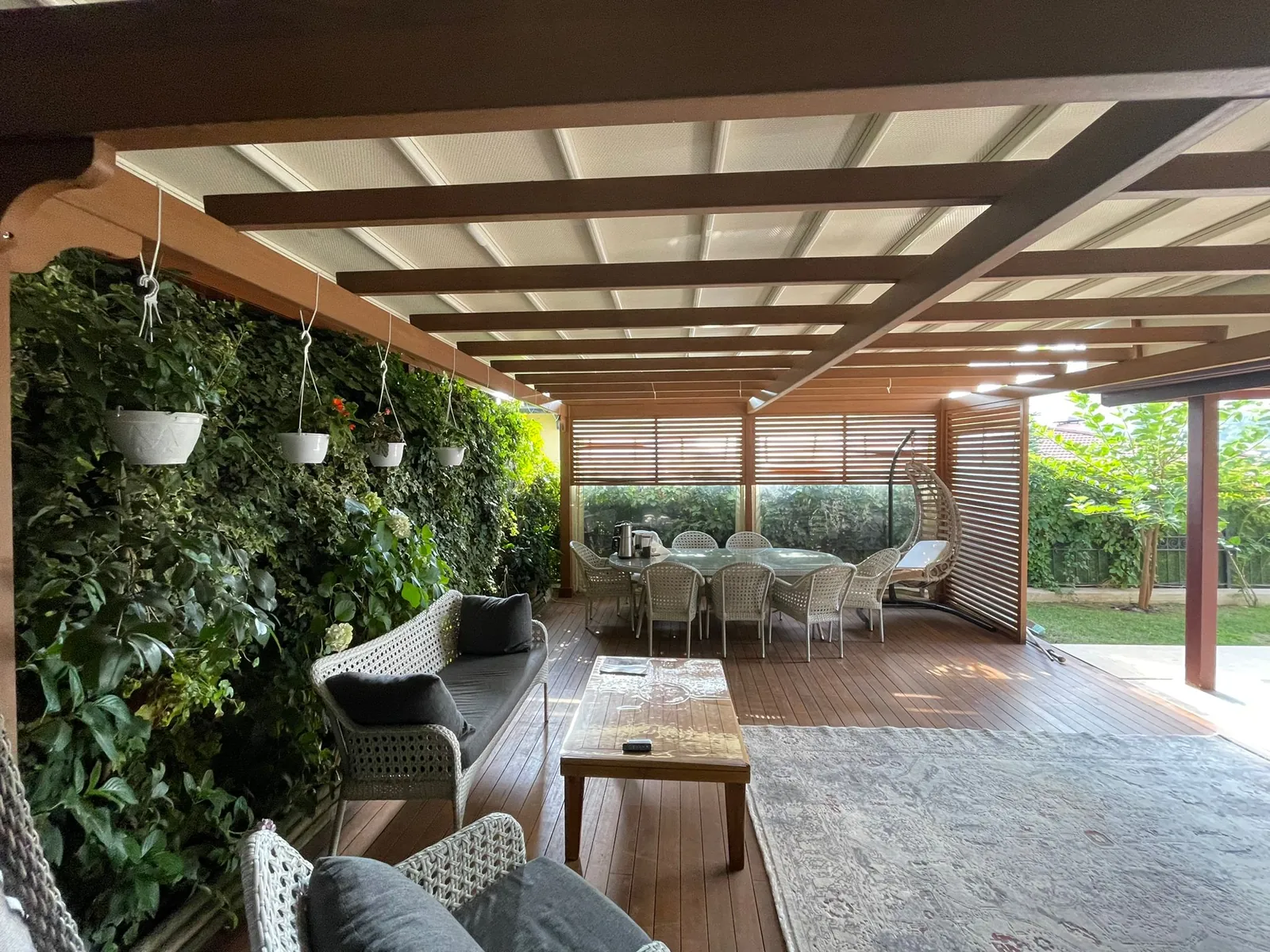
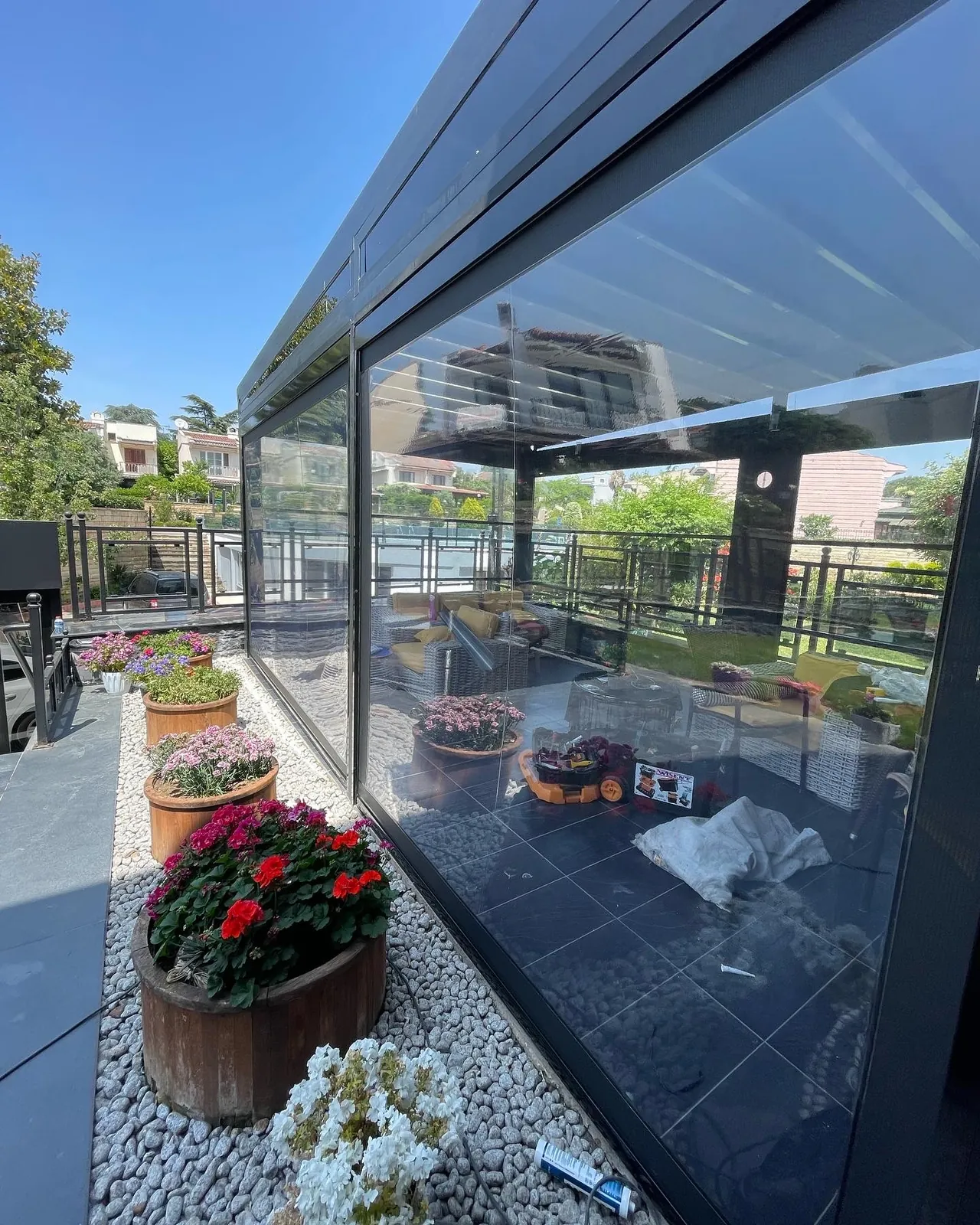
Most often on the sides of bioclimatic pergolas and winter gardens. It is also fitted on terraces, balconies, in front of restaurants and cafés, and in hotel gardens. There are two models: the vertical zip for façades and the ceiling zip (Sky Zip).
Zip screen or guillotine glass?
They meet different needs. A zip screen blocks sun and wind while letting air through, and is lighter and more economical. Guillotine glass insulates against sound, heat and water; if you want to use the space as a closed room in winter, choose glass. Many projects use both: a zip screen outside the glass.
What to look for when choosing
- Size: the width and height of a single screen determine the rail and cassette section.
- Fabric: light transmission and colour determine how much you see outside from within.
- Control: remote and wall switch; the phone app works only with the Somfy smart-automation system.
- Mounting: how it is fixed to the pergola, wall or ceiling.